Why do my fashion ads get clicks but no sales?
Your fashion ads get clicks but no sales because there's a fundamental disconnect between the promise of your ad creative and the reality presented by your product photos on the landing page. I learned this the hard way, burning nearly ₹40 lakh on Facebook and Instagram ads for a women's ethnic wear brand based in Surat before it finally clicked. We'd run these amazing, aspirational ads with models in stunning settings, driving a respectable 2-3% CTR. But when people landed on the product page? Crickets. Our conversion rate was abysmal, hovering under 0.5%.
The problem wasn't the ad itself; it was what happened after the click. Our ads showed a lifestyle, an emotion, a feeling. Then the customer would land on a basic product page with a single, poorly lit flatlay photo and maybe one or two shots of the garment on an unstyled mannequin. The visual journey just… stopped. It was like going to a fancy restaurant after seeing a gourmet ad, only to be served fast food. Customers felt cheated, confused, or just plain underwhelmed. They'd bounce immediately, and our ad budget would go up in smoke.
What's the 'photo-match problem' in fashion advertising?
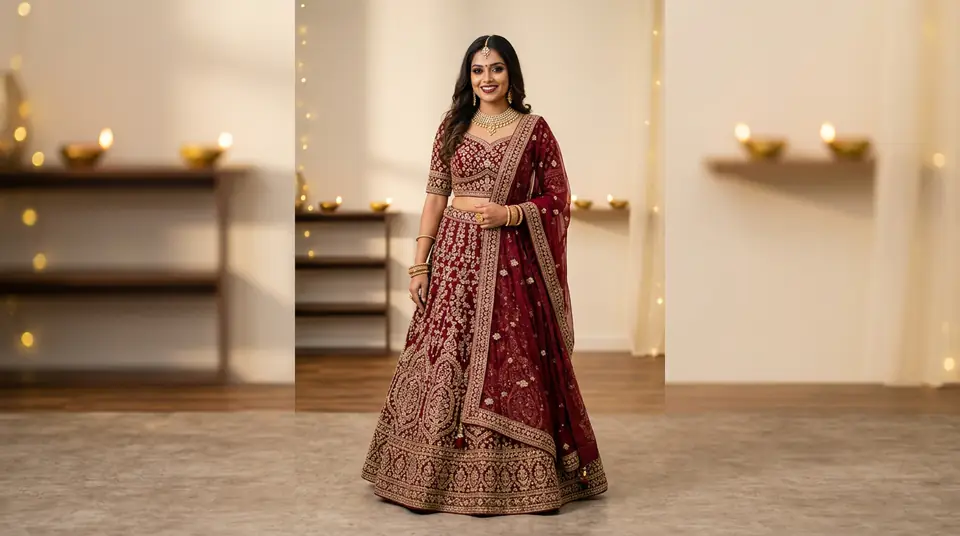
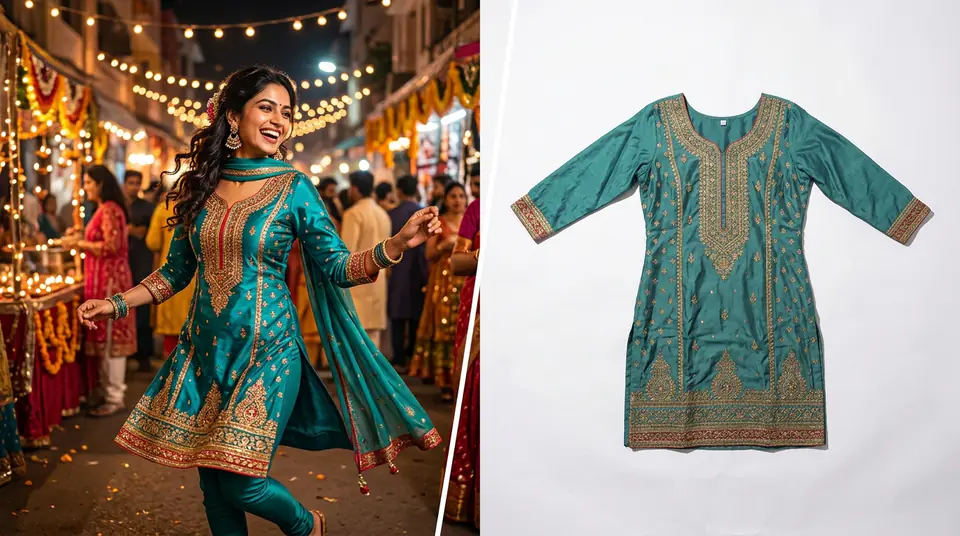
The 'photo-match problem' in fashion advertising is when the imagery used to attract clicks (your ad creative) doesn't visually or emotionally align with the product images presented on your e-commerce listing or landing page. Think of it as a jarring visual handoff. Your ad might feature a vibrant kurti on an expressive model in a bustling Delhi market, creating a sense of energy and cultural richness. That's your hook, designed to grab attention and drive a high CTR.
But if the customer clicks through and lands on a product page that shows the exact same kurti as a sterile flatlay on a white background, or on a different model with completely different styling and lighting, it creates immediate friction. The aspiration vanishes. The perceived quality drops. They start questioning if it's even the same product, or if your brand is legitimate. This cognitive dissonance kills trust faster than a bad return policy, leading directly to a plummeting CVR and lost sales, even if your initial ad performance was stellar.
How do different photo styles affect CTR and CVR?
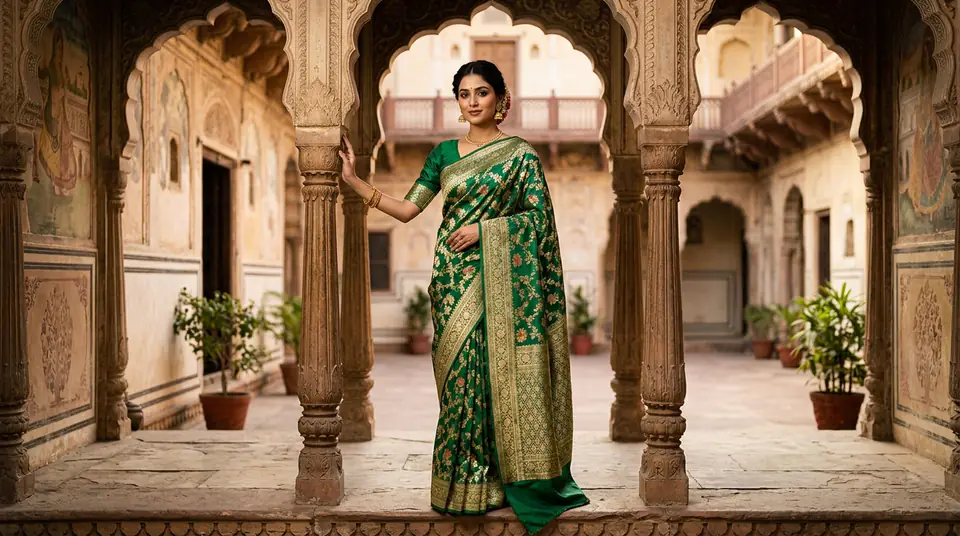
Aspirational, lifestyle photos are fantastic for boosting CTR because they evoke emotion and tell a story, while utilitarian, clear product shots are essential for driving CVR by providing necessary details and building purchase confidence. You need to use both, but strategically. Your ads, especially at the top of the funnel, should be about captivating attention. Use images that show the product in context, styled beautifully, creating a desire.
Once they click, the customer's goal shifts from inspiration to evaluation. They want details. Here, your product page needs to be a trustworthy resource. You need clean, well-lit, consistent images that show the garment from multiple angles, highlight fabric texture, and clarify fit. This is where your conversion photos come into play. They don't need to be as 'story-driven' as your ads, but they must be consistent and high-quality.
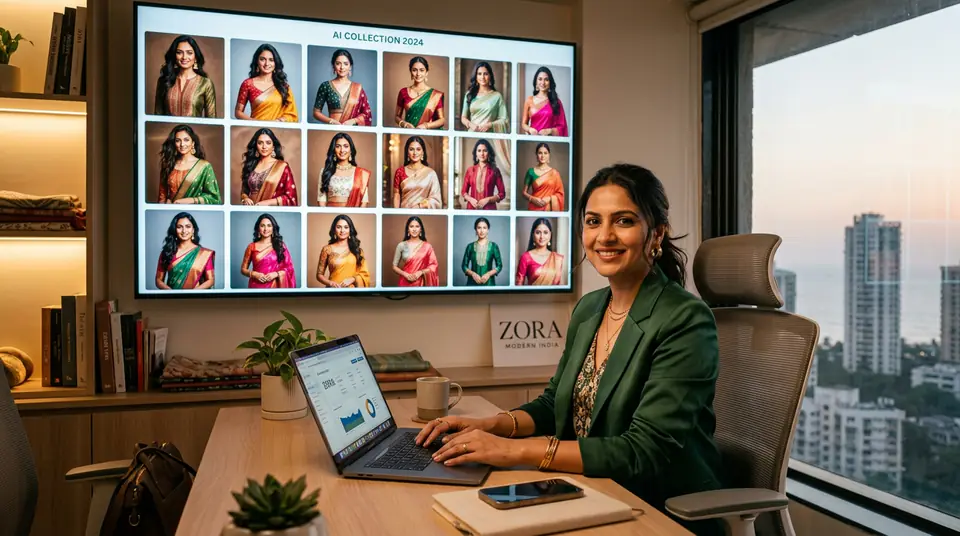
The key is ensuring your landing page photos feel like a natural, high-quality continuation of your ad. If your ad shows a model, your product page should show that same garment on a similar model, with similar styling cues, even if the pose is more static. This visual continuity is crucial. DrapifyApp can help here; it lets you generate numerous consistent ad creatives and product photos from a single garment image in about 3 minutes, ensuring that visual 'handshake' between your ads and your product listings is smooth and convincing. You can even lock the model's identity across different poses, maintaining brand consistency effortlessly across hundreds of SKUs.
Generate your own AI fashion photoshoot with Drapify — 50 free credits, no card required.
Can inconsistent catalogue photos really cost me sales?
Absolutely, inconsistent catalogue photos break trust and make shoppers question your brand's professionalism, directly impacting your conversion rate. Imagine browsing for a kurta set on Myntra or Ajio. You click on a listing that looks promising. The main image is bright, crisp, and on a great-looking model. Then you scroll down, and the next photo is blurry, on a different model with a weird pose, and the lighting is completely off. The third photo? A flatlay that looks like it was shot in someone's living room. What's your immediate reaction?
Customers might assume you're selling a knock-off, or that the quality is erratic. It makes them question if the product they think they're buying is actually what they'll receive. This uncertainty is a massive barrier to purchase. We saw this with our own brand; when we finally invested in consistent, high-quality photography for our product pages, our CVR jumped by nearly 15% within a month. Suddenly, customers felt confident enough to click 'Add to Cart'.
How many product photos do I need for good conversion?
For fashion, aim for a minimum of 5-7 diverse product photos per SKU to provide a comprehensive view and address common customer queries. This isn't just about showing the garment; it's about anticipating every question a customer might have before they buy. Think about what you look for when buying clothes online.
The goal is to eliminate doubt. When a customer has seen every angle, a close-up of the fabric texture, and how it looks on a model, they're much more likely to convert. Platforms like Amazon India often allow 7-9 image slots – use them all! With DrapifyApp, you can get 1K or 2K output resolution, allowing customers to zoom in and examine details without pixelation, reinforcing quality perception.
How can I test ad creatives to boost conversion, not just clicks?
To truly boost conversion, not just clicks, focus on A/B testing ad creatives against their corresponding landing page photo sets, using conversion metrics (like Add to Cart, Initiate Checkout, or Purchase) rather than just CTR as your primary indicator. Many marketers get stuck optimizing for CTR because it feels good to see those high numbers. But a high CTR on an ad that leads to zero sales is just expensive window shopping for your brand.
Here's how to think about it: if you have two ad creatives, 'A' and 'B', both driving similar CTRs, but 'A' leads to 1.5% purchases and 'B' leads to 0.8% purchases, then 'A' is your winner, regardless of which one had a slightly higher CTR. Your budget should flow to 'A'. You also need to test different types of ad creatives. Try one ad with a lifestyle model shot, another with a flatlay, and a third with a video. Ensure that whatever visual style you use in the ad is mirrored, consistently and professionally, on the product page it links to.
The biggest challenge here is generating enough varied, high-quality creatives to test efficiently. Traditional photoshoots are slow and costly, making rapid iteration impossible. This is where AI tools can be invaluable. DrapifyApp allows you to create hundreds of diverse ad-ready visuals and product catalogue images quickly and affordably (around ₹13-15 per photo), enabling you to run exhaustive A/B tests on your ad creatives and product page presentation. This speed lets you find winning combinations for seasonal campaigns, like Diwali or Eid, without missing deadlines or breaking the bank.