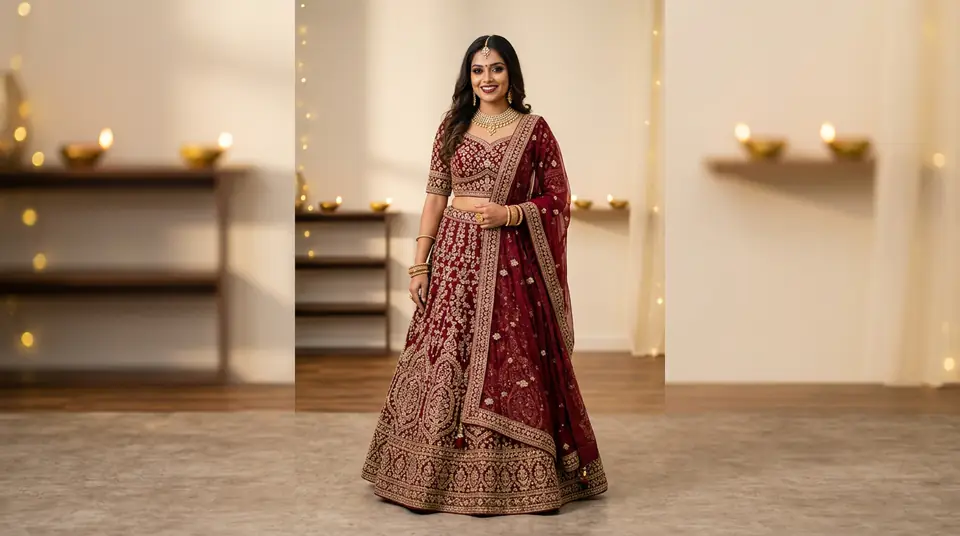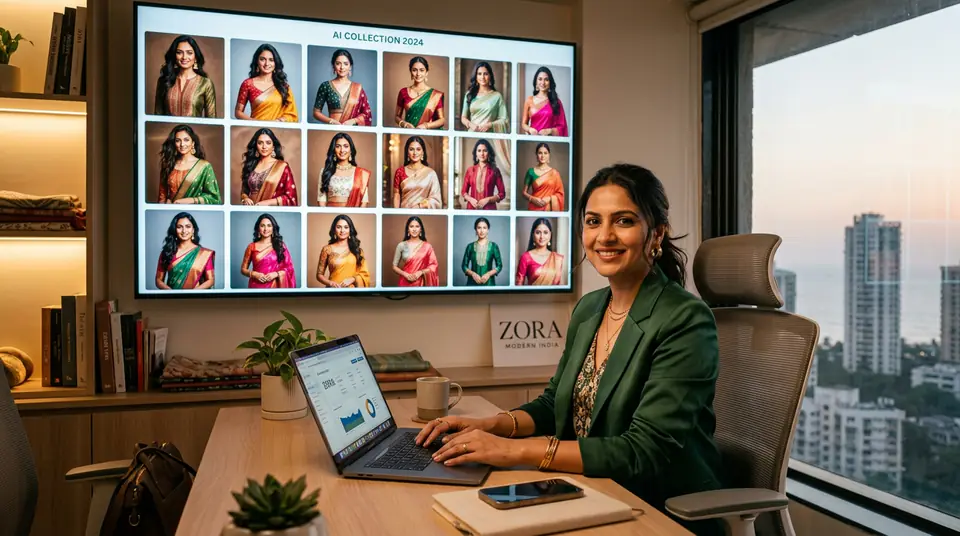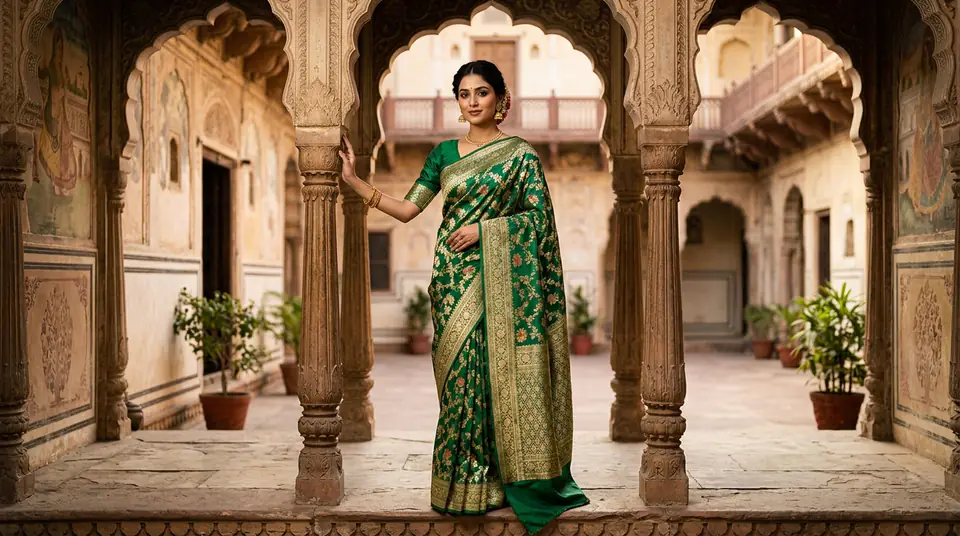
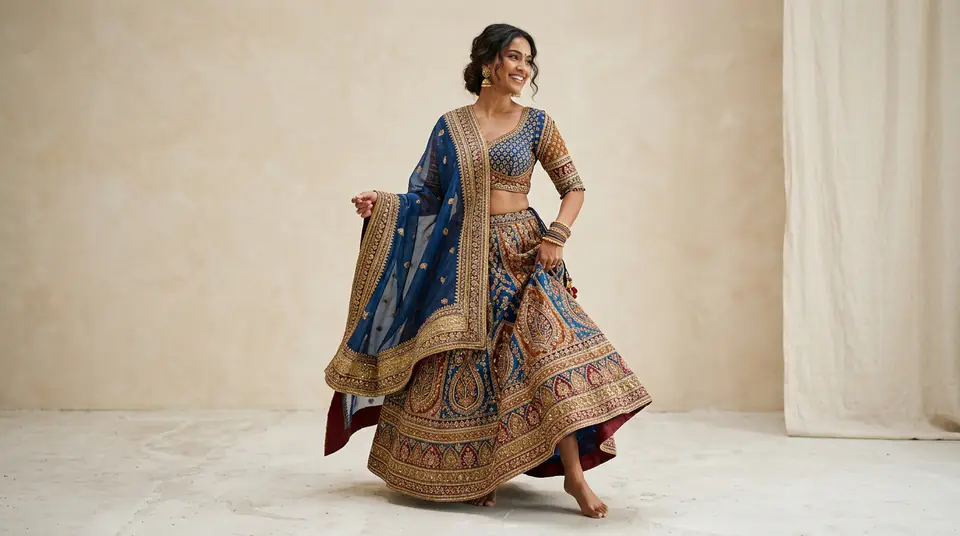
Myth #1: "You need a grand, elaborate studio shoot for every festival collection."
I get it. You want your festive collection to look premium, luxurious, like what the big brands splash across magazines. A full-day shoot with a top-tier Mumbai studio, multiple models, elaborate sets, maybe a grand heritage haveli for a backdrop—that feels like the way to convey quality and grab eyeballs during high-stakes seasons. It's how you signal "new" and "special." It made sense. Once upon a time.
But for 90% of brands, it’s a logistical nightmare and a cash sink. That high-end studio shoot takes planning. Weeks, sometimes months, for talent booking, styling, location permits, and approvals. By the time you get the edited photos back, half the festival window is gone. Poof. And if a garment gets a minor design tweak or you add a new colour? Good luck reshooting that specific item within your sprint. You’re sunk. The speed to market with good enough imagery, consistently, often trumps perfection. You need volume, fast. Not a photoshoot that feels like producing a Bollywood movie.
We’ve seen brands in Jaipur miss the Raksha Bandhan rush by seven days because they were waiting for their “perfect” shoot edits. They lost an estimated ₹2.5 lakhs in potential sales just on their top 10 SKUs, purely due to late listings. A single studio day can easily set you back ₹40,000-₹70,000 before you even pay models, stylists, or editors. That’s for one collection. Imagine scaling that for an entire festive lineup.
Myth #2: "Authenticity means shooting with real models, every time."
Customers want to see real people, relatable faces, diversity. An actual human model makes the clothing feel alive, aspirational. You think AI models look fake, uncanny, or just not "Indian enough." It’s about building trust, after all. And that’s a fair point. For a hero campaign, a human touch can be magic. For hundreds of SKUs? Not so much.
Yes, human models have their place, especially for flagship campaigns or editorial features. But for the sheer volume of SKUs and variants needed for a festival catalogue – imagine 15 saree designs, each in 4 colours, plus coordinating blouses – shooting every single one on a human model is a colossal waste of time and money. Think about the logistics. Different models might be booked for different days, leading to inconsistent skin tones, poses, and overall vibe across your collection. Customers primarily want to see the product clearly, how it drapes, the texture, and its fit. Consistency and availability across all variants are what drive sales at scale, not just a human face.
A large ethnic wear wholesaler in Surat we worked with was spending over ₹80,000 per month just on model fees for their new collections. Their average product page conversion rate barely moved. It sometimes even dropped when different models were used across similar products, causing visual dissonance and confusing buyers. They were paying for inconsistency.
Example: The Diwali Saree Scramble
Remember that saree manufacturer from Varanasi? They had 50 new designs, each in 3 colourways, for Diwali. Traditional shoot? Minimum 10 days of shooting, another 7-10 for editing. Total cost upwards of ₹3 lakhs. They finally got their catalogue online 5 days before the first big sale day, missing out on crucial early bird orders. Competitors who used faster methods were already raking in sales while they were still waiting for files. That’s a direct revenue hit.
Generate your own AI fashion photoshoot with Drapify — 50 free credits, no card required.
Myth #3: "Faster means cheaper, so I'll just find the cheapest photographer."
You’re on a tight budget. Every rupee counts. So, you look for the lowest quote, the freelancer on Instagram offering a "festival special" package for ₹500 per photo. It seems like a smart business decision to cut costs, right? Optimizing expenses. Maximize profits. Sure.
This is a classic false economy, and it burns brands every festival season, without fail. A cheap photographer often means rushed work, inconsistent lighting, poor colour accuracy, and terrible editing. You end up with photos that look amateurish, pixelated on zoom, or worse – get rejected by marketplaces like Myntra or Amazon India for not meeting strict guidelines (think non-white backgrounds, incorrect aspect ratios, low resolution). Then what? Reshoot. Pay more. Lose even more time. Ultimately, you pay twice, or worse, lose sales because your listings never went live or looked terrible. Quality matters, especially when competition is fierce.
We tracked a Myntra seller who opted for a ₹400/photo deal for their kurtis. 30% of their images were rejected due to poor background consistency and low resolution, straight from the Myntra QA team. They had to reshoot 150 SKUs, spending an additional ₹75,000 and losing 12 critical festival sales days. That initial "saving" evaporated, fast.
Myth #4: "You need to shoot every colour variant separately."
To accurately represent your product, you simply must photograph each colour of a kurti, or each print variant of a dupatta, individually. Anything else feels like cutting corners, and customers will notice. You think digital manipulation can't capture the subtle nuances of fabric, the exact shade. It’s a purist’s approach.
But what if I told you that approach is costing you a fortune in both time and money? Modern image processing, especially with AI, has advanced dramatically. You can get exceptional quality colour variants generated from a single master shot. This isn't just a cost-saver; it’s a massive time-saver, critical during festival sprints. Imagine a lehenga available in six vibrant shades. Instead of six separate, complex photoshoots, you get one perfect shot and generate the rest. The consistency across variants, with an identity-locked model, also looks incredibly clean and professional on your product page. Platforms like DrapifyApp do this incredibly well, taking a single photo and generating all your variants perfectly, even across different poses and scenarios. No reshoots, just a few clicks.
Brands using DrapifyApp for colour variants reported a 70% reduction in their variant photography costs and a 5x faster catalogue turnaround time for multi-colour products compared to traditional methods. A single saree variant shot traditionally can cost ₹1000-₹1500; generating a variant through AI using platforms like DrapifyApp is about ₹13-15 per photo. That’s not a typo. ₹13. Not ₹1300.
Example: The Variant Headache
A small boutique in Lucknow specialized in custom-dyed chikan suits. For Eid, they had 20 designs, each in 5 different pastel shades. Shooting all 100 variants traditionally would have cost them over ₹1 lakh and taken weeks of studio time and post-production. They chose to shoot one master for each design and use AI to generate the colour variants. Their entire collection was online in four days for less than ₹15,000. Big difference in speed, cash flow, and mental sanity for the owner.
Myth #5: "My old catalogue photos are good enough for this season."
If it ain't broke, don't fix it. You invested in those photos last year, and the product is still selling. Why spend more money? You think customers don't really care as long as they can see the product. You call it resourcefulness. I call it lost opportunity.
Stale content is digital dust, plain and simple. Especially in the fast-moving festival segment, customers are looking for what's new, what's fresh, what feels current. Using last year's photos signals apathy, not resourcefulness. Your listings blend into the background. Your ads using old creatives experience severe fatigue, with click-through rates plummeting and cost-per-clicks skyrocketing. People get tired of seeing the same thing. You wouldn’t wear the same outfit to every Diwali party, would you? Your digital storefront deserves the same refresh.
An analysis of Myntra sellers showed products updated with fresh, model-based imagery for Diwali 2023 saw, on average, a 20-25% increase in click-through rates and a 15% uplift in conversion compared to identical products using older visuals from the previous year. New photos aren't just an expense; they're an investment with a clear, measurable return. Freshness pays. Literally.