What's wrong with most co-ord set photography today?
Most co-ord set photography today fails to highlight the coordination and versatility that makes these garments so popular, often treating them as two separate pieces instead of a cohesive look. I see it every day on Myntra, Ajio, even Amazon India. Sellers will photograph the top and the bottom individually on a flat lay, or put them on a model but with awkward styling that doesn't showcase how the pieces truly complement each other. It's like selling a car by showing only the engine and a tire.
The problem isn't just about aesthetics; it costs sales. When a customer can't visualise the complete outfit, they hesitate. They ask themselves: 'Will these pieces actually go together?', 'How does the top drape over the pants?', 'Can I wear the top with something else?' This uncertainty translates directly into lost conversions and, often, higher return rates when expectations aren't met. I've seen brands in Mumbai spend ₹30,000 on a studio shoot for a new festive co-ord collection, only to have their sales slump because the catalogue photos didn't convey the magic of the ensemble. They focused on parts rather than the whole.
Why are co-ord sets so hard to photograph properly?
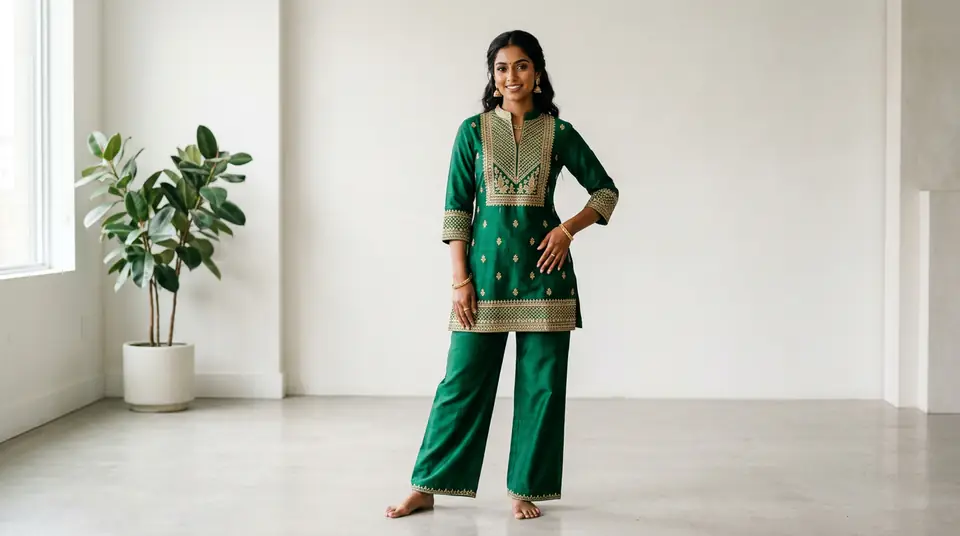
Co-ord sets are uniquely challenging because you're not just selling a top and a bottom, but an idea — a complete, styled outfit that needs to be presented both together and sometimes separately, all while maintaining brand identity and fit accuracy. Think about it: a saree is one garment, complex in drape, yes, but still one unit. A co-ord set requires you to show the interaction between two or more pieces. How does that flared kurti flow over those palazzos? Does the crop top sit perfectly with the high-waisted skirt?
Do I need a model for every co-ord set style?
Traditionally, yes, you'd need a model for every unique co-ord set to showcase drape, fit, and styling, which is where costs explode for small and mid-sized brands. Imagine you have 50 new co-ord set designs for the Eid collection. Hiring a good model for a full day in Bangalore costs ₹10,000-₹20,000. Add in a photographer (₹15,000-₹25,000), stylist (₹5,000-₹10,000), makeup artist (₹3,000-₹7,000), studio rental (₹8,000-₹15,000), and post-production (₹100-₹300 per photo). You're easily looking at ₹50,000 to ₹1 lakh per day, which might cover only 10-15 styles if you're lucky. And if you have colour variants? Reshoot everything.
This traditional approach means many brands either skip models entirely, opting for flat lays or ghost mannequins that just don't sell as well, or they drastically limit their catalogue, missing out on crucial sales. I remember one boutique owner in Chennai who wanted to launch 30 co-ord sets for the wedding season but could only afford to shoot five on a model. The others just sat in inventory. It's a real bottleneck.
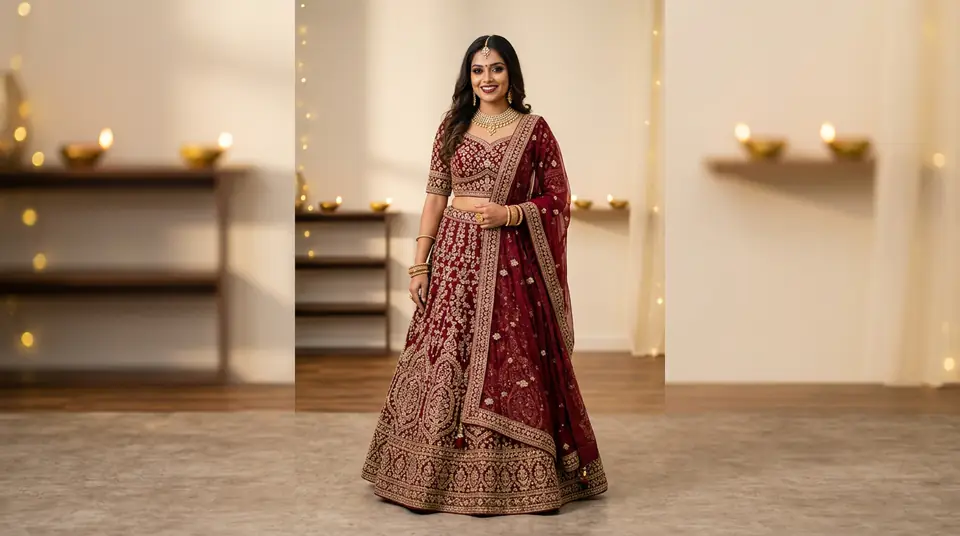
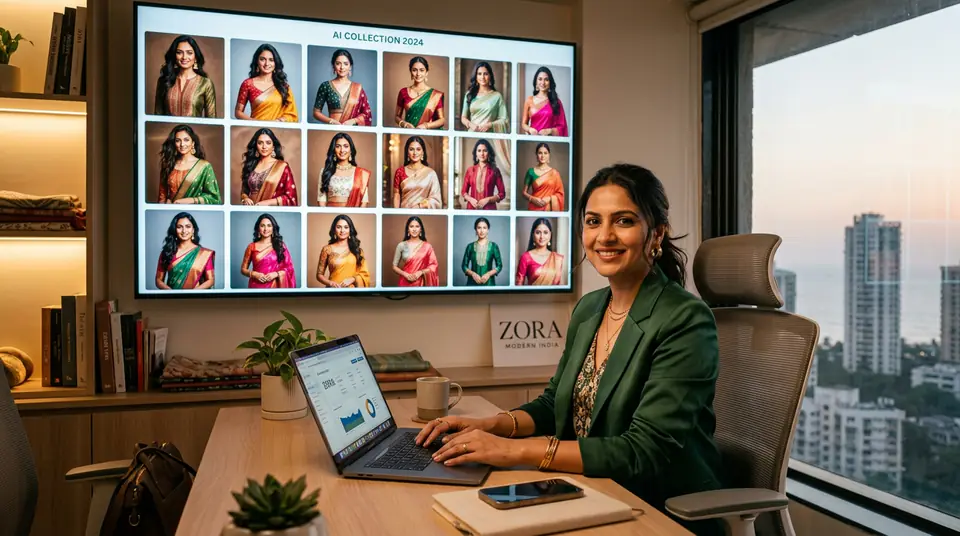
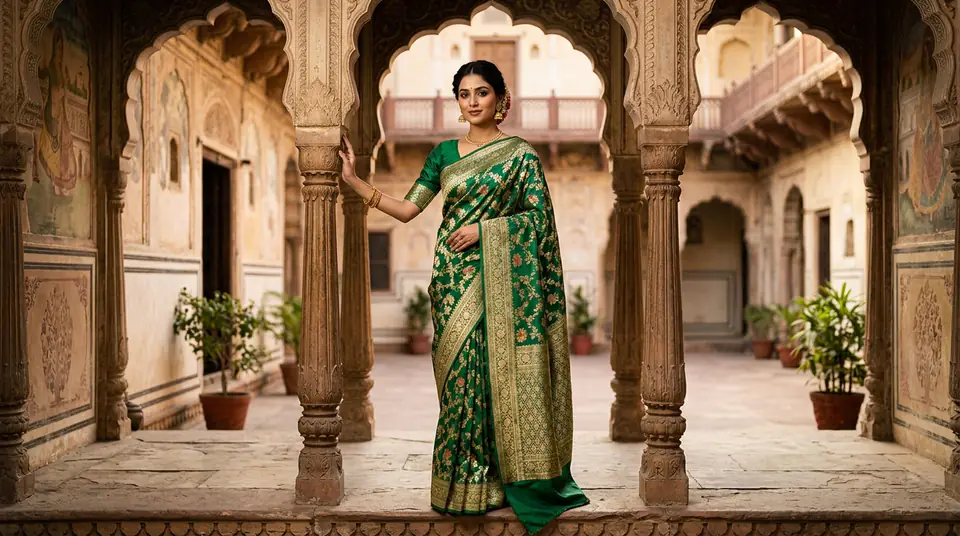
This is precisely where platforms like DrapifyApp change the game. You don't need a live model for every single co-ord set. Instead, you can upload a single product photo of your garment, and the AI generates studio-quality images on a range of diverse, identity-locked virtual models. You pick the poses, the background, the style. This means one co-ord set can have dozens of looks without a single extra rupee spent on a physical photoshoot. It’s like having an entire studio at your fingertips, 24/7.
Generate your own AI fashion photoshoot with Drapify — 50 free credits, no card required.
How can I make my co-ord set photos look premium on a budget?
Achieving a premium look for your co-ord set photos on a budget means focusing on consistent lighting, clear styling, and leveraging smart tools that cut down traditional studio costs without compromising quality. You don't need a fancy studio to start. A well-lit corner near a window in your home or office can work wonders. Soft, even natural light is your best friend; harsh shadows are not.
Can AI really photograph my co-ord sets like a studio?
Yes, AI fashion photography can now realistically capture your co-ord sets with studio-quality results, often indistinguishable from traditional photoshoots, at a fraction of the time and cost. I know, I was a sceptic too. Spent years in studios, saw the magic happen firsthand. But the tech has moved fast. What once took a full day, a team of five, and upwards of ₹50,000, now takes minutes and costs closer to ₹15 per photo.
Platforms like DrapifyApp are designed for this exact challenge. You upload a single image of your co-ord set — say, a white background flat lay. Then, you choose from a library of diverse Indian models and various poses. The AI 'drapes' your garment onto the model, making sure the fabric falls naturally, wrinkles are realistic, and the fit is accurate. It's not just pasting; it's simulating real-world physics. You can even generate multiple colour variants of the same co-ord set without needing to reshoot anything. This is huge for inventory management!
~3 minutes
Time per photoshoot
~₹13-15
Cost per photo
1K/2K/4K
Output resolution
Unlimited
Colour variants
For co-ord sets specifically, DrapifyApp ensures the top and bottom are treated as a single, styled entity, not disparate pieces. You get consistent identity-locked models across all your listings, building brand recognition. Plus, with failed shots auto-refunded and credits that never expire, it's a no-brainer for brands in Coimbatore or Pune looking to scale without the headache of traditional photography. They even give you 50 free credits to start. You can test it yourself.
What's the best way to list co-ord sets on Myntra or Ajio?
To effectively list co-ord sets on marketplaces like Myntra or Ajio, you need a mix of full-body shots showcasing the complete outfit, individual product shots of the top and bottom, and detailed close-ups, all adhering to their specific image guidelines. Myntra, for instance, has strict requirements for aspect ratios, background colours (usually pure white or light grey), and model consistency. If you don't follow these, your listing can get demoted or even rejected.
Remember, the goal is to eliminate doubt. Give the customer every angle, every detail, every styling possibility. This comprehensive visual storytelling is what drives conversions and reduces those dreaded returns. For brands with dozens of co-ord sets, especially for festive seasons like Diwali, getting this right with traditional methods is a logistical nightmare. AI can make this checklist achievable for every single SKU, every single time.