The Cost of Complacency: Your Photos Are Sabotaging Your Sales
In India's hyper-competitive fashion ecommerce landscape, every rupee and every click counts. Yet, a silent killer is sabotaging countless Indian fashion brands: the fatal flaw of using identical product photos across their Direct-to-Consumer (DTC) website and major marketplaces like Myntra, Ajio, Flipkart, and Amazon India. You think you're saving time, but you're actually burning cash and leaving lakhs on the table. This isn't just about 'good' photos; it's about strategically optimised DTC marketplace photography designed to convert specific audiences on specific platforms.
Are you struggling to break past a certain sales ceiling? Is your advertising ROI dwindling? Are customers buying from your website only to return the product, citing discrepancies? The culprit often lies in your undifferentiated visual strategy. Your competitors, savvy Mumbai designers and Surat wholesalers alike, are already adapting. They're winning by speaking to each customer segment with the visual language they understand. If you're not, you're not just falling behind – you're actively losing money every single day. The time for generic photography is over; the era of precision, data-driven visual strategy is here. And if you don't jump on it today, you'll be left playing catch-up for months, possibly years.
The Double Whammy: Why Your Marketplace Photos Fail Your DTC Site
Let's be brutally honest: the kind of product photography that excels on a marketplace like Myntra or Amazon India is fundamentally different from what performs on your beautifully curated DTC Shopify store. Marketplaces are transaction-driven. Buyers are often searching for a specific item, comparing prices, and making quick decisions. This demands clear, uncluttered, often white-background product shots that meet strict compliance guidelines. They need to see the product, plain and simple.
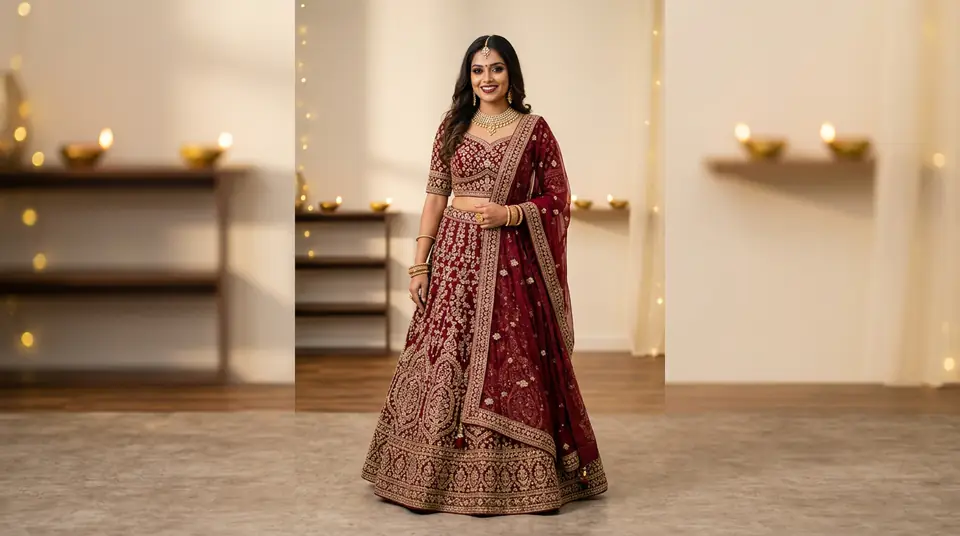
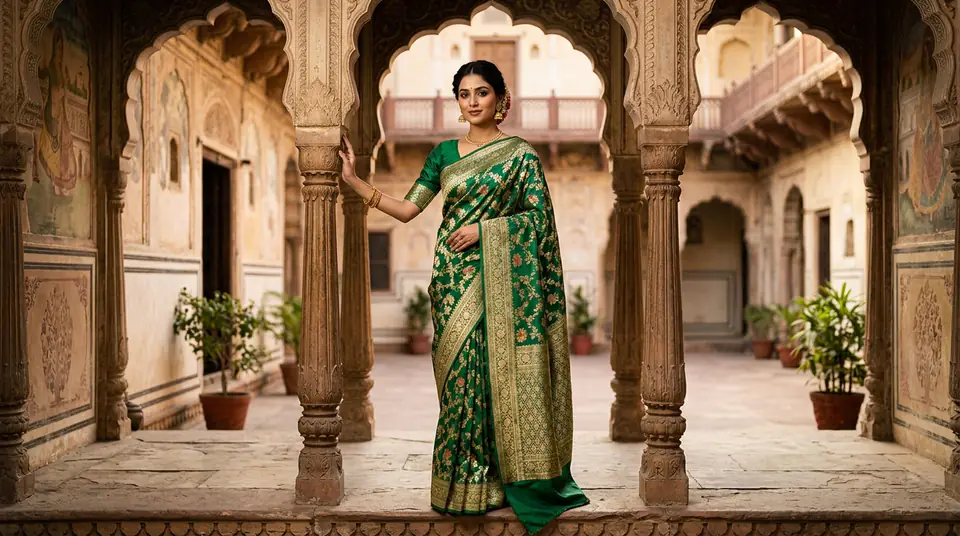
However, these sterile, high-volume shots are a death sentence for your DTC brand experience. Your own website is where you tell your story, build emotional connections, and foster loyalty. It’s where you justify a premium price point and differentiate yourself from the noise. Pure product-on-white photography, while essential for Myntra listings, offers zero aspiration, no context, and no lifestyle. It fails to convey your brand's unique aesthetic, the fabric's flow, or how that kurti set would look at a Diwali party. Your visitors click away, unimpressed, seeking brands that actually speak to them visually. You've brought them to your branded home, but then shown them a bare, uninviting catalogue. It’s no wonder your DTC conversion rates are lagging.
The Silent Killer: How Your DTC Photos Underperform on Marketplaces
Now, let’s flip the coin. Your stunning, aspirational DTC lifestyle photos – the ones shot with natural light, showcasing models lounging in elegant settings – are fantastic for your brand narrative. But trying to shoehorn them into marketplace listings is a grave mistake that will cost you sales and visibility. Marketplaces have stringent requirements, not just for aesthetic but for technical specifications:
Myntra: Often demands high-resolution, pure white background images for primary product shots, specific aspect ratios, and clear detail shots. Overly artistic or busy lifestyle images confuse buyers and often get rejected or flagged, burying your listings in search results. Ajio: Similar emphasis on clean, detailed product views. Too much styling or complex backgrounds can distract from the garment itself, leading to lower engagement and higher bounce rates. Flipkart & Amazon India:* Algorithmically favour listings with clear, high-quality, compliant images that load fast. Your large, stylized DTC photos, while beautiful, might load slower, feature non-compliant poses or accessories, and ultimately penalize your product's ranking. They struggle to communicate essential product information at a glance.
Imagine listing a gorgeous saree on Myntra with a heavy lifestyle shot as the main image. Shoppers scroll past, unable to discern the actual pattern or fabric details quickly. They move to a competitor with a crisp, clear product shot. You just lost a sale because your photos, while 'pretty', weren't optimised for the marketplace's specific demands and customer behaviour. This is where your brand's growth hits a wall.
Generate your own AI fashion photoshoot with Drapify — 50 free credits, no card required.
The Hidden Lakhs You're Losing: Real Costs of a Mismatched Strategy
Still think a single photography approach is 'efficient'? Let's talk numbers. The cost of a mismatched DTC marketplace photography strategy isn't theoretical; it's eating into your profit margins right now.
Consider this: One Bangalore ethnic wear brand, 'Saanvi Styles', was stuck at ₹12 lakhs/month revenue, pouring money into ads but seeing diminishing returns. Their 'hybrid' photo catalogue was failing them. After optimizing their visual assets with platform-specific photos using DrapifyApp, they cut their Myntra product return rate by a staggering 8% and boosted their DTC site conversion by 2.5 percentage points in just three months. This granular focus led to an additional ₹3.5 lakhs in monthly revenue without increasing their ad spend. Their old approach was costing them hundreds of thousands every quarter.
Beyond direct sales, you're paying in:
Higher Return Rates: When photos don't accurately represent a product (too styled for marketplace, too plain for DTC), customer expectations are mismanaged, leading to returns that eat into profits and damage seller ratings. Wasted Ad Spend: If your product photos don't convert on the landing page or listing, every rupee you spend on driving traffic is less effective. You're essentially paying to show people products they won't buy. Lost Brand Equity:* A disjointed visual experience across platforms confuses customers and dilutes your brand message. In a crowded market, consistency and targeted communication are paramount.
These hidden costs are silently eroding your potential. During peak seasons like Diwali, Eid, or Raksha Bandhan, these inefficiencies multiply, costing you lakhs in missed opportunities. The only way out is a strategic, differentiated approach.
DrapifyApp: Your Strategic Weapon for Dominating Both DTC & Marketplaces
This is where DrapifyApp isn't just an option; it's a necessity. We understand the nuanced demands of the Indian fashion market and the critical difference between DTC marketplace photography. DrapifyApp empowers you to create perfectly tailored, high-converting product visuals for every platform, in seconds, without breaking the bank.
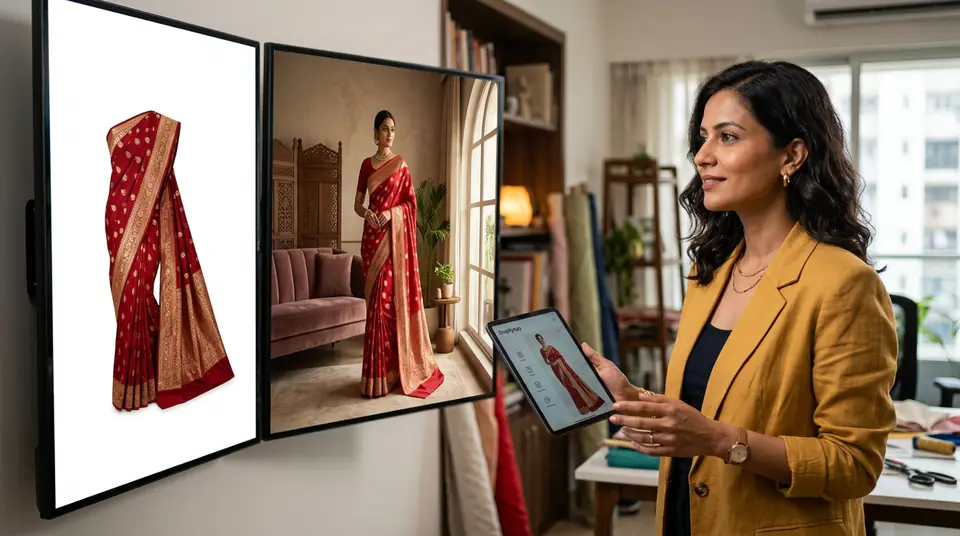
Imagine generating crisp, compliant, white-background product shots for your new kurti set collection for Myntra – all with accurate draping and perfect lighting – within minutes. Then, using the same initial image, you switch to DrapifyApp's innovative design studio. Choose from a vast library of custom backgrounds, add virtual models, and craft an aspirational lifestyle shot that perfectly captures your brand's essence for your Shopify store or Instagram ads. All within the same platform, leveraging powerful AI fashion photoshoots.
DrapifyApp's capabilities are designed for scale and precision:
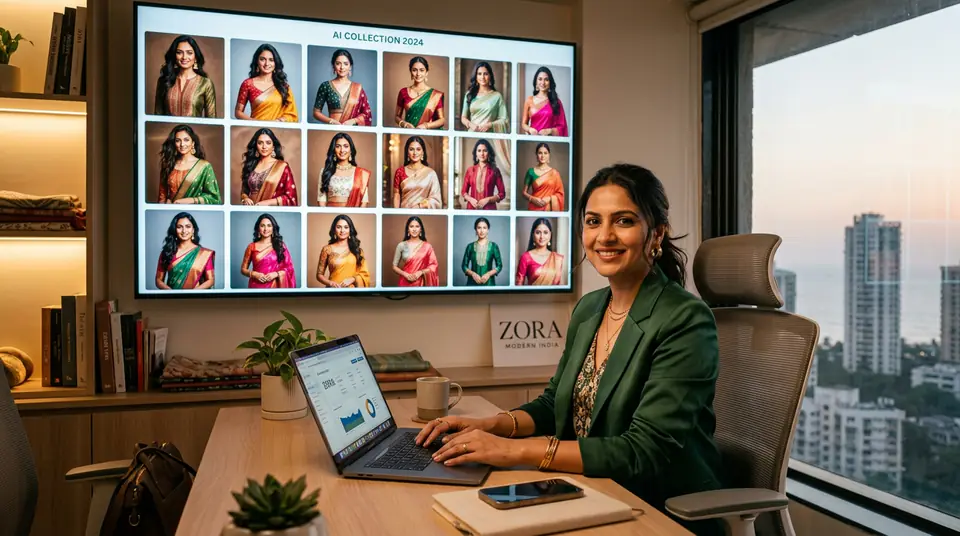
Instant AI Fashion Photoshoots: Go from product photo to professional catalogue shots in seconds. Affordable Scaling: Get started at just ₹499 for 450 credits. Roughly 15 credits per photo for 1K resolution and 25 credits for stunning 2K images – a fraction of traditional shoot costs. Versatile Product Support: Whether you sell kurti sets, sarees, shirts, western wear, kids wear, footwear, or jewelry, DrapifyApp handles it all. Customisable Design Studio: Create compelling brand stories with custom backgrounds and virtual models tailored for your DTC audience.
Stop compromising. Start converting on every platform with photos that are built to perform.
Action Steps: Blueprint for a Dual-Platform Photo Strategy (Starting Today)
It's time to stop the bleeding and implement a winning strategy. Here’s your immediate action plan:
1. Audit Your Current Photos: Go through your product listings on Myntra, Ajio, Flipkart, and your DTC site. Honestly assess if your photos are meeting the specific demands and visual styles of each platform. Are marketplace images too busy? Are DTC images too generic? Identify the gaps.
2. Define Platform-Specific Photo Needs: For marketplaces, prioritise clarity, compliance, and product focus (e.g., at least 6 distinct shots for Myntra: front, back, side, detail, fabric close-up, and model shot with simple pose). For your DTC site, focus on storytelling, aspiration, and unique brand identity (lifestyle shots, detailed texture, creative angles, how-to-style imagery).
3. Leverage DrapifyApp for Differentiated Content: This is where you transform your strategy into reality. Upload your raw product images to DrapifyApp. Use the AI to generate: Marketplace-Ready Images: Crisp, white-background, compliant shots tailored for high-volume sales on Myntra, Ajio, and Amazon India. DTC-Ready Images: Experiment with DrapifyApp's design studio to create rich, engaging, aspirational lifestyle photos with diverse backdrops and virtual models that resonate with your target audience on your own website.
4. A/B Test and Optimise: Don't set and forget. Continuously test different visual approaches on both your DTC site and marketplaces. Monitor conversion rates, return rates, and engagement. DrapifyApp makes iterative testing incredibly affordable, allowing you to quickly find what works best.
The Time to Act is NOW – Don't Let Your Competitors Win
The Indian fashion ecommerce market is unforgiving. Competitors are constantly innovating, and if you're not optimising every touchpoint, you're not just stagnant; you're falling behind. Your current 'one-size-fits-all' approach to DTC marketplace photography is an outdated relic that is costing you lakhs in lost sales and missed opportunities, especially during critical sales periods like upcoming festivals. Don't let another customer abandon your cart because your photos failed to communicate effectively. The solution is clear, accessible, and ready for you to leverage today.
DrapifyApp puts the power of hyper-targeted visual content creation directly into your hands. Stop wondering why your sales are plateauing. Start creating high-converting, platform-specific product photography that truly connects with your audience, wherever they are shopping. The future of your fashion brand depends on it. Don't be the brand that gets left behind because you were too slow to adapt.