The ₹15 Lakh Wake-Up Call in Ahmedabad
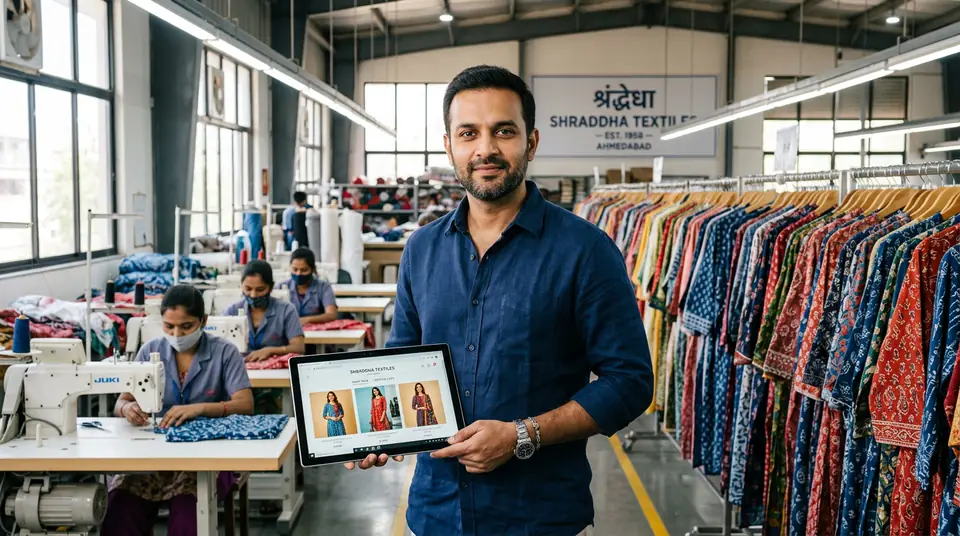
It was a Tuesday afternoon in Ahmedabad, the kind where the heat makes the air thick enough to chew. For Ankit Patel, a third-generation garment manufacturer, the air in his office felt even thicker. The email on his screen was short, polite, and brutal. A major retail chain, one of his biggest buyers, had just cancelled a confirmed ₹15 lakh order for his new line of block-printed cotton kurtis. Reason? “A shift in seasonal forecasting.” Which was corporate-speak for “we changed our minds.” Suddenly, Ankit was sitting on a mountain of beautiful, finished garments with nowhere to go. His own D2C Shopify store, Aavani Jaipur, which he’d proudly launched six months prior, was doing a measly ₹50,000 a month. It was a hobby, not a lifeboat. The math was horrifying. The problem wasn't the product; his family had been perfecting their craft for 50 years. The problem was the photos on his website, shot on a ghost mannequin in a corner of the factory. They looked flat, lifeless. Dead.
He was a manufacturer, a master of production lines and supply chains. He thought in terms of cost per piece, metres of fabric, and shipping containers. He hadn't realised that in D2C, the most important machine isn't the sewing machine. It's the camera.
Why Does a Manufacturer's First D2C Attempt Usually Fail?
A manufacturer's first D2C attempt usually fails because their B2B operational mindset, especially around product photography, is too slow and costly for the fast-paced D2C market. In the B2B world, you shoot a catalogue once a season. You book a studio for two days, shoot your 100 new designs, and send the hardbound lookbook to your buyers. The sales cycle is six months long. D2C is a different beast entirely. Your customer wants to see ten new products a week. Your Facebook ads need fresh creatives every four days. Your sales cycle is six minutes long. You can't run a D2C brand on a B2B timeline. Ankit was trying to fight a daily war with a semi-annual weapon.
“We used to plan a shoot for weeks. Coordinate with a studio, book a model, get a stylist, a makeup artist... the whole circus. It was an event. It made sense when we were showing a collection to twenty wholesale buyers. But for a website where a thousand people visit every day? The 'event' model was bleeding us dry and we didn't even know it.”
The 'Solution' That Cost ₹30,000 and Solved Nothing
The conventional solution of hiring a local photography studio often fails because the high cost, slow turnaround, and coordination overhead make it impossible to scale for a large catalogue. Ankit, determined to fix his photo problem, did what he thought was the right thing. He found a well-regarded photographer in Ahmedabad. The day rate was ₹30,000, model included. It felt like a massive investment. They spent a full day shooting 20 of his best-selling kurtis. It was a long, frustrating day of adjusting lights and fixing drapes. Then, he waited. It took nearly ten days to get the edited photos back. He eagerly uploaded them to his Shopify store, updated his ads, and waited for the sales to pour in. They didn’t. The conversion rate crawled up from a pathetic 0.4% to a slightly-less-pathetic 0.5%. He’d spent a fortune and a week and a half to achieve... nothing. He had another 180 SKUs from the cancelled order alone. Doing this for all of them was unthinkable.
| Factor | Traditional Studio Shoot | Ankit's D2C Requirement |
|---|---|---|
| Cost per Batch (20 SKUs) | ₹30,000+ | Sustainable & low |
| Time-to-Live | 10-14 days | < 48 hours |
| Scalability | Low (limited by studio time) | High (hundreds of SKUs/month) |
| Flexibility | Low (reshoots are expensive) | High (test new styles instantly) |
Generate your own AI fashion photoshoot with Drapify — 50 free credits, no card required.
What is a Fabric-to-Catalogue Workflow?
A fabric-to-catalogue workflow is a system that allows a garment to go from a physical sample to a live, model-photographed product listing online in under 48 hours, bypassing traditional studio logistics. It's a fundamental shift from thinking of photography as a big, one-time project to treating it as a daily, in-house process, just like stitching or packing. The goal isn't to create award-winning art; it's to get a commercial-quality, high-converting image onto a product page as fast as humanly (or technologically) possible. This speed becomes the manufacturer's biggest competitive advantage, allowing them to test new designs, react to trends, and keep their online store constantly fresh without breaking the bank.
Ankit had never heard the term, but in his desperation, scrolling Instagram late one night, he stumbled upon the tool that would enable it. He saw an ad for DrapifyApp, promising AI fashion photoshoots from a single garment photo in minutes. It sounded like science fiction. He was deeply skeptical. But he was also desperate.
The Switch: From a Single Flat Photo to a Full Catalogue
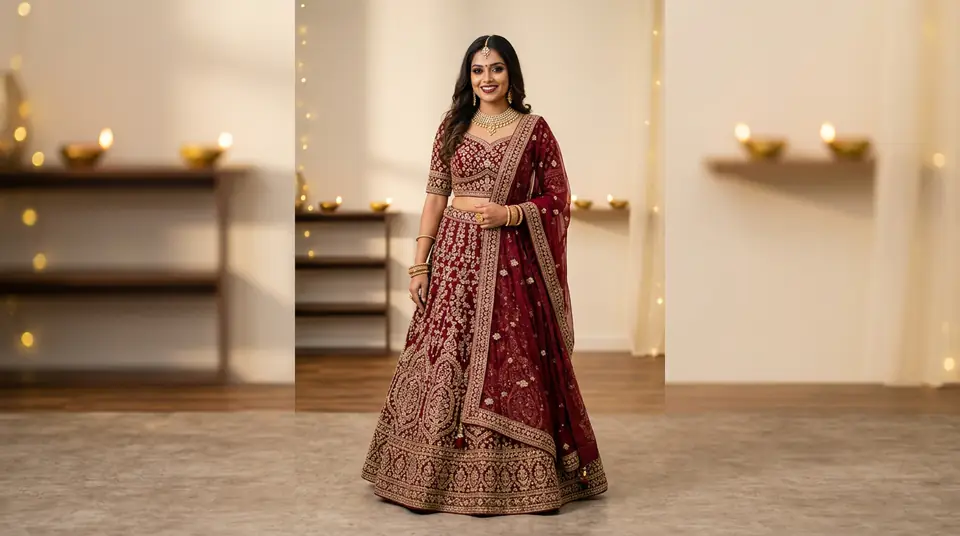
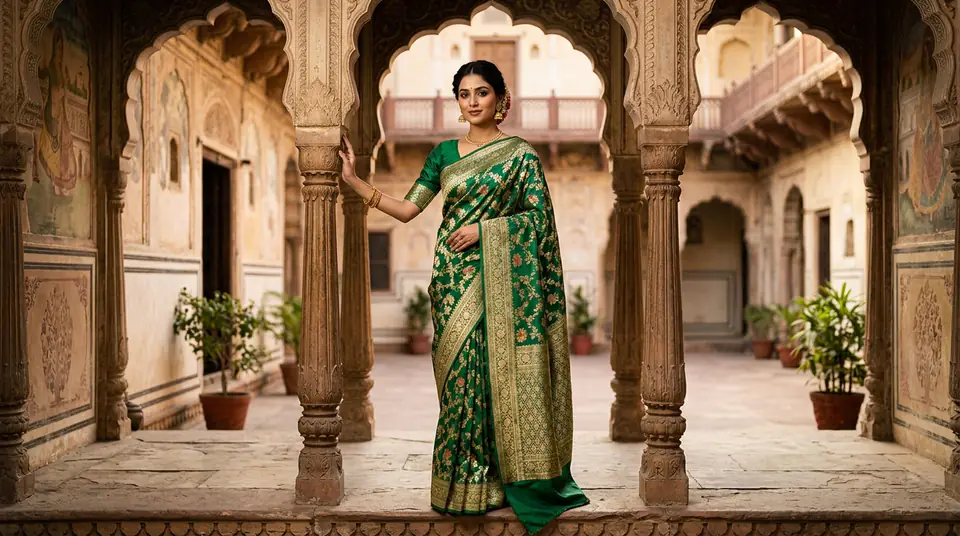
The switch to an AI-driven workflow involved taking one clean flat-lay photo of a garment and using software to generate a complete set of on-model images for ecommerce listings. Ankit decided to use the 50 free credits Drapify offered. He took one of his best-selling kurtis, laid it flat on a white sheet on the factory floor, and took a picture with his own phone. He uploaded the image, held his breath, and clicked 'Generate'. Three minutes later, he had ten photos of his kurti on a professional-looking model, in different poses, against clean backgrounds. The lighting was perfect. The drape looked natural. It was better than the ₹30,000 shoot.
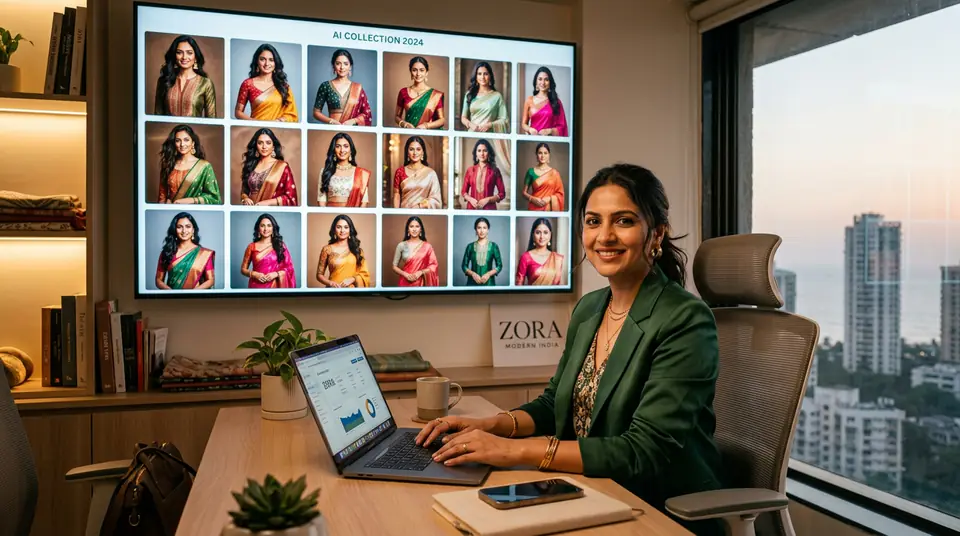
It was his 'aha' moment. The next afternoon, he photographed his top 20 SKUs himself. By evening, he had over 200 new model images ready to go. The cost was staggering in its difference. Instead of ₹1,500 per SKU at the studio, he was generating superior shots for about ₹130 per SKU. He could launch a new product online the same day it came off the assembly line. He could create entire catalogues for different marketplaces, like generating photos for Myntra's specific guidelines, without booking a single extra minute of studio time. The middleman wasn't the wholesaler anymore; it was the entire photography industry.
The Numbers Don't Lie: Before and After AI Photography
Adopting an AI photography workflow directly improved key D2C metrics by slashing costs, increasing conversion rates, and dramatically shortening the time-to-market for new products. For Ankit, the results were almost immediate. He replaced the old mannequin and studio shots on his top 20 products. The impact on his Shopify dashboard and Meta Ads manager was profound.
₹30,000 -> ~₹2,600
Shoot Cost / 20 SKUs
10 days -> <48 hours
Time to Go Live
0.5% -> 1.8%
Shopify Conversion Rate
₹850 -> ₹510
Meta Ad CPA
His monthly revenue shot past the ₹3 lakh mark within two months. The cancelled ₹15 lakh order was no longer a disaster; it was an opportunity. He could now afford to experiment, to launch small batches and see what customers actually bought before committing to a big production run. He was finally thinking like a D2C brand.
Ankit's Advice: 'Stop Thinking Like a Wholesaler.'
Ankit's primary advice for other manufacturers is to abandon the wholesale batch-processing mindset and embrace the speed and agility required for direct-to-consumer sales. This means treating your online store not as a clearance channel, but as your new flagship, where your ability to list new products quickly is your primary asset. It's about building a system for scaling bulk catalogue photography that works at the speed of ecommerce, not the speed of a shipping container.
“The market doesn’t wait for your photographer to have a free Tuesday,” Ankit says now, standing in that same factory, though it feels different, more energetic. “The market wants to see what’s new, right now. If you can’t show it, you don’t exist. For years, we were experts at making clothes. The last year taught us how to sell them. And it all started when we fixed the pictures.”