01.1. Influencers Get Likes, Catalogue Photos Get Sales
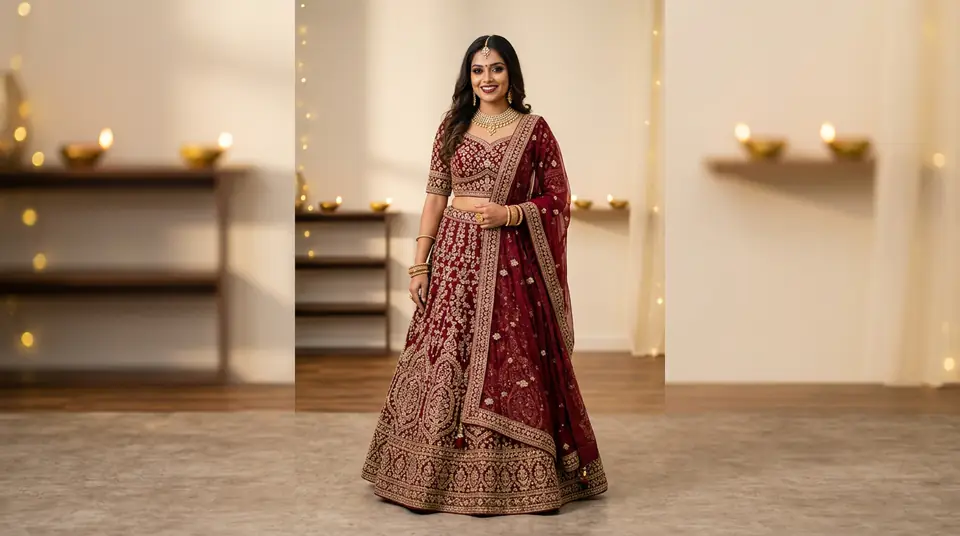
Influencers are great for top-of-funnel brand awareness. They put your gorgeous new lehenga in front of their followers, generate buzz, maybe even drive some traffic to your site. Awesome! But then what? When a potential customer lands on your product page, they’re not looking for another lifestyle shot. They're in purchase mode. They want to know exactly what they're getting for their hard-earned ₹2,500. Your catalogue photos are the last, crucial touchpoint. If they're blurry, inconsistent, or just plain boring, that customer isn't adding to cart. They're bouncing. It’s a harsh truth, but I've seen brands waste ₹5 lakh on influencer campaigns, only to lose half that traffic due to shoddy product visuals.
02.2. Shoppers Demand Detail, Not Just Vibe
Think about how you shop online for clothes. Do you make a decision based on one dreamy shot of an influencer twirling in a saree? Probably not. You scroll down. You zoom in. You check for fit, fabric, stitching. Influencer content sells a dream, an aspiration. Your catalogue photos sell the product. They need to show the garment clearly, accurately, and from multiple angles. We’re talking about the actual, tangible item a customer will receive. Anything less is a recipe for high returns and unhappy customers. Your product page isn’t a mood board; it’s a detailed inspection booth.
03.3. The Unspoken Promise of Consistency
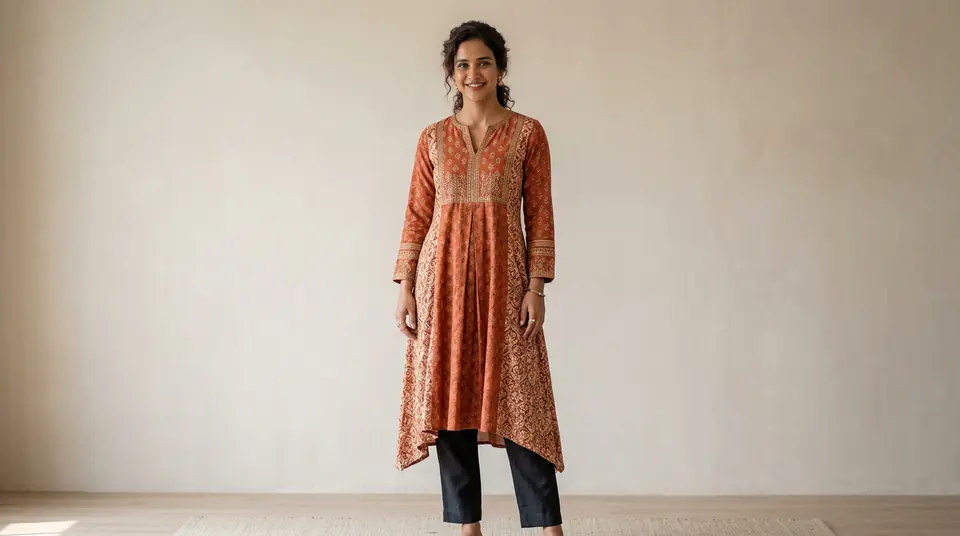
You've got 20 different kurtis, but your catalogue looks like 20 different brands shot them. One on a white background, another against a busy wall, a third with a model you can barely see. This disjointed look erodes trust, fast. Consistency in your product photography – same lighting, similar model poses, uniform background – signals professionalism and reliability. It tells your customer, "We know what we're doing. We care about quality, even in our presentation." Big brands like Myntra and Ajio enforce strict style guides for a reason. They understand consistency builds brand equity, even for third-party sellers. For your D2C brand, it’s even more critical.
Generate your own AI fashion photoshoot with Drapify — 50 free credits, no card required.
04.4. Why Fabric Details Are Your Silent Salesperson
In India, fabric is everything. The soft touch of a chanderi silk, the intricate weave of a Kanjivaram, the delicate embroidery on a chikankari kurta. You can’t feel the fabric online, so your photos have to do the heavy lifting. High-resolution images that allow customers to zoom in and see every thread, every bead, every shimmer are non-negotiable. If your catalogue photos are pixelated or too dark, that customer is just guessing. And guess what? Most shoppers won't guess; they'll just move on. This is where AI tools like DrapifyApp really shine, providing 2K/4K output that captures every detail, making sure your product's texture comes through clear as day, for just ₹13-15 per photo. No expensive studio lighting needed.
05.5. Show Every Angle, Every Colour (or Lose the Cart)
Imagine you’re buying a gorgeous co-ord set. You see one picture, head-on. But you want to know: How does the top look from the back? What about the drape of the trousers? Does it come in other colours, and if so, how do those look? If your product page offers only one or two static shots, you're leaving sales on the table. Shoppers need comprehensive visual information to commit. They want to envision themselves wearing it. With DrapifyApp, you can generate multiple poses and even colour variants from a single garment photo. That means no more reshooting an entire collection just for a new shade or angle. It’s about giving the customer exactly what they need to say "yes" without breaking your budget.
06.6. Your Catalogue is Your Best SEO Play
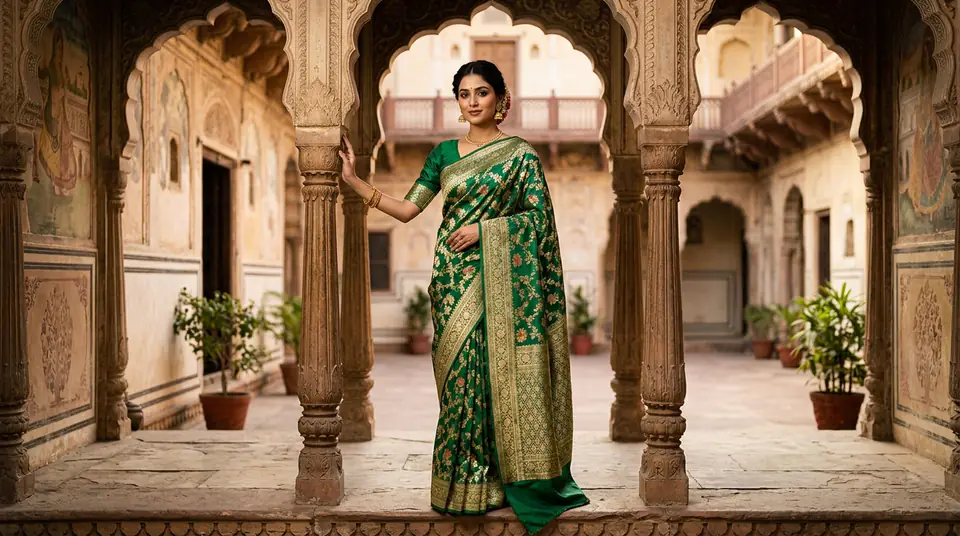
Beyond pretty pictures for your human customers, those catalogue photos are gold for search engines. Every product image you upload needs proper alt text, descriptive filenames, and context. Google Images is a massive discovery platform, especially for fashion. If your photos aren't optimized, you're missing out on organic traffic directly to your product pages. An influencer post might get picked up by an algorithm for a bit, but your properly tagged, high-quality catalogue images create evergreen SEO value. It's like having a silent marketing team working 24/7, driving potential buyers directly to your product. Don't underestimate the power of an "Emerald Green Silk Saree Front View" alt tag.
07.7. Beat the Competition on Marketplace Grids
You're selling on Myntra, Amazon India, or Flipkart? Great! But so are thousands of other brands. When a customer searches for "women's ethnic wear," they're presented with a grid of competing products. What makes yours stand out? Often, it's the quality of that tiny thumbnail image. A crisp, well-lit, professional catalogue photo instantly grabs attention amidst a sea of amateur-looking shots. It makes your product look premium, even if your price point is competitive. Don't let a generic, poorly shot image get lost in the scroll. Your catalogue photos are your first impression in a highly competitive digital bazaar. Make it count.