Introduction: The Sticker Shock of Catalogue Photography
A traditional fashion photoshoot in India typically costs between ₹15,000 and ₹80,000 for a single day, a range that quickly expands with complexity and reshoots. As an ex-Myntra category manager, I've seen countless sellers bleed capital on catalogue photography, often without a clear understanding of the true expenditure or how it impacts their bottom line. It's not just the invoice; it's the lost sales from delayed listings and the opportunity cost of resources tied up in coordinating shoots.
Many small and medium-sized brands, especially those dealing in high SKU counts like kurtis, sarees, or even menswear, often find their photography budget spiraling. They might start with a ₹25,000 quote, but by the time they factor in retakes, model no-shows, and expedited post-production, the final bill could hit ₹40,000 easily. This isn't sustainable for the razor-thin margins most e-commerce sellers operate on. The math stops working at about 50 SKUs per season if you're aiming for profitability without relying solely on aggressive ad spends.
Itemized Breakdown: Where Does Your ₹ Go?
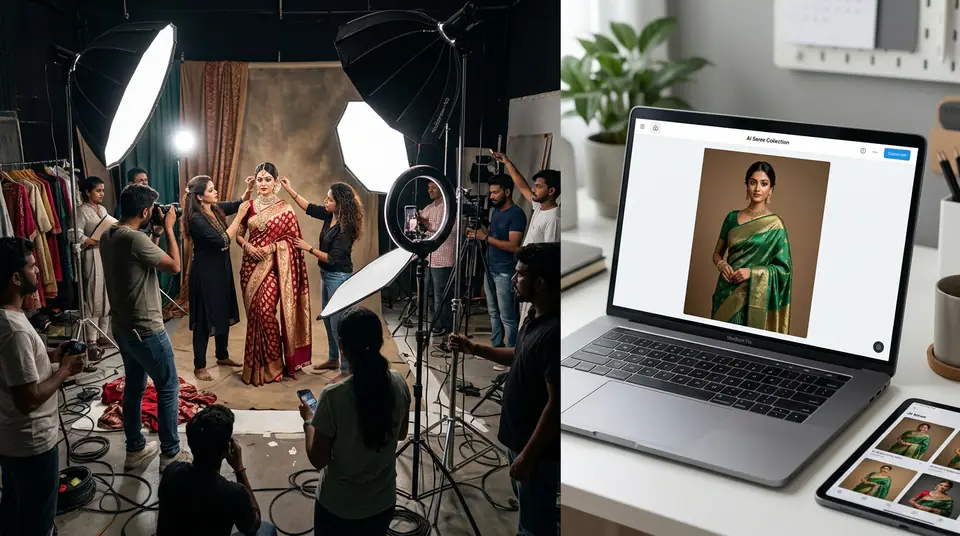
The expenses for a traditional fashion photoshoot are a sum of many small parts, each adding a significant chunk to the total bill. Most sellers only budget for the photographer's fee, completely missing the constellation of other professionals and logistical nightmares involved.
| Item | Typical Cost (₹) | Notes |
|---|---|---|
| Model Fees (1 day) | 7,000 - 25,000 | Depends on experience; often paid per garment or per hour over basic day rate. |
| Photographer (1 day) | 8,000 - 30,000 | Includes equipment, lights. Varies wildly by portfolio and city (Mumbai vs. smaller cities). |
| Studio Rental (1 day) | 3,000 - 10,000 | Basic white cyclorama studio. Location (Bengaluru, Delhi) affects price. |
| Makeup Artist & Hair (1 day) | 4,000 - 8,000 | Essential for model readiness; often includes assistant. |
| Stylist (1 day) | 3,000 - 7,000 | For draping, accessories, ensuring garments look right. Crucial for sarees, lehengas. |
| Retouching/Post-Production | 100 - 350 per image | Per-image charge. Can be a huge variable, especially for complex garments or skin smoothing. |
| Garment Pick-up/Drop | 500 - 2,000 | Logistics cost, especially for bulk items from Surat or Jaipur. |
| Food & Beverages | 1,000 - 2,000 | For the crew and model during the shoot day. |
| Contingency (10-15%) | Varies | Always budget for extra shots, unexpected delays, or minor fixes. |
For a typical catalogue shoot featuring, say, 15-20 kurtis or western dresses, you're looking at a minimum spend of ₹26,500 on the lower end, and that's if everything goes perfectly. Add a more experienced model, a seasoned photographer, and advanced retouching, and you're easily breaching the ₹50,000 mark. This doesn't even account for the time you or your team spend coordinating, which has a real cost, too.
The Hidden Costs: Reshoots, Delays, and Lost Opportunity
Reshoots and delays are where the real budget leaks happen, often adding 20-50% to your initial photography estimate without providing equivalent value. I've seen monsoon season in Mumbai halt outdoor shoots for days, pushing back launch dates by weeks. A model falling sick, a garment arriving damaged, or a simple miscommunication about styling can trigger a costly re-do. Each reshoot isn't just a photography expense; it's a loss of potential sales from products sitting unlisted.
Consider a typical scenario: A Surat-based saree wholesaler needs 50 new designs photographed for the Diwali season. They budget ₹30,000 for a one-day shoot. Two days after the shoot, they realise ten sarees weren't draped correctly, or the background consistency isn't there for Myntra's strict guidelines. Getting the team back for a half-day reshoot costs another ₹10,000-₹15,000 (model, photographer, studio), plus the additional retouching. The 'fixed' cost has just inflated by 33-50%. The worst part? Those ten sarees are delayed by at least a week, missing crucial early-festival traffic.
Beyond direct costs, there's the opportunity cost. Every day your product isn't listed with high-quality, conversion-optimized images, it's not selling. If a product could generate ₹2,000 in sales per day, a 7-day delay due to a reshoot means ₹14,000 in lost revenue for that single SKU. Multiply that across your catalogue. This isn't just theoretical; it's tangible lost money. For insights on preventing these issues, check out our guide on fashion photoshoot cost reduction in India.
Traditional Studio vs. AI: A Head-to-Head Cost Comparison
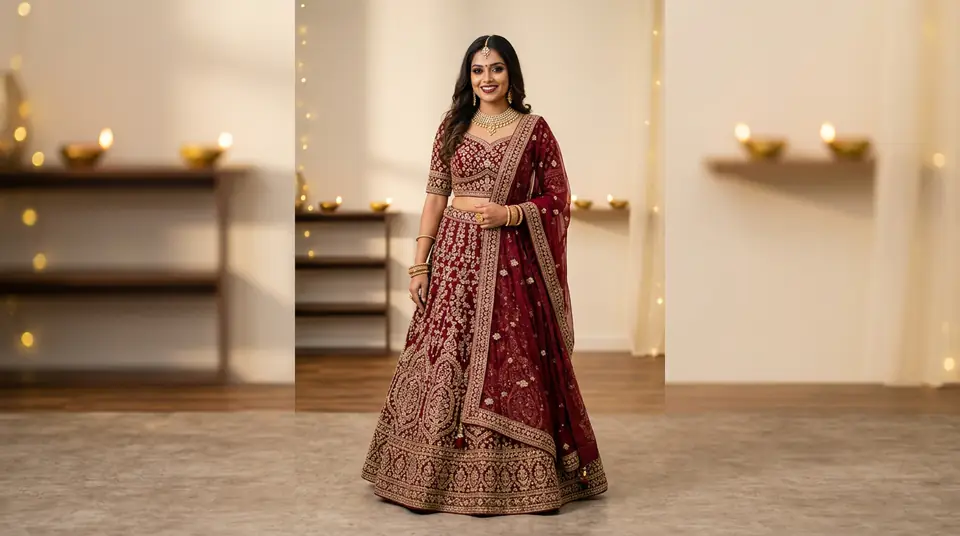
Comparing traditional studio photography with AI-powered alternatives like DrapifyApp reveals a stark difference in both cost and efficiency for e-commerce brands. Where a studio relies on physical resources and human coordination, AI leverages computational power to generate visuals from a single garment photo.
| Feature | Traditional Studio (Approx. per image, bulk) | DrapifyApp (Approx. per image) |
|---|---|---|
| Setup Cost (Fixed) | ₹15,000 - ₹80,000 / day | ₹0 (Pay-as-you-go) |
| Variable Cost (per image) | ₹150 - ₹400 (including overhead) | ₹13 - ₹15 (1K/2K/4K output) |
| Turnaround Time | 3-7 days (for first draft) | ~3 minutes |
| Reshoot Cost | Full or half-day rate | ₹0 (if AI fails, auto-refund) |
| Model Fees | Included in per-day cost | ₹0 (AI models) |
| Styling/Makeup | Included in per-day cost | ₹0 (AI handles) |
| Background Options | Limited by studio setup | Hundreds, instantly changeable |
| Colour Variants | Requires reshoot or complex edit | Instant generation from one base image |
₹48,000
typical studio day rate for 50 SKUs
₹750
cost per AI image for 50 SKUs
64x
cost difference for 50 SKUs
Let's crunch some numbers. For a brand launching 50 new kurtis, a traditional studio shoot might cost ₹48,000 (at ₹24,000 studio cost plus ₹24,000 post-production at ₹480/image inclusive of all other costs). With DrapifyApp, generating 50 high-quality images at ₹15 per image costs just ₹750. That's a 64x difference. This stark contrast isn't just theoretical; it's impacting balance sheets for thousands of sellers. The single most shocking number is often the hidden cost of delays and reshoots, which can add another 30% to that initial studio fee.
Generate your own AI fashion photoshoot with Drapify — 50 free credits, no card required.
Scaling Your Business: When the Math Stops Working
The traditional photography model becomes financially untenable the moment you attempt to scale your SKU count beyond a handful of products or require frequent catalogue refreshes. If you're managing 200+ unique garments per season, or worse, weekly drops like fast fashion brands, a physical studio setup simply can't keep up without astronomical costs.
Imagine a brand like a Surat textile exporter needing to photograph 500 new saree designs every month. At an average of 50 designs per studio day, that's ten full studio days. Even at a 'discounted' rate of ₹25,000 per day, you're looking at ₹2.5 Lakhs just for photography every single month. This doesn't include the project manager's salary, the logistical nightmare of tracking 500 garments, or the inevitable reshoots. The math stops working for profitability once you factor in returns and advertising spend.
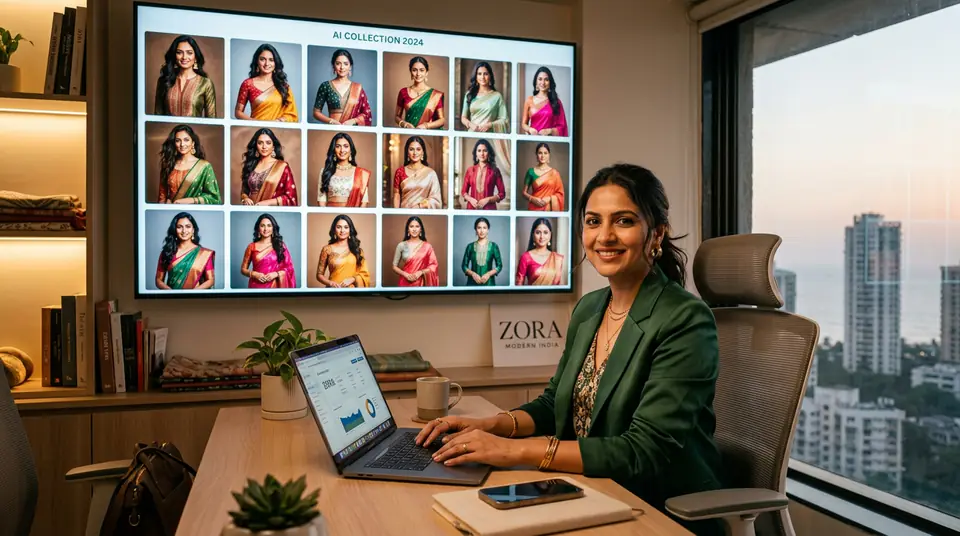
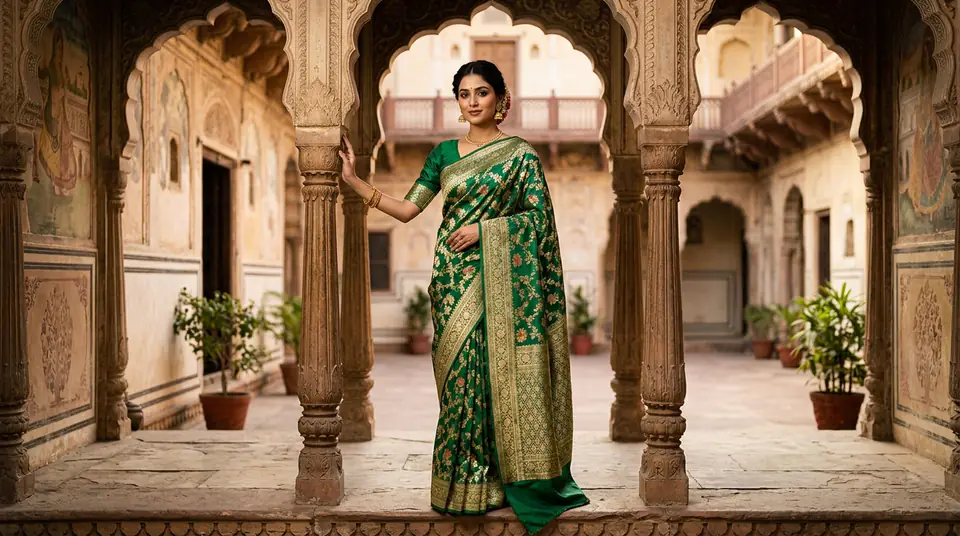
This is precisely where AI-driven solutions become indispensable. Generating saree catalogue photography or kurti photoshoot images for hundreds of products in a week or even a few days, for mere pennies per image, transforms your operational capability. Brands on Amazon India, Myntra, and Meesho are already leveraging this to stay competitive, especially during peak seasons like Diwali or Eid when speed to market is everything.
The DrapifyApp Advantage: Precision at Pennies
DrapifyApp offers a cost-effective alternative by generating high-quality fashion photoshoots from a single garment image, significantly reducing the financial burden and time investment. This isn't just about cheap photos; it's about strategic cost management.
You upload one flat garment photo, and our AI generates a model photoshoot in approximately 3 minutes. The cost? Around ₹13-15 per photo, depending on the resolution (1K/2K/4K output). You can generate unlimited poses, try different backgrounds, and even get identity-locked models across various poses – meaning the same AI model appears consistently, enhancing brand recall. We handle everything from sarees and kurtis to lehengas, menswear, western wear, and even jewellery. Plus, you can generate all your colour variants without needing to reshoot a single garment. Failed shots are auto-refunded, and credits never expire, so there's zero risk. You even get 50 free credits to start. This is how smart brands manage their e-commerce product photography today.
Beyond the Price Tag: Speed and Consistency
Beyond the dramatic cost savings, AI fashion photography delivers unparalleled speed and consistency, two critical factors often overlooked in traditional photoshoot budgeting. Getting a model and crew aligned for a shoot, then waiting for retouching, typically takes 3-7 days for a first draft. For seasonal collections, this delay can mean missing crucial early sales windows on marketplaces.
With AI, your catalogue can be ready in hours. You can iterate on poses, swap models, or test different backgrounds in minutes, responding to market trends or competitor launches almost instantly. Consistency in model appearance, lighting, and background across thousands of SKUs is virtually impossible with human teams, leading to a fragmented brand identity. AI models maintain a consistent look and feel, ensuring every product photo aligns with your brand's aesthetic. This level of control and efficiency directly impacts conversion rates and brand perception, especially for discerning customers on platforms like Myntra or Ajio. Learn how this approach helps with Myntra catalogue photos and overall brand consistency.
When Traditional Fashion Photography Still Makes Sense
Despite the compelling cost and efficiency arguments for AI, traditional fashion photography still holds undeniable value in specific, high-end scenarios where brand storytelling and artistic direction are paramount. For editorial campaigns, high-fashion lookbooks, or bespoke luxury collections, the human element of a photographer's vision, a supermodel's unique charisma, or an exotic location shoot adds an intangible value that AI can't yet replicate.
If you're launching a limited-edition designer couture line, where each piece is a work of art and the story behind it is as important as the garment itself, a meticulously planned traditional shoot with a renowned photographer can build prestige and desirability. Similarly, for brands targeting an ultra-premium segment that expects a certain 'vibe' or exclusivity in their visuals, the curated experience of a human-led shoot might be non-negotiable. The cost then becomes an investment in brand equity, not just catalogue images. However, for the vast majority of e-commerce sellers focused on daily sales and inventory turnover, these scenarios are niche exceptions, not the rule.