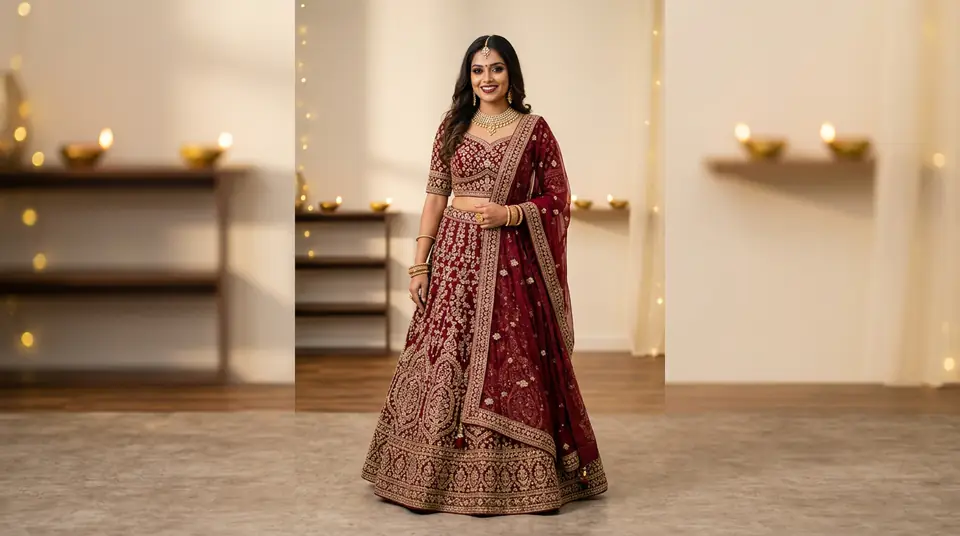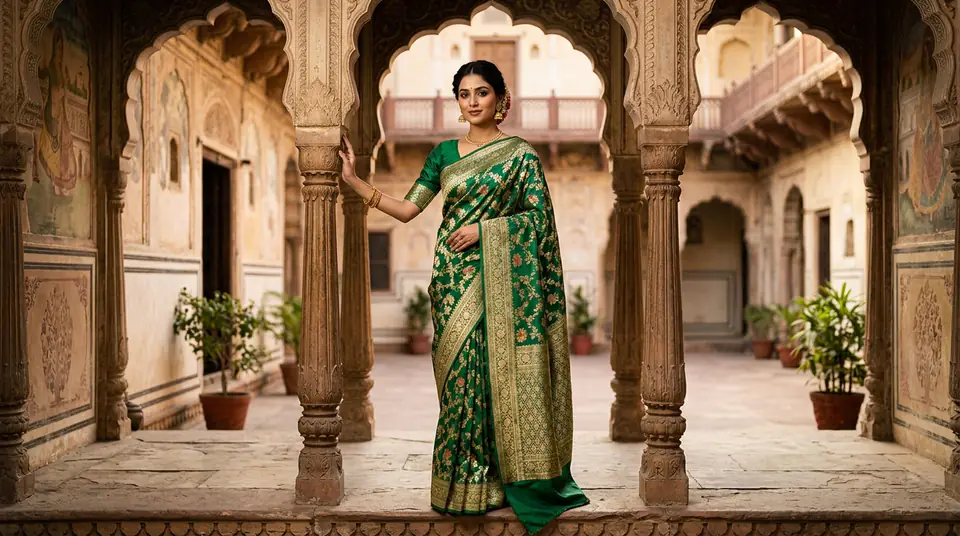
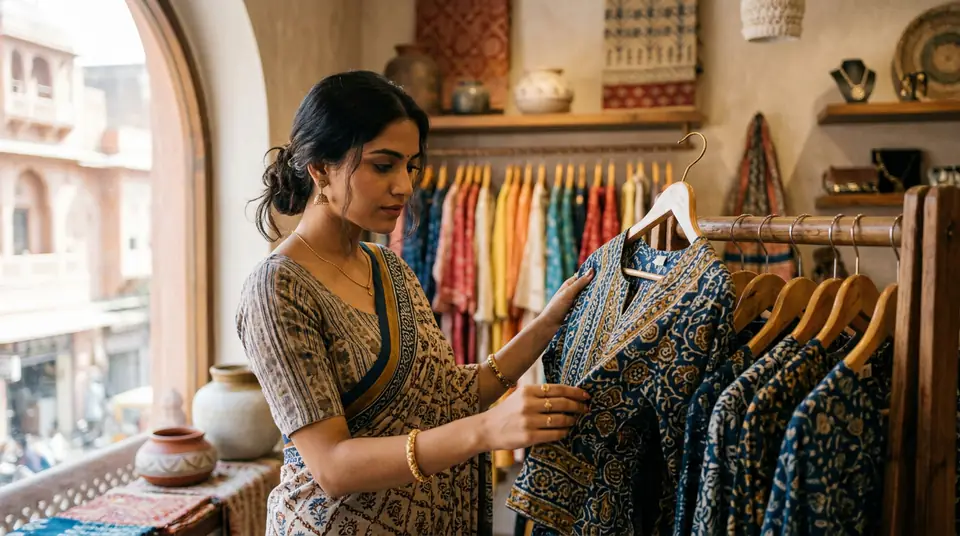
Myth 1: "A clean white background is the only professional look."
A clean white background is not the only professional look; in fact, relying on it exclusively is a primary driver of high fashion return rates because it fails to communicate essential fabric information.
I get why we all started doing this. Marketplaces drilled it into our heads. For your main hero image on Amazon, Flipkart, or Myntra, a pure white or light grey background isn't just a suggestion, it's a requirement. It creates a neat, uniform grid on their search pages. It feels safe, clean, and for a long time, it was the only way to look like a serious brand. We spent years in our Surat studio perfecting the lighting to get that perfect, shadowless void. We thought we were being professional.
The reality is that this 'professional' look is costing you a fortune in reverse logistics. That sterile white background strips a garment of its soul. It tells you nothing about the weight of a georgette saree, the sheen on a Banarasi silk, or the specific texture of a slub-cotton kurti. You're selling a flat, two-dimensional idea of the product. The customer sees a picture, builds an expectation of the fabric's feel and drape in their head, and when the real thing arrives... disappointment. That gap between the clinical photo and the tactile reality is where returns are born. You're not selling a garment; you're selling a picture of a garment. If the picture lies, the customer sends the garment back. It's that simple.
32%
Our return rate with white backgrounds only
18%
Return rate after adding 2 lifestyle shots per product
₹150+
Cost of a single returned kurti (logistics & processing)
For your first image, follow the rules. Of course. But for the other five or six images in your gallery? Show the garment in the real world. A shot against a textured wall, on a model sitting on a sofa, a close-up that shows the weave. Give the customer the visual data they need to avoid a return. It's a key part of creating compliant and effective Myntra catalogue photos that actually convert and stick.
Myth 2: "The brighter the photo, the better it sells."
Overly bright photos don't sell better; they just create a higher number of returns due to color misrepresentation.
This myth comes from a good place. You're scrolling through Meesho, and what catches your eye? The bright, vibrant, almost-glowing product photos. The logic is simple: bright equals attention. So photographers and in-house teams get the brief: 'make it pop'. They crank up the brightness, boost the saturation, and turn a nice maroon into a startling crimson because it looks more exciting on a tiny phone screen.
But 'color not as expected' is the single biggest reason for returns in online apparel. That 'popping' photo is a promise you can't keep. When the customer opens the package in her home, under normal lighting, and sees the actual muted maroon shehnai she ordered instead of the racy crimson from the picture, she feels deceived. It's an instant return request. We ran an A/B test on our new floral kurti line. The oversaturated, 'poppy' images got 15% more clicks. Great. But their return rate was 42%. The color-accurate, slightly less 'exciting' photos? A return rate of just 26%. The net profit from the color-accurate listings was 22% higher at the end of the month.
Generate your own AI fashion photoshoot with Drapify — 50 free credits, no card required.
Myth 3: "One good model photo is enough for a listing."
A single model photo is never enough because it leaves critical questions about the garment's fit, back design, and drape unanswered, forcing the customer to gamble on the purchase.
Doing a full photoshoot is a pain. I know. You've got the model for a few hours, the photographer is charging by the day, and you have 50 new designs to get through. The temptation is to get one great 'hero shot' of the front of the garment and move on. It's cheaper, it's faster, and you think, 'this one photo looks amazing, it will sell'. We operated this way for years.
The reality is, your customer is trying to build a 3D model of the garment in her mind using the 2D images you provide. One photo isn't enough information. What does the back look like? Is there a tie-up? How does the fabric hang when you turn? Does it cling or flow? Is the embroidery only on the front? Every unanswered question is a reason for her to hesitate, or worse, to buy it, try it, and return it because of a surprise she couldn't see. Your job is to eliminate surprises. And this is where new tech makes a huge difference. You no longer need a massive studio shoot to get these angles. With a tool like DrapifyApp, you can take one flat photo of your garment and generate a whole gallery of shots on an AI model—front, back, side, smiling, walking. All for a fraction of what one extra hour in the studio would cost.
| Photo Strategy | Photos Per Product | Return Rate (Q1) | Key Customer Complaint |
|---|---|---|---|
| Old Way (Hero Shot) | 1 (Front on Model) | 32% | "Fit/Style not as described" |
| New Way (Visual Data) | 5 (Front, Back, Side, Detail, Lifestyle) | 24% | "Wrong size ordered" |
Adding these shots was the single best investment we made in our ecommerce product photography workflow. The drop from 32% to 24% returns on our top 20 SKUs paid for the entire year's photo budget in three months.
Myth 4: "We just need a 'pretty face' for the model."
Focusing only on a conventionally beautiful, slim model is a guaranteed way to increase returns from your actual customer base, who need to see clothes on a body that looks like theirs.
The logic of aspirational marketing is deeply ingrained in fashion. For decades, the formula was simple: hire the most stunning, usually very thin, model you can find, and people will associate that beauty with your brand. The product becomes something to aspire to. Many brands, big and small, still operate on this principle, booking the same handful of popular Size S models for every shoot.
But your goal isn't just to get the click; it's to keep the sale. If your average customer is a Size L and she only sees your dress on a Size XS model, she has no realistic idea how it will drape on her hips or fit her arms. She's guessing. And when it arrives and doesn't look the same, it feels like a personal failure, not a product mismatch. She returns it. Relatability now trumps aspiration, especially when it comes to reducing returns. Showing your product on different body types isn't just a social good; it's a financial strategy. It provides crucial fit information that a size chart never can.
Getting a variety of models used to be a logistical nightmare. Now it's a few clicks. On Drapify, you can take the same kurti and render it on dozens of different AI models of varying sizes and ethnicities. This isn't just about representation; it's about providing the clear, practical visual information that prevents a return. It's the modern way to do an effective plus-size model photoshoot in India without the massive overhead.
Myth 5: "Fixing photos for the whole catalogue is too expensive and slow."
Fixing your entire catalogue with traditional photography is too expensive, but the cost of AI-driven photography is so low that it's now more expensive to keep your old, high-return photos.
This is the most understandable myth of all. If you're a manufacturer in Surat with a catalogue of 800 sarees, the thought of reshooting everything is paralyzing. A single day in a studio with a good photographer and model costs ₹35,000-₹50,000. You might get through 40 products. To do your whole catalogue would take weeks and cost lakhs. The business can't just stop. So you live with the 30% return rate, because the cure seems worse than the disease.
The reality is that the maths has completely changed in the last 24 months. You're not comparing the cost of a photoshoot to nothing. You're comparing it to the very real, ongoing cost of returns. A single ₹999 kurti that gets returned costs you at least ₹150 in reverse shipping, QC, and repackaging. That's a direct hit to your margin. Now, what does it cost to fix the photos for that kurti and prevent future returns? Using DrapifyApp, you can generate an entire set of 10 new, high-resolution, multi-angle photos for about ₹150. Total. Suddenly, the cost of generating perfect images for an item is the same as the cost of just one return for that item.
“We're no longer in a situation where you have to choose between speed, cost, and quality. You can fix the photos for your 100 best-selling products this afternoon, without a studio, and see the impact on your return rate by next week.”
This isn't a theoretical argument. We started by fixing the 50 products with the highest return rates. The project took one person a weekend, cost less than a single day at our old studio, and cut the return rate on those specific products by an average of 11%. That's real money, back in our pockets, that was previously being burned on courier fees.