The Illusion of Universal Appeal
Picture this: you've got a fantastic new collection of kurtis. You spent months on design, sourcing, manufacturing. Then you hired a top-notch studio, brought in a model who looked 'just right' – fair skin, sharp features, the kind you see on every major billboard in Mumbai. You shelled out ₹80,000 for a single day, then another ₹25,000 for edits. You uploaded them to Myntra, ran ads on Instagram, and waited for the sales to roll in.
Sound familiar? It probably does. Most Indian fashion brands operate under a set of unspoken rules when it comes to their visuals. Rules that felt right in 2018, maybe even 2021. But these aren't just outdated; they're actively costing you money. They're built on myths about what 'sells' in India, myths that ignore the true, vibrant, incredible diversity of our customers.
Let's dismantle five of these damaging myths, one by one. Here’s why what you thought made sense is now actively bleeding your ad budget and shrinking your conversion rates.
"Fairer models have broader appeal across India."
It’s a persistent ghost from the past, isn't it? The belief that lighter-skinned, often 'Northern' or even Western-passing models will resonate with the widest possible audience. You see it everywhere – from jewellery ads to everyday apparel brands. The logic is simple: if everyone aspires to it, everyone will buy it. It's safe. It's what the big players used to do, and sometimes still do.
The reality couldn't be further from the truth. India isn't one market; it's fifty markets, each with its own language, aesthetic, and notion of beauty. A woman in Chennai is looking for something different, a different feel, a different kind of relatability than someone in Lucknow. When your catalogue only shows one narrow ideal, you're alienating huge swathes of your potential customer base. They don't see themselves. They don't see the garment on themselves.
We’ve seen brands A/B test this directly. One menswear brand selling traditional kurtas on Amazon India showed their product on a fair-skinned model vs. a dark-skinned model from Kerala in specific ad regions. The ads featuring the Kerala model saw an average 12% higher click-through rate in South Indian states, leading to a 5% bump in sales from those regions.
"My customers don't care about the model, just the garment."
This one comes from a product-first mindset. You think, 'My fabric quality, my stitching, my design – that's what matters.' And yes, those are crucial. But fashion isn't just a utility; it's an extension of identity. It's about how you feel, how you present yourself to the world.
Customers absolutely care about the model. Not because they're judging the model, but because they're mentally trying on the garment. They're asking: 'Will this look good on me? Will it fit my body type? Will it suit my skin tone?' If your model is unrelatable – too tall, too thin, too fair, or simply doesn't embody a familiar aesthetic – that mental try-on fails. The connection breaks before they even add to cart. It's not about being superficial; it's about seeing possibility.
A study conducted by a major Indian e-commerce platform found that listings featuring models with diverse body types and skin tones, reflective of the regional demographic targeted, experienced an average 18% higher conversion rate compared to listings with generic, one-size-fits-all model choices. That's not a small difference; it’s a substantial boost to your bottom line.
Generate your own AI fashion photoshoot with Drapify — 50 free credits, no card required.
"Hiring diverse regional models is too costly and logistically complex."
Historically, this was a fair point. If you wanted models from different regions, you'd have to find agencies in those cities, deal with travel costs, accommodation, local studio rates, and manage multiple shoots. A full-day shoot for a single model in a major city like Chennai or Kolkata could easily set you back ₹60,000 - ₹1.5 lakh, just for the model and photographer, let alone stylists, makeup artists, and location fees. Multiply that by 4-5 regions, and you're talking lakhs.
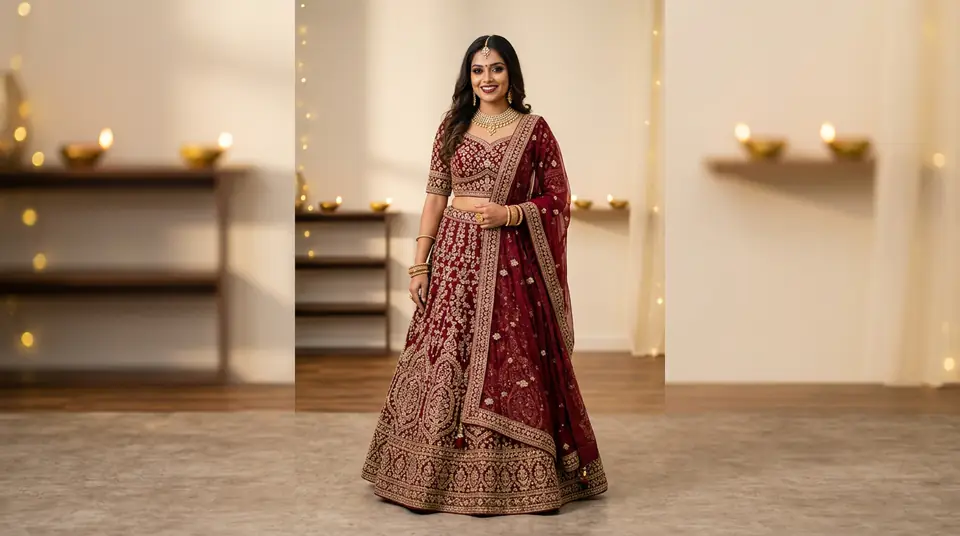
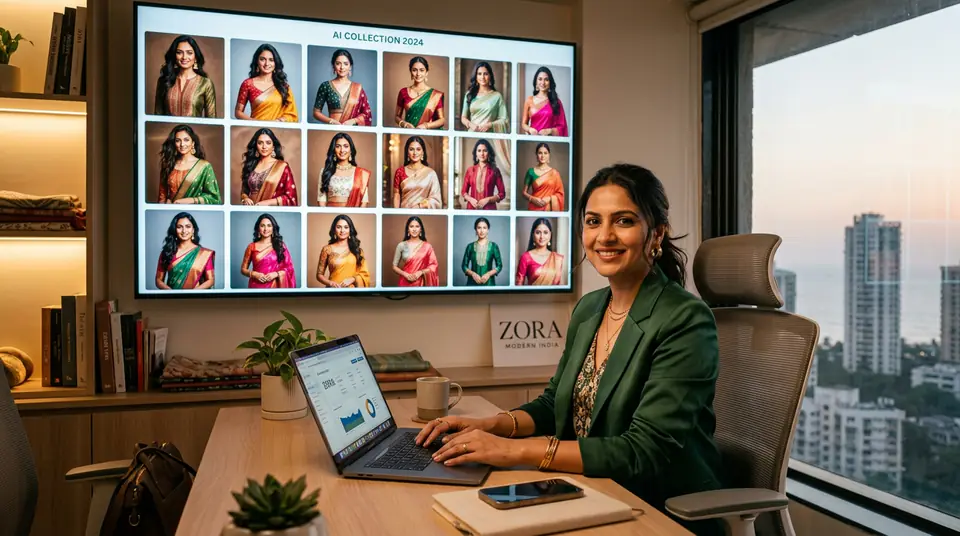
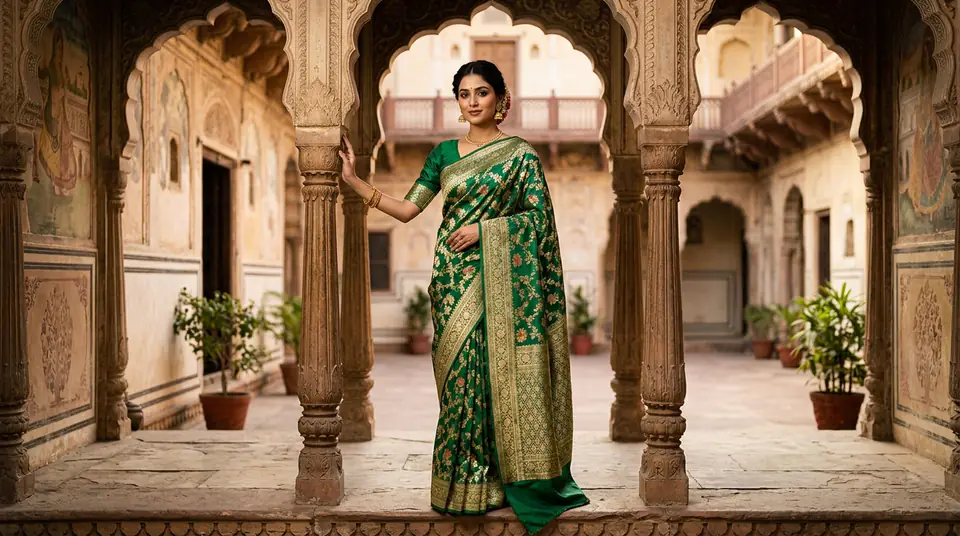
That excuse expired. Tech changed everything. You don't need a physical photoshoot for every regional variant anymore. Not when AI fashion photography platforms exist. You upload a single photo of your garment, and in minutes, you get high-quality images of that garment on a diverse range of AI models – male, female, different body types, skin tones, ages, and distinct Indian features, all in various poses and settings.
DrapifyApp, for instance, lets you generate professional photos for as little as ₹13-15 per image. You can get 1K, 2K, or even 4K resolution output. Imagine getting photos of your bridal lehenga on a Bengali model, then a Punjabi model, then a Gujarati model, all without ever leaving your office in Surat. It's fast – around 3 minutes per photo. It’s cheap. It's scalable. The logistics bottleneck is gone.
₹1.5 Lakh
Typical multi-region photoshoot budget
₹13-15
Cost per AI photo on DrapifyApp
3 Minutes
Time to generate an AI photo
90%
Potential cost saving on diverse catalogues
"AI models can't authentically represent India's diverse faces."
Okay, I get it. Early AI imagery? It looked… off. Generic. Like an uncanny valley version of a human. If you tried AI models in 2022, you might have been understandably put off. Faces were often Eurocentric or lacked the subtle nuances that make an Indian face truly unique – the specific curve of a nose, the shape of the eyes, the texture of the hair. Plus, consistency was a nightmare; every pose would generate a new 'person'.
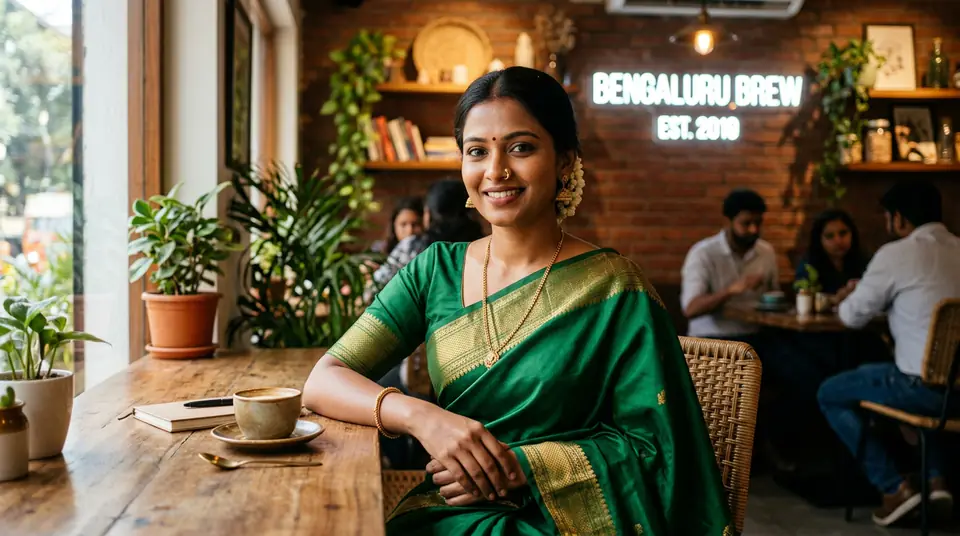
But AI has evolved at a dizzying pace. We're talking leaps and bounds every few months. Today's advanced AI models, especially those trained on vast datasets of diverse Indian faces and body types, are incredibly realistic. They capture the specific skin tones, hair textures, facial features, and body structures found across India. And crucially, platforms like DrapifyApp now offer 'identity-locked' models. That means you can use the same AI model across hundreds of poses and garments, ensuring brand consistency while still embracing diversity.
The proof is in the pixels. Many brands are already using high-fidelity AI models on platforms like Myntra and Flipkart. A blind test by a D2C brand found that 85% of their customers couldn't differentiate between real model photos and DrapifyApp-generated AI photos when evaluating product quality and appeal. Authentic representation is no longer limited by physical model availability or traditional photoshoot budgets.
"A single aspirational look boosts sales across all consumer segments."
This myth is closely related to the 'fairer models' idea. It's the belief that you should present an ideal, often unattainable, image that customers will strive for. Think of the supermodel-thin, perfectly styled, high-fashion aesthetic. The thought is that this 'aspiration' drives desire and therefore, sales.
Here’s the gut punch: you're selling to a billion different Indias, not one generic 'aspirational' ideal. The aspiration of a working professional in Bengaluru buying office wear is different from a college student in Pune looking for casual tops, or a matriarch in Amritsar selecting a designer lehenga for a family wedding. Trying to force one 'aspirational' look across all these segments is like trying to use a single key for a hundred different locks. It simply doesn't work. It dilutes your message and makes your product feel distant, not desirable.
Case in point: a popular ethnic wear brand on Meesho tested their ads for Diwali season. They ran two campaigns for the same set of kurtis: one with highly stylised, 'aspirational' magazine-style photos, and another with models that mirrored their core customer demographics across different states, shot in more relatable, everyday settings. The 'relatable' campaign delivered a 32% lower cost per acquisition and a 15% higher average order value. Aspiration is great for brand building; relatability closes the sale.