The Invisible Bloom: Anjali's Uphill Battle in Pune
The twilight was settling over Pune, painting the sky in hues of orange and purple. Inside her modest home office, Anjali stared at her laptop, the glow reflecting a familiar knot of frustration on her face. Her brand, 'Thread & Bloom', specialized in exquisite, hand-block printed kurtis and sustainable ready-to-wear. Each piece was a labour of love, steeped in traditional artistry with a contemporary twist. Her designs were solid, her fabric choices impeccable, and her customer feedback — when she got it — glowed.
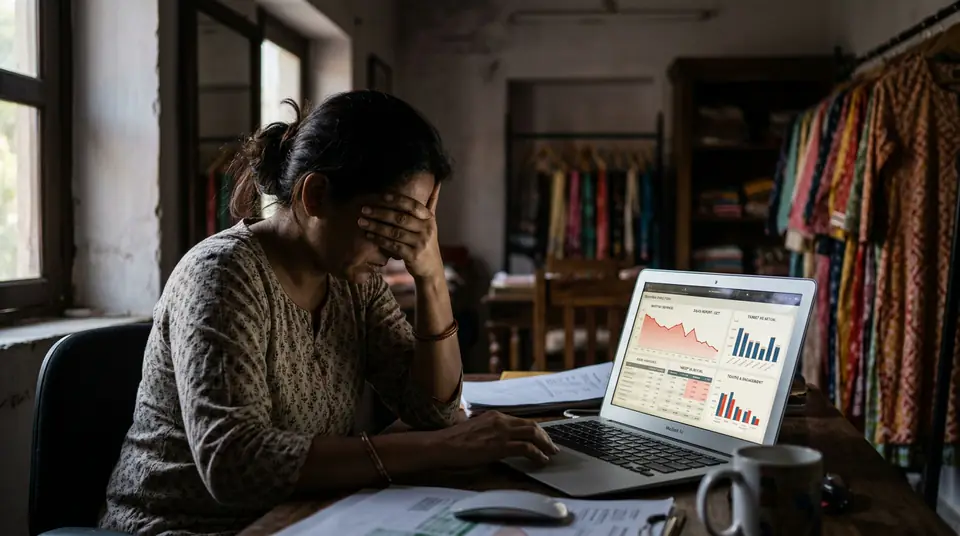
The problem? Nobody found her. Her little online store, a Shopify setup she'd painstakingly built, barely registered a ripple in the vast ocean of Indian fashion ecommerce. When a potential customer typed 'hand block print kurti' into Google, they saw FabIndia, Jaypore, Ahalyaa. Her beautiful pieces? Pages deep. Invisible. "It felt like I was running a boutique in the middle of a desert," she'd told me later, her voice still carrying that echo of past exasperation.
The Breaking Point: A Silent Diwali
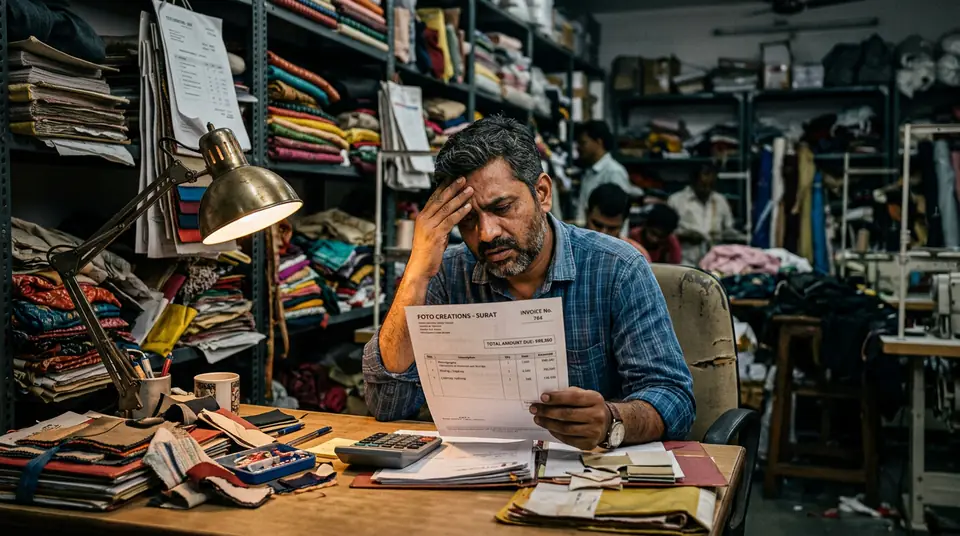
Diwali season, the biggest sales window for any ethnic wear brand in India, had just ended. For Anjali, it had been a disaster. She’d spent ₹20,000 on Facebook and Instagram ads, targeting exactly the kind of buyer she imagined. The clicks were there, yes. But conversions? Almost non-existent. Her average order value lingered around ₹1,800, but her advertising cost per acquisition had ballooned to an unsustainable ₹700. "I was literally losing money to gain customers who barely bought anything," she sighed. "It wasn't just disheartening; it was financially terrifying. I thought, this is it. I can't keep doing this."
Chasing Ghosts: What Didn't Work
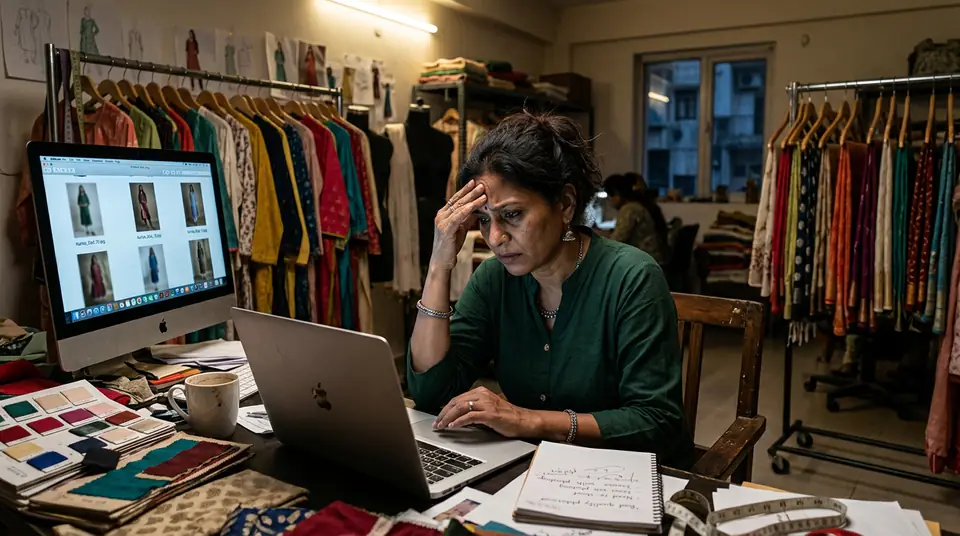
Anjali wasn't sitting idle. She'd tried everything. She hired a local photographer for her new collection – a young guy with a decent camera but no real fashion experience. He charged her ₹2,500 per kurti for 3-4 shots on a plain white background, taking two weeks to deliver. The results were… flat. Lifeless. The intricate block prints looked dull, the fabric's drape uninspired. "They just looked like generic Amazon listings, not the artisanal pieces they were," she recounted. Another time, she tried shooting on her phone, setting up a makeshift studio with natural light. The quality was inconsistent, colours were off, and she spent entire days hunched over, trying to get just one usable shot. Time she didn't have.
She even tried selling on Myntra for a brief period, but the competition was brutal, and their strict photo guidelines meant she needed professional-grade images she couldn't afford to produce at scale. Her products were good, she knew that. But the visual presentation wasn't. It just wasn't compelling enough to stop a scroll, let alone trigger a purchase. That was the harsh truth. Her product catalogue was her storefront, and it looked like a dusty, neglected corner shop next to glittering malls.
Generate your own AI fashion photoshoot with Drapify — 50 free credits, no card required.
The Pivot: Finding Her Digital Stage
One evening, while researching low-cost product photography solutions, Anjali stumbled upon DrapifyApp. She was skeptical, of course. "AI fashion photos look fake," was her immediate thought. But the promise of professional-grade images from a single garment photo, generated in minutes for ~₹15 a shot, was too intriguing to ignore. She signed up for the 50 free credits, thinking, What's the harm?
She uploaded a photo of one of her best-selling Chanderi silk kurtis. Three minutes later, she had five distinct images: a studio shot on a model, one in a rustic Indian setting, another in a contemporary urban backdrop, and even a couple of colour variants she hadn't originally planned to shoot. The models looked real. The fabric draped beautifully. The block prints were crisp. The detail. The life. It was like seeing her kurtis truly shine for the first time online. "My jaw literally dropped," she remembers, a grin spreading across her face. "It wasn't just good; it was better than anything I'd ever shot myself, or paid for."
“I spent so long thinking I needed a huge budget and a whole team to get good photos. DrapifyApp showed me that quality catalogue photos aren't just for the big brands anymore. It completely changed how I saw my own business's potential.”
Numbers Don't Lie: Competing with Giants
The change wasn't instant, but it was dramatic. Anjali began systematically replacing all her old product photos with DrapifyApp-generated images. She focused on her top 20 kurtis first, then expanded to her entire catalogue of 80+ designs. She could generate images for an entire collection in a single afternoon, something that used to take weeks and cost a fortune. The images had consistent, identity-locked models, which gave her brand a polished, professional look typically reserved for much larger operations. This freed up her time to focus on design, marketing, and customer service. Crucially, the cost per photo plummeted.
The impact on her business was undeniable:
7x
Increase in Google Search Visibility for target keywords
3.5x
Increase in organic traffic within 6 months
45%
Reduction in Bounce Rate on product pages
80%
Decrease in photography costs per collection
Within six months, Anjali saw a 7x increase in her Google Search visibility for terms like 'hand block print kurti Pune' and even broader ones. Her organic traffic shot up by 3.5 times. More importantly, her conversion rate on product pages, which had limped along at a dismal 0.8%, now consistently hovered above 3%. The bounce rate on product pages dropped by 45%. People were clicking, yes. And they were staying. And buying. Her average monthly revenue, which had been around ₹60,000, surged to over ₹2.5 lakhs. She was no longer just visible; she was a contender.
Her search engine rankings improved so significantly that she often found herself on the first page of Google, sometimes above established players like FabIndia for specific niche terms. It wasn't about outspending them on ads anymore; it was about outsmarting them with a compelling, extensive, and visually rich product catalogue. DrapifyApp wasn't just a tool; it was her unfair advantage.
Anjali's Wisdom: What She'd Tell You
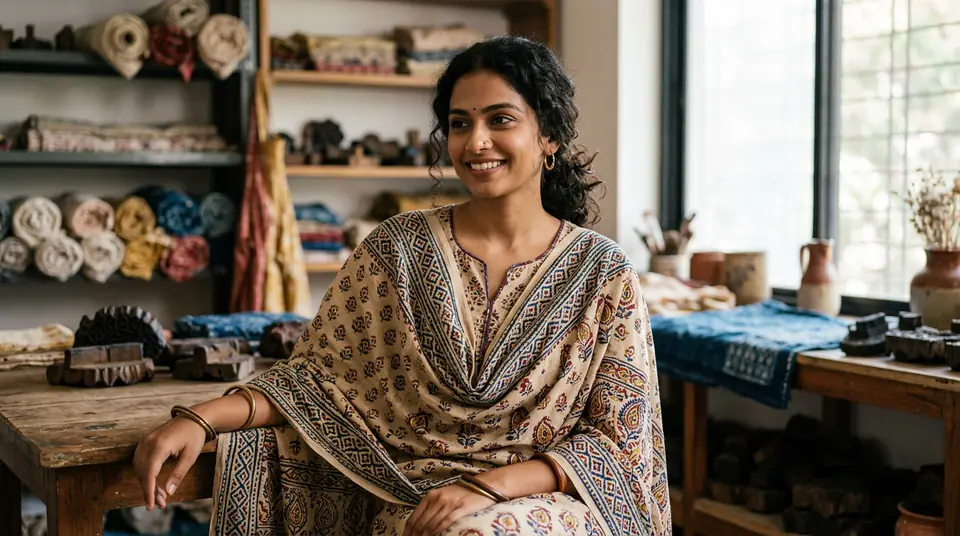
Today, Anjali’s Thread & Bloom is thriving. She’s expanded her range, confidently adding new colour variants and even launching a menswear line, all without the logistical nightmare and crushing costs of traditional photoshoots. Her catalogue is fresh, vibrant, and constantly updated.
When I asked her what advice she'd give to other indie brands struggling to make a mark, she didn't hesitate. "Stop thinking good photos are a luxury," she said firmly. "They're not. They're the foundation of your online presence. If your product photos don't instantly convey quality and desirability, you're invisible. Doesn't matter how great your design is. Don't be afraid to embrace new tech, especially when it gives you the kind of leverage DrapifyApp gave me. It's not about being bigger; it's about being smarter, faster, and looking just as good, if not better, than the giants."