When ₹500/day Becomes ₹5,000/day for Nothing
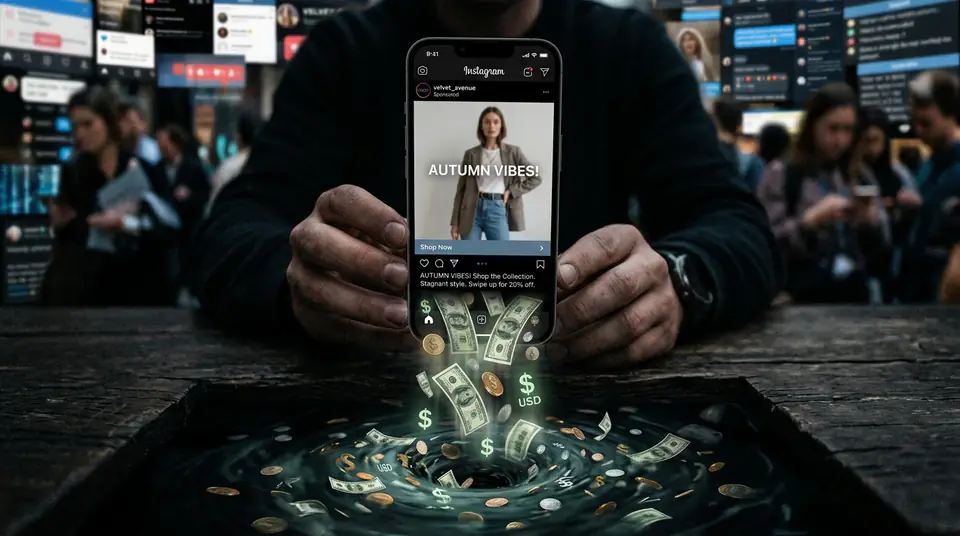
The dream is simple: put your gorgeous new kurtis or latest saree collection on Instagram, hit 'promote', and watch sales roll in. For many Surat-based wholesalers, a daily spend of ₹500 to ₹1,000 on Meta ads is standard practice, often yielding initial positive results. The math, however, gets complicated fast. When those initial returns dwindle, and you keep pouring money into the same ads, you're not just losing potential sales; you're actively bleeding cash on ineffective impressions. It’s a common trap: chasing yesterday’s performance with today’s tired creative.
I’ve seen it firsthand in our family business. We'd launch a new collection, get a great CPA for a week or two, then watch it steadily climb from ₹80 to ₹150, sometimes even ₹200, within a month. It felt like the platform was punishing us. This isn't some conspiracy; it's classic Instagram ad fatigue, and it’s one of the biggest hidden costs for fashion brands trying to scale beyond that initial daily budget.
The Anatomy of a Wasted Rupee: Initial Creative Costs
Producing compelling ad creatives for Instagram isn't cheap, and these upfront investments are the first to be diluted by creative fatigue. For a typical fashion brand, whether selling on Myntra or directly through their Shopify store, preparing even a small batch of high-quality visuals involves significant expenditure before a single ad impression is bought. Let's break down what goes into a single decent ad creative shot in a traditional studio setting.
| Item | Typical Cost (₹) | Notes |
|---|---|---|
| Model Fees (1 day) | 15,000 - 30,000 | Experienced models in Mumbai or Delhi; varies by portfolio. One to two looks per day. |
| Photographer (1 day) | 10,000 - 25,000 | Standard day rate for fashion photography, excluding assistant. Based on 8-10 hour day. |
| Makeup Artist & Hair Stylist (1 day) | 7,000 - 15,000 | For single model, up to 3 look changes. Includes touch-ups. |
| Stylist (1 day) | 8,000 - 18,000 | Concept development, outfit coordination, accessories. Crucial for polished look. |
| Studio Rent (1 day) | 5,000 - 12,000 | Basic studio space in a city like Bangalore or Ahmedabad. Can go higher for premium. |
| Garment Prep & Transport | 2,000 - 5,000 | Steaming, alterations, logistics for bringing collection to shoot. |
| Post-production (per image) | 150 - 500 | Retouching, color correction, background removal. For 10-20 final images. |
| Ad Copywriter (per concept) | 1,500 - 4,000 | Crafting compelling headlines & body for 3-5 ad variations per creative. |
| Graphic Designer (per concept) | 2,000 - 5,000 | Overlaying text, creating carousel slides, minor video edits. |
Totaling that up, even for a modest production aiming for 10-15 usable ad images from a single outfit, you’re looking at an initial outlay of ₹50,000 to ₹1,00,000. And that’s before you spend a single rupee on Meta’s actual ad platform. This baseline cost is what creative fatigue slowly but surely erodes.
Creative Fatigue: The Silent Killer of Ad Spend
Creative fatigue means your audience has seen your ad so many times that its effectiveness plummets, leading to declining engagement and dramatically higher costs. You've definitely experienced it yourself: that same saree ad from a brand you follow pops up for the tenth time, and you just scroll past. Your potential customers do the same.
Meta's algorithms, designed for user experience, pick up on this disinterest. When users stop clicking, swiping, or engaging, your ad's relevance score drops. Consequently, your Cost Per Mille (CPM) – the cost for 1,000 impressions – starts to climb because the algorithm has to work harder to find an audience segment that hasn't seen your ad twenty times. Concurrently, your Click-Through Rate (CTR) will inevitably fall, sometimes by 50% or more within weeks for highly targeted audiences. I've personally seen our ROAS (Return on Ad Spend) for a successful ad campaign drop from 3.5x to a painful 1.2x within a month, simply because we didn't refresh the creative fast enough.
The math stops working when your CPA (Cost Per Acquisition) exceeds your profit margin on a garment. If your margin on a kurti is ₹300, and your CPA rockets from ₹80 to ₹350 due to fatigue, you're not just losing money; you're paying to acquire customers at a net loss. This isn't theoretical; it's a daily reality for countless D2C fashion brands on Instagram and Facebook.
Generate your own AI fashion photoshoot with Drapify — 50 free credits, no card required.
The Refresh Tax: Costs of Constantly Renewing Your Creative Assets
Refreshing your ad creatives is essential to combat fatigue, but this comes with its own set of costs, often mirroring the initial photoshoot expenses, creating a cycle I call the 'refresh tax.' Many brands find themselves needing new images or videos every 3-6 weeks to keep performance stable, especially during peak seasons like Diwali or Eid.
To get fresh creatives, you typically face two options: another full-blown studio photoshoot or a smaller, piecemeal approach. Both demand significant time and money. A 'mini-shoot' for just a few new looks might still cost ₹20,000-₹50,000, involving a photographer, a model for a few hours, and some basic post-production. It's often not enough to generate truly new concepts, just variations on a theme.
The alternative is to try to recycle existing assets, but even with skilled graphic designers, there's a limit to how many unique ad concepts you can extract from a static set of images. This is where the cost of speed and variety truly kicks in. Waiting weeks for a new shoot means you’re either running exhausted ads or not running any ads, both costing you sales. This constant demand for fresh content is the core of the refresh tax.
However, new approaches can significantly cut this tax. AI tools like DrapifyApp offer a way out, generating new fashion ad creatives from existing garment photos for a fraction of the traditional cost and time. Imagine getting fresh model shots for your co-ord sets or lehengas in minutes, not weeks, helping you stay ahead of the curve.
Cost Comparison: Traditional Studio vs. AI-Powered Creative Generation
A direct cost comparison between generating new ad creatives through traditional studio methods versus an AI platform reveals a stark difference in both expenditure and speed. Let’s assume we need 10-15 unique model photos for various ad concepts to combat fatigue for a month.
| Cost Item | Traditional Studio (₹) | DrapifyApp (₹) | Notes |
|---|---|---|---|
| Model Fees | 15,000 - 30,000 | 0 | AI models included, no recurring fees. |
| Photographer Fees | 10,000 - 25,000 | 0 | No photographer needed; AI renders photo. |
| Studio/Location Rent | 5,000 - 12,000 | 0 | No physical studio required for AI. |
| Makeup Artist & Stylist | 7,000 - 18,000 | 0 | AI handles styling and makeup virtually. |
| Garment Prep & Transport | 2,000 - 5,000 | 0 | Requires only a single product photo upload. |
| Post-production (per image) | 1,500 - 7,500 | 0 (Included) | Based on 10-15 images @ ₹150-₹500. AI generates final image. |
| Time (opportunity cost) | 3-7 days | 1 hour | Lead time for booking, shooting, editing vs. minutes for AI generation. |
| Creative Generation (10 images) | N/A | 130 - 150 | Approximately ₹13-15 per DrapifyApp photo. Credits never expire. |
For 10 high-quality, unique ad concepts, a traditional studio approach costs anywhere from ₹50,000 to over ₹1,00,000, not including the ad copy or graphic design elements. With DrapifyApp, generating those same 10 new creative assets might cost you a mere ₹130 to ₹150. We’re talking about generating AI model photoshoots in ~3 minutes from a single garment photo, complete with identity-locked models across poses, and even colour variants without reshoots. This dramatically shifts the economics of keeping your ad creatives fresh.
The savings aren't just monetary; they're also in time and agility. Imagine launching a new campaign for your winter collection, realizing a specific ad isn't performing well, and generating 5 new, distinct model shots within 15 minutes to test. That speed is invaluable in a market as competitive as India's fashion ecommerce space, allowing you to continually scale your ecommerce bulk catalogue photography for dynamic ad testing.
Calculating Your True Ad Spend: A Practical Worksheet
To truly understand the Instagram ad fatigue cost, you need to run your own numbers. Don't just look at CPA; calculate your 'Effective CPA' and 'Effective ROAS,' which factor in your creative production costs.
1. Track Creative Shelf Life: How long does a specific ad creative maintain an acceptable CPA before it starts to fatigue? Usually 2-4 weeks for aggressively scaled campaigns.
2. Calculate Creative Cost Per Day: Divide your total creative production cost (e.g., ₹60,000 for a photoshoot) by the number of days the creative is actively used (e.g., 20 days). That's ₹3,000/day just for the creative.
3. Add to Ad Spend: If you're spending ₹1,000/day on Meta, your true daily spend is ₹1,000 (platform) + ₹3,000 (creative) = ₹4,000. Now recalculate your CPA and ROAS based on this 'all-in' daily spend. You'll likely see a much harsher reality.
This exercise is sobering. When you incorporate the actual cost of refreshing your creatives, the math for traditional methods often looks unsustainable for consistent daily ad spends below ₹2,000-₹3,000. This is especially true for brands on marketplaces like Amazon India or Flipkart, where margins are already razor-thin. This is why tools offering fashion photoshoot cost reduction in India with AI models become indispensable.
When Traditional Shoots Still Make Sense: The Value of Authenticity
Despite the undeniable cost and efficiency advantages of AI-powered creative generation, traditional photoshoots still hold significant value and remain crucial for certain strategic objectives. It’s not an either/or situation; it's about smart allocation.
For luxury brands or those aiming for a very specific, high-touch narrative – think a designer lehenga collection for wedding season, shot in an opulent heritage location in Rajasthan – the immersive, tangible experience of a traditional shoot can be irreplaceable. These shoots aren't just about showing garments; they're about crafting a brand story, an aspiration, and a feeling that resonates deeply with a high-value customer. A bespoke photoshoot involving top-tier talent provides a level of control over artistic direction, lighting nuance, and human interaction that AI, while incredibly advanced, can’t fully replicate yet. This is where the emotional connection with the product and brand is paramount.
Moreover, for influencer marketing campaigns or collaborations that require genuine human interaction and testimonials, a physical shoot is necessary. When a celebrity or a prominent fashion blogger needs to be seen wearing your product, interacting with it in real-world scenarios, the traditional approach provides that authentic content. It builds credibility through fairness and real-world context that a synthetic image, however perfect, cannot achieve. For these strategic, high-impact campaigns, the significant investment in a traditional shoot becomes a calculated marketing spend, not just a creative production cost.