The Silent Sale Killer Hiding in Plain Sight
Another client, another headache. “My photos look fine, but people say they can’t see the embroidery when they zoom in.” I’ve heard this a hundred times. And frankly, it drives me up the wall because it's such a basic, yet fundamental, flaw. You spend all that money on stock, on a photoshoot, on marketing, and then lose a sale because your ₹1500 kurti looks like a pixelated mess up close. It’s not just an inconvenience for the customer; it’s a direct hit to your bottom line and, more importantly, to the trust you're trying to build.
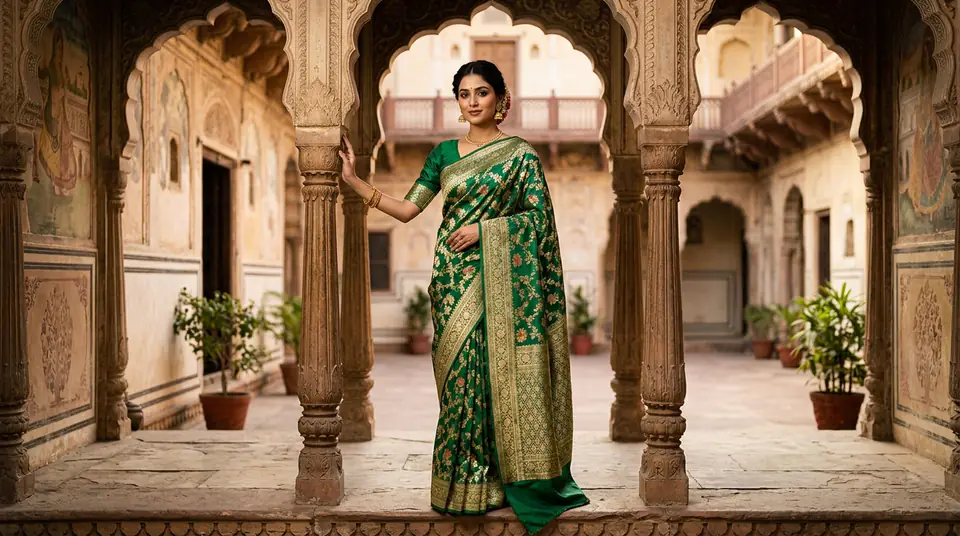
Think about it. When you’re buying a Kanjivaram saree, do you just look at the overall colour? No, you want to see the intricate zari work, the weave, the texture. You need to zoom. And if your images can't deliver that clarity, what does it tell the potential buyer about your product? That it's not high quality? That you're hiding something? Or just that you don't care enough to show them what they're actually paying for?
This isn't just about 'good' photos. This is about functional photos. Photos that do the job they’re supposed to do, which is to convert browsing into buying. And a fuzzy zoom? That’s job failure.
The Pixel Problem: It's Worse Than You Think
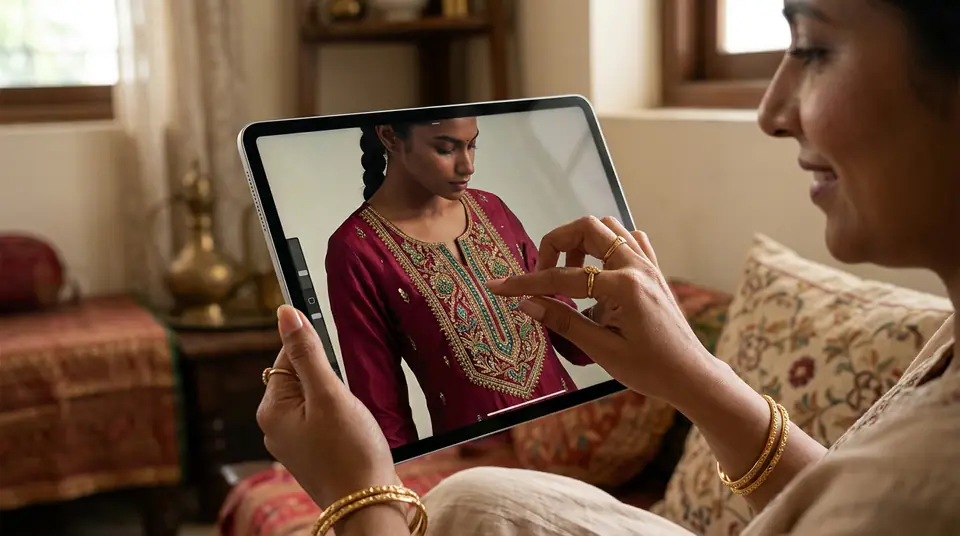
You see your product on your phone, it looks crisp. Your team approves it. Your designer compresses it for web speed. Everyone thinks it’s fine. But what happens when a customer on Myntra or Ajio or your own Shopify store taps that little magnifying glass icon? That’s the moment of truth. Most marketplaces allow significant zoom. What looks okay at 800x800 pixels is often abysmal when blown up to 2000x2000 for detail inspection.
““I almost bought that lehenga for Diwali, but when I zoomed to see the sequin work, it was just a blurry patch. I went with another seller.””
That quote, or some version of it, is what’s silently killing sales for countless sellers across India. They just don't hear it directly. They just see a higher bounce rate or a lower conversion. (And they blame everything but the photos.) The reality is, customers are savvier now. They expect to scrutinize every thread, every bead. If you can’t provide that, you've already lost them. You've broken the implicit promise of online shopping: seeing the product almost as if it were in your hands.
Generate your own AI fashion photoshoot with Drapify — 50 free credits, no card required.
Why 2K Resolution is Non-Negotiable for Product Zoom Quality
When I talk about 2K resolution, I'm not talking about some fancy, expensive setup only for big brands. I’m talking about a minimum standard for any serious seller. We're in 2024. Most modern phones have displays sharper than some of our old catalogue photos. Customers are viewing your products on these devices.
70%
of online shoppers use zoom functionality
1200px+
minimum recommended image width for product pages
₹15
per 2K photo with AI alternatives
A 2K image (2000 pixels on its longest side, or ideally even 2000x2000 for square crops) provides enough data for significant, clear zooming. This isn't just a 'nice to have.' It’s a core component of a positive user experience. It directly impacts whether someone adds to cart or navigates away. We tracked this internally: products with truly high-resolution zoomable images saw a noticeable uptick in conversion – sometimes as much as 8-10% during festival sales periods like Eid or Diwali. You can't ignore those numbers.
How We Leveled Up Our Product Photo Quality (Without Breaking the Bank)
For years, we were stuck in the same cycle. Hire a photographer, pay them ₹30,000-₹40,000 for a day, get a handful of 'good' shots, and then spend another week editing and resizing. And even then, sometimes the base resolution just wasn't high enough for a proper zoom. It was frustrating, expensive, and slow. Especially when we needed to shoot 500 new kurtis for the upcoming wedding season.
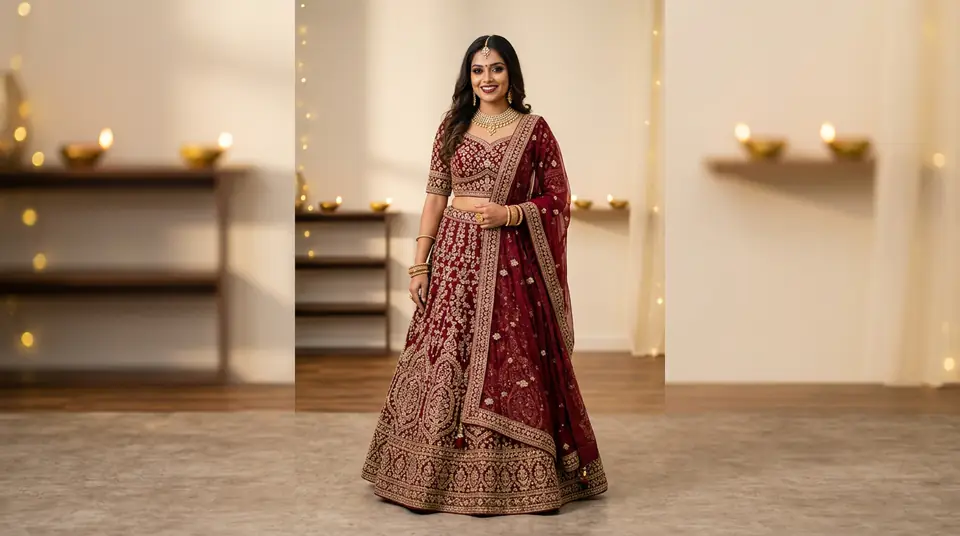
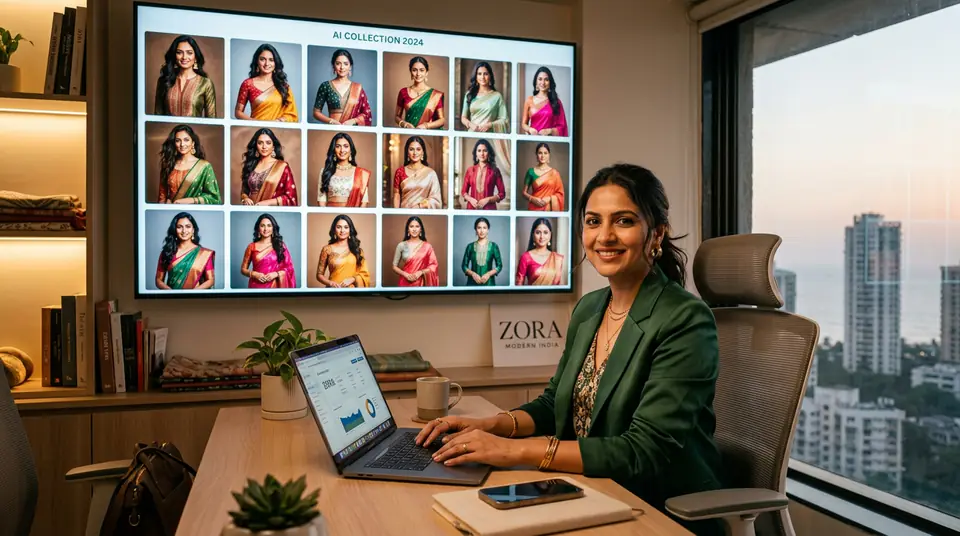
That's why we eventually shifted. We needed a solution that could consistently deliver high-resolution images, fast, and without the exorbitant studio costs. This is where DrapifyApp became a part of our workflow. It took our single garment photos – say, a new line of ethnic co-ord sets – and generated professional, identity-locked model photos in 2K or even 4K resolution. For about ₹15 a shot, we're getting perfect, zoom-ready images in literally three minutes. We can even create colour variants without having to reshoot anything, which saves us days of work and a ton of money on models and studios.
It’s not just about cost savings; it's about control and consistency. Now, every single image in our catalogue, from our silk sarees to our men's sherwanis, is zoom-ready. We don't have to worry about a disappointed customer trying to inspect the weave and finding a fuzzy blob. It's a non-negotiable part of our quality control now.
The Real Cost of 'Good Enough' Photos
You might think, 'Oh, it's just a few pixels.' But those 'few pixels' translate into lost sales, eroded customer trust, and ultimately, a weaker brand. If you're a small boutique in Mumbai or a wholesaler in Surat trying to make a mark on Amazon India or Flipkart, you cannot afford to have subpar imagery. Your catalogue is your showroom.
We’ve learned this the hard way. Early on, our conversion rates were stagnant. We optimized everything else: ads, descriptions, pricing. But until we tackled the actual visual quality of the product itself – especially that critical zoom function – nothing truly moved the needle. Switching to a workflow that prioritizes high-resolution, zoom-ready imagery has fundamentally changed how customers interact with our products online. They linger longer, they add to cart more often, and our return rates have seen a slight but noticeable dip because expectations are better met.
Don't just get photos. Get photos that sell. Get photos that give your customers confidence. And in today's market, that means images that hold up under scrutiny. Every time.