"WhatsApp Catalogue Sales are just about forwarding photos."
It's natural to think of WhatsApp as just a messaging app. For small businesses, especially those without a dedicated website, it's the easiest way to connect directly with customers. You take a photo, send it to a few contacts, and boom – maybe an order. It feels immediate, personal, and low-tech. No fancy website, no payment gateways, no shipping integrations needed at first. Just chat. And many of us started exactly like that, me included, just sharing new stock with friends and family circles in Jaipur.
WhatsApp selling, to be truly effective, is a sophisticated dance, not just a casual chat. It's an entire sales funnel compressed into a messaging app. You're not just sending photos; you're building a relationship, showcasing products, answering queries, handling objections, and closing sales – all through text, voice notes, and images. It's about engagement, not just broadcast. If you treat it like a bulletin board, your conversion rates will reflect it. Customers expect an experience, even on WhatsApp. They want quick replies, clear information, and a sense of trust.
I track my sales channels closely. When I just broadcasted images, my conversion rate from initial outreach to actual sale was hovering around 3-4%. After I structured my approach – using quick replies, engaging with follow-up questions, and personalizing interactions – that rate jumped to over 12% in just three months. That's for my kurti and anarkali sets. It's about being a responsive seller, not just a sender.
"My customers don't care about fancy photos, they care about price."
India is a price-sensitive market. Everyone loves a good deal. Many boutique owners feel that if their prices are competitive, customers will overlook average photos. They believe a customer will zoom in, read the description, and make a decision based purely on the fabric, work, and price. They think money spent on good photography is wasted when customers are haggling for an extra ₹50 discount. "My saree sells itself," they'll say, "if the price is right."
This is perhaps the most dangerous myth, especially for fashion. On WhatsApp, customers can't touch the fabric, feel the embroidery, or see the fit on a real person. Your photos are their only window into your product. If your photos are dimly lit, blurry, or just flat shots of a garment on a hanger, you're not just losing sales; you're actively eroding trust and perceived value. Good photos don't just showcase your product; they justify your price point. They scream "quality" before you even type a single word. A visually appealing image, even for a ₹1200 kurti, makes it look worth more, commands respect, and reduces the endless cycle of "final price kitna?" questions. People do care about price, but they also care about value, and visuals convey value immediately.
For my festive collection last Diwali, I experimented. I took 20 new designs and listed half with quick phone photos and the other half with professional-looking images I generated using DrapifyApp. The professionally shot items, priced identically, received 4x more inquiries and a 2.5x higher conversion rate within the first week. The phone-shot items often got dismissed with a "bhaiya, iska best price kya hai?" while the good photos sparked "is this still available?"
Generate your own AI fashion photoshoot with Drapify — 50 free credits, no card required.
"I need to keep my prices low to compete on WhatsApp."
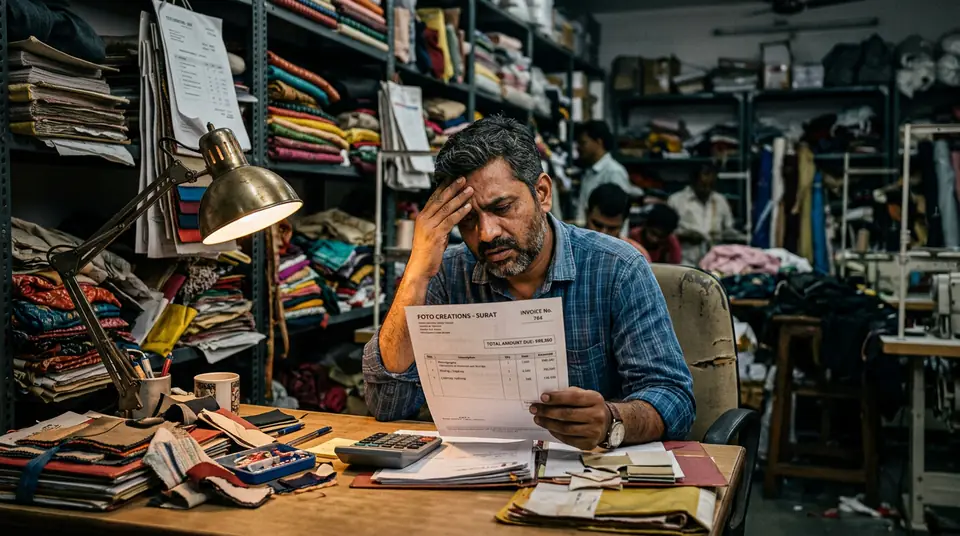
The perception is that WhatsApp is a hub for deals, discounts, and direct-from-manufacturer prices. There's a constant pressure from customers asking for the "lowest possible price" or comparing your product to something cheaper they saw on Meesho or Flipkart. Boutique owners often feel trapped, believing they must undercut competitors to even get a foot in the door, leading to razor-thin margins and exhaustion. It feels like a race to the bottom, and nobody wants to be left behind.
Chasing the lowest price is a losing game. Someone will always be cheaper. Your value proposition isn't just the product; it's the entire experience. It's your quick responses, your personalized recommendations, the trust you build, and, yes, the quality presentation of your products. My boutique isn't the cheapest in Jaipur, not by a long shot. But my customers pay a fair price because they know they're getting quality, reliable service, and beautiful pieces. Focus on building a brand, even if it's just you and your phone. When you deliver consistent quality and a great shopping experience, customers are willing to pay for it. They're paying for peace of mind, for convenience, and for the joy of receiving something special, not just a commodity.
My average customer lifetime value (CLTV) for those who've bought from me at full price, without heavy discounting, is ₹7,500 over 12 months. For customers who only ever bought discounted items, that number drops to under ₹2,000. People who value quality and service will return, and they'll bring their friends.
"I need to hire models for every new saree and kurti."
We've all seen the gorgeous fashion campaigns on Instagram or Myntra. Live models bring clothes to life; they show fit, drape, and styling ideas that flat lays just can't. There's a strong belief that to look professional and aspirational, every garment needs to be shot on a human model. This is especially true for intricate pieces like bridal lehengas or elaborate sarees, where the way it falls is crucial. Boutique owners often spend thousands, sometimes tens of thousands, on a single photoshoot, believing it's the only way to get high-quality images.
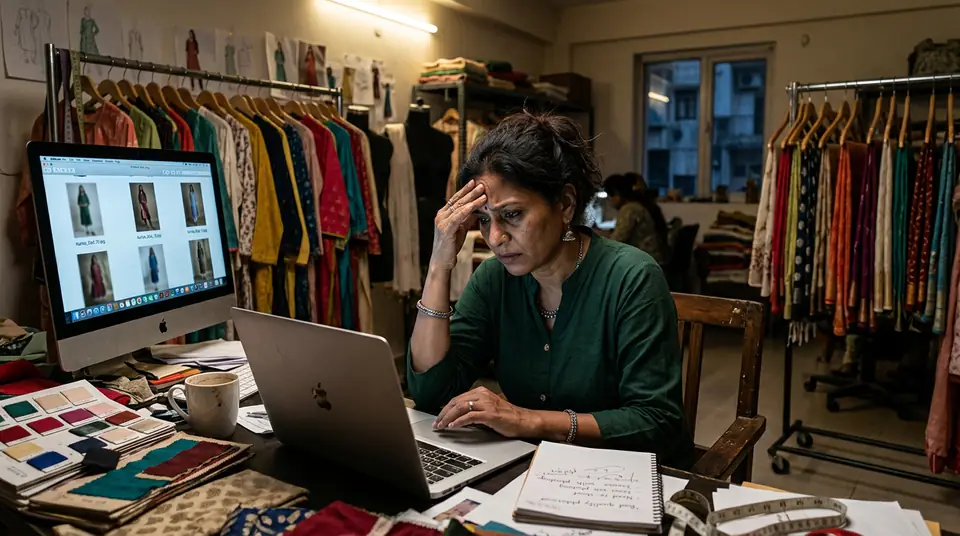
Hiring models, photographers, makeup artists, and renting a studio is a massive overhead, especially for a small business. A single day's shoot in Jaipur can easily cost upwards of ₹25,000-₹50,000, and that's just for a few styles. Then you have to factor in retakes, travel, and the sheer logistical headache. For most small businesses, it's simply not scalable for a constantly evolving inventory. The reality is, you need professional-looking, lifestyle-contextual images, but the "how" has changed dramatically. AI tools like DrapifyApp let you create stunning model photos from a single product shot. No models, no studio, no endless reshoots for colour variants. It's not about ditching models entirely, it's about being smart where you use them and scaling efficiently.
Before DrapifyApp, I would do two big photoshoots a year for my seasonal collections, costing me nearly ₹1 Lakh each. Now, I use AI for about 80% of my daily catalogue updates. It costs me around ₹13-15 per photo for 4K quality, and I get them in minutes. This means I can launch new designs for my kurtis and casual sarees daily if I want, without waiting for a shoot date or blowing my budget. For my premium wedding wear, I still do a small, curated human model shoot, but the bulk of my inventory is covered affordably and beautifully by AI.
"WhatsApp Business is too basic, it's not for serious scale."
When people think of scaling an e-commerce business, they often picture elaborate Shopify stores, complex inventory management systems, and large marketing budgets. WhatsApp Business, with its relatively simple interface, catalogue feature, and broadcast lists, feels like a stepping stone, not a destination. There's a common misconception that you'll quickly outgrow its capabilities if you start generating significant sales. "It's just for kirana stores or home bakers," some will say.
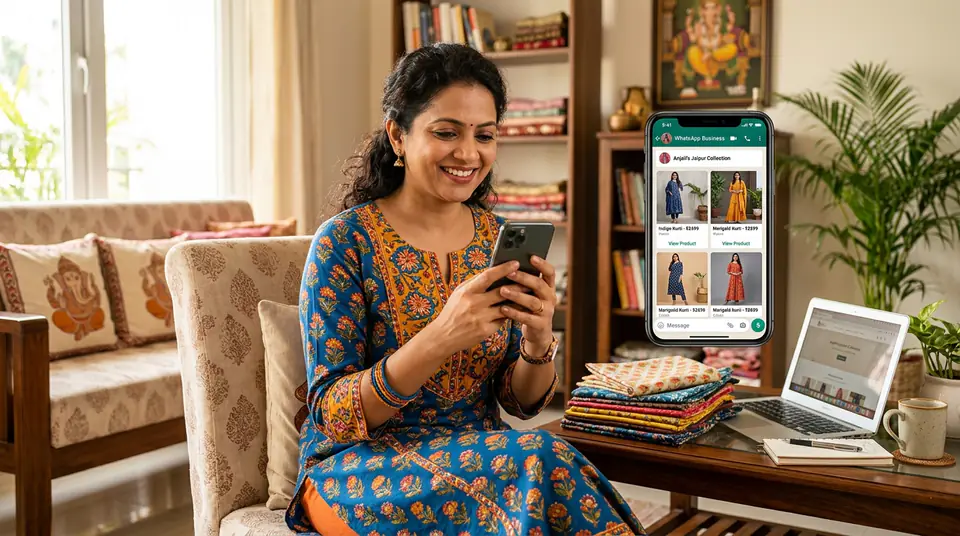
WhatsApp Business is a powerhouse, especially in India where almost everyone is on it. The key is how you leverage its features. The catalogue feature is fantastic for displaying your full range – a digital storefront right within the chat app. Broadcast lists, used judiciously, are incredibly effective for announcing new arrivals or flash sales without spamming groups. Quick replies save hours of typing. And with third-party tools or smart integrations, you can even automate parts of your customer service. My entire business started and grew on WhatsApp. I hit ₹3 Lakhs in sales some months, all managed through WhatsApp, a solid payment gateway, and a reliable delivery partner. It's about smart workflow, not platform complexity. The low barrier to entry means you can reinvest more into inventory and marketing, rather than expensive website upkeep. Using tools like DrapifyApp means my catalogue is always fresh and engaging, directly addressing customer needs on a platform they already use.
In a study by BCG and WhatsApp itself, businesses using WhatsApp Business reported up to a 2x increase in customer engagement and a significant boost in sales. My own experience is a testament: my average order value on WhatsApp is actually higher than any marketplace I've tried, about 18% higher. It's because of the personal connection and the trust built, something harder to replicate on a generic e-commerce site.