Why is showcasing every color variant important for online sales?
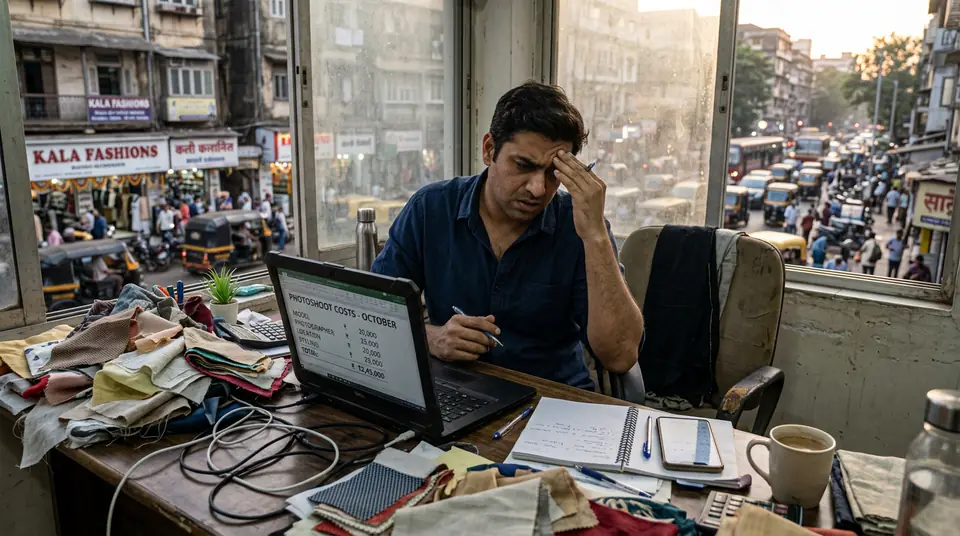
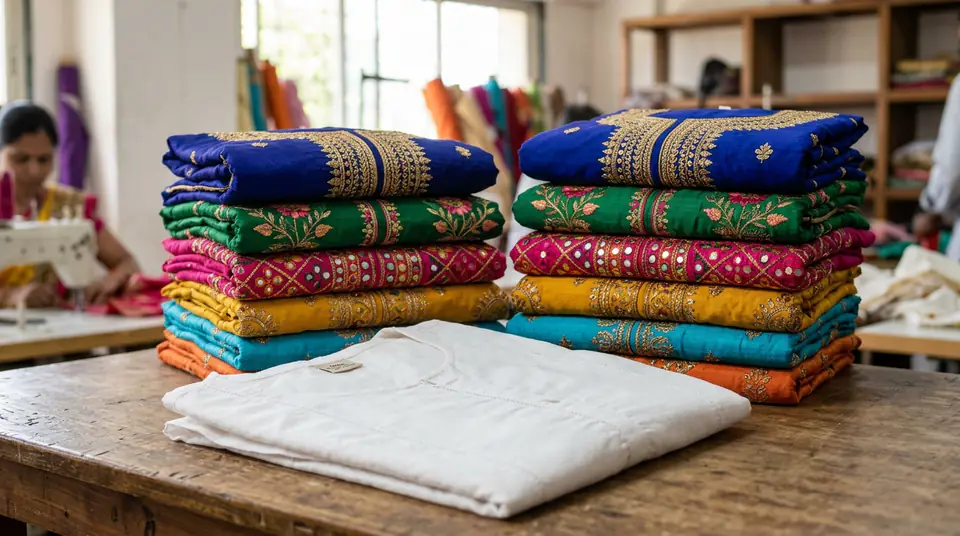
Showcasing every color variant is crucial for online sales because customers rely entirely on visuals to make purchasing decisions, and missing a variant means missed sales and higher returns. Think about it: when you're buying online, you can't touch the fabric or see the true shade in person. Your product photos are the only way a customer truly understands what they're getting. If a customer loves a kurti design but wants it in a specific blue, and you only show the red, they'll likely move on. They won't hunt for the blue on your website or imagine it exists perfectly. This isn't just a hunch; I've seen it repeatedly with my own boutique's WhatsApp sales and heard it from fellow sellers in Jaipur and Surat. People want certainty, especially when parting with their hard-earned rupees.
What does it actually cost sellers to not photograph all color variants?
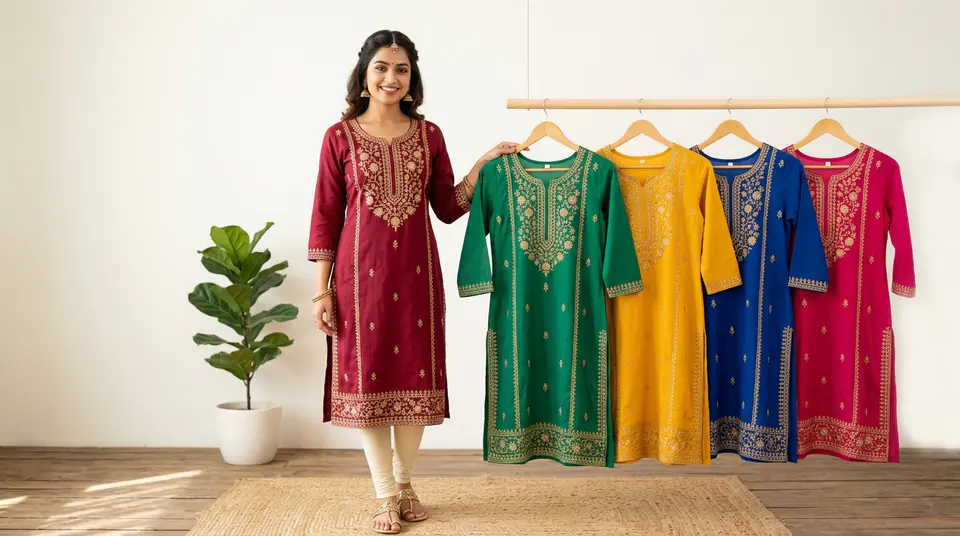
Not photographing all color variants costs sellers significantly in lost sales, increased return rates, and a diminished brand perception, especially on competitive platforms like Myntra and Amazon India. For years, I just showed 2-3 colors for my bestselling Anarkalis, assuming customers would understand if I wrote "also available in green, purple, yellow." That strategy cost me. My conversion rate for those specific products was always lower than items where I displayed every single shade. I've heard from a seller in Ahmedabad who calculated a nearly 15% drop in conversions for items where less than 70% of color variants were photographed. It's simple math: if you hide options, you miss sales. This isn't just about small losses either; it impacts your growth.
If 100 potential customers see a product, and 30 of them were specifically looking for a color you didn't photograph, those 30 sales are gone. Over a year, for even a moderate seller, that adds up to lakhs. A boutique owner in Bengaluru I spoke with recently mentioned she estimates losing ₹5,000 to ₹10,000 per month on popular kurti designs simply because she can't show all 5-7 color options.
When a customer orders a "blue" kurti based on a text description, and the blue they receive isn't what they pictured (perhaps it's a lighter sky blue instead of a navy), they'll often return it. Returns cost you shipping, processing, and restocking fees, not to mention unhappy customers. One of my connections in Delhi, who sells western dresses, found that accurate color variant photography cut her return rates by 8% over six months. This 8% might seem small, but for a business handling 500 orders a month, that's 40 fewer returns.
If your listings are incomplete, customers might perceive your brand as less professional or reliable. In India's crowded e-commerce space, trust is everything. A customer might wonder what else you're not showing or if the product quality is inconsistent. This hesitation can be the difference between a sale and a lost opportunity.
15% lower
conversion rate for incomplete variants
8% cut
in return rates with full variants
₹5,000-₹10,000
monthly sales loss for boutique on variants
Are marketplaces like Myntra and Amazon India strict about color variant photos?
Yes, major marketplaces like Myntra and Amazon India are increasingly strict about requiring accurate and comprehensive product photography for all color variants, often leading to listing rejections or poor visibility if not met. These platforms prioritize a consistent and high-quality shopping experience. They know incomplete listings lead to customer frustration and returns. I've had listings for sarees rejected on Myntra because I only provided photos for one pallu design when three variants were available. They're not doing this to make your life harder; they're protecting their own brand and ensuring customer satisfaction.
Customers being confused by text descriptions without matching visuals. Imagine buying a Bandhani saree only to find the shade of red is completely different from the single image you saw.
Returns are costly for marketplaces too, affecting their logistics and customer satisfaction scores. Every time a package goes back, it's a drain on their resources.
A patchy visual experience makes their entire platform look less professional. When a customer clicks through different color options on a product page, they expect to see a corresponding image update. If it doesn't, it breaks the shopping flow. On Amazon India, for instance, clear imagery for every selectable attribute, including color, is a must. If you only show one color, buyers can't visually confirm other options, hurting your search ranking and visibility. It’s a quiet but firm rule across all big players, from Meesho to Myntra. Ignoring these rules isn't just a slight disadvantage; it can result in your products being deprioritized in search results or even delisted, especially during high-traffic events like the Great Indian Festival or Big Fashion Festival.
Generate your own AI fashion photoshoot with Drapify — 50 free credits, no card required.
What are the traditional options for color variant photography in India?
Traditional options for color variant photography in India typically involve studio photoshoots with models, ghost mannequins, or flat lays, each coming with its own set of costs, time commitments, and logistical challenges. When I first started, I used a local photographer in Jaipur.
This is the gold standard for many, as it shows how the garment drapes and fits. But imagine having 10 kurtis, each in 6 colors. That's 60 unique shots needed, potentially 60 different looks for a model, plus hair, makeup, styling. A typical studio day rate in Delhi or Mumbai can be ₹40,000 to ₹70,000, plus model fees of ₹10,000-₹25,000 a day. For each variant, you're paying for additional setup, model changes, and editing. It's fantastic for a hero shot, but becomes astronomical for scaling your catalogue. You're not just paying for the click; you're paying for the whole production.
A step down in cost from live models, but still requires skilled photographers to layer multiple shots to remove the mannequin digitally. You save on model fees, but the per-product cost for intricate garments like sarees or lehengas can still be ₹300-₹800 per image due to post-production work. It's a good middle ground but still eats into margins for high-volume variant production.
The most affordable traditional method, where garments are artfully arranged and shot flat. For some products, this works. For a simple t-shirt or a scarf, it can convey the product adequately. But for a flowing anarkali or a heavy bridal lehenga, it simply doesn't convey the drape or fit properly. It lacks the aspiration and realism that customers expect for higher-value fashion items. It's often the last resort when budgets are tight, but it often leads to those higher return rates we discussed earlier. The big issue with all these: time. Getting 60 perfect shots, edited and approved, can take weeks, especially during peak seasons like Diwali or Eid. This slow turnaround means you could miss key selling windows.
| Photography Type | Average Cost Per SKU (5 Variants) | Timeframe | Pros | Cons |
|---|---|---|---|---|
| On-Model Studio | ₹15,000 - ₹35,000 | 2-4 weeks | Most realistic, aspirational | Very expensive, slow, logistical overhead |
| Ghost Mannequin | ₹1,500 - ₹4,000 | 1-2 weeks | Better drape than flat lay, no model fees | Still requires skilled editing, medium cost |
| Flat Lay | ₹500 - ₹1,500 | 3-7 days | Most affordable, simple setup | Lacks realism, poor drape visualization, high returns |
How can I photograph many color variants without breaking the bank?
You can photograph many color variants affordably and efficiently using AI fashion photography tools like DrapifyApp, which generate high-quality images for all your color options from just one existing product photo. Instead of re-shooting every single shade, you provide a single good photograph of your product – maybe a flat lay, a ghost mannequin shot, or even just a photo from your phone. Then, DrapifyApp uses AI to put that garment onto a diverse range of Indian models, creating new images for each of your specific color variants. This completely bypasses the studio, the models, the stylists, and all the associated logistical nightmares and costs.
For me, this was a lifesaver. When I needed to add more color options for my popular rayon kurtis, I used DrapifyApp to generate the new variant images. It cost me ₹9 per 1K resolution photo, which is a fraction of what a physical shoot would have demanded. I get my images back in about three minutes, ready for upload. This isn't just about saving money; it's about reclaiming your time and sanity, especially if you're a small boutique owner doing everything yourself. Imagine launching a new collection for Eid, and instead of a frantic week-long photoshoot, you've got all your color variants ready in a single afternoon. This approach frees up capital that would otherwise be tied up in photoshoots, letting me invest more in inventory or marketing. You can generate color variant photos with AI models for all kinds of garments, from simple tops to elaborate lehengas. It completely changes the economics of bulk catalogue photography for Indian sellers.
How do AI-generated color variant photos look on Indian garments?
AI-generated color variant photos from platforms like DrapifyApp are highly realistic and suitable for Indian garments, accurately depicting fabric texture, draping, and intricate details on diverse models. The technology has evolved dramatically. It's not just a quick Photoshop job; it intelligently applies the garment's texture and cut to the new color, making it look authentic. I use DrapifyApp for my block print kurtis and even for some of my less intricate sarees. The AI is trained on vast datasets of real fashion images, including a lot of Indian ethnic wear, making it particularly good at understanding Indian garment specifics.
The drapes, pleats, and way the fabric falls look natural on the AI models, whether it's the stiffness of a brocade or the flow of a georgette.
You can ensure the generated colors closely match your actual inventory by providing reference images or hex codes if available. This is crucial for customer satisfaction and reducing returns, as the visual representation is almost identical to the physical product.
DrapifyApp allows you to select from a range of Indian models, ensuring your brand resonates with a wider audience. Plus, these models are "identity-locked," meaning the same model appears across multiple poses for consistent branding. This consistency across your entire product line builds a stronger brand identity. When a seller from Indore asked me about scaling her traditional chanderi suits for Amazon India, I showed her how DrapifyApp could generate dozens of model photos for different colors and poses in about three minutes per variant. It's not just about cost; it's about speed and consistency at scale. With DrapifyApp, failed shots are auto-refunded, and credits never expire, which takes away much of the risk associated with traditional photography budgeting. You also get 50 free credits to start, so there's no harm in trying it out for your own collection.