Fabric to Listing: The Manufacturer's Dilemma
Getting a finished garment from your factory floor to an online marketplace listing, complete with high-quality model photos, used to mean one thing: a full-blown studio photoshoot. Now, with the rise of AI, manufacturers, wholesalers, and even small boutiques in places like Surat and Tirupur have a genuine choice. I've spent enough on ads to know bad photos sink sales faster than anything else, so picking the right production workflow isn't just about cost, it's about survival for your direct-to-consumer (DTC) ambitions.
This isn't some abstract discussion for venture-funded brands; this is for the guys in Ahmedabad and Jaipur moving dozens of new SKUs every week. We're breaking down the two main paths for getting your clothing ready for platforms like Myntra, Amazon India, or your own Shopify store: the traditional studio setup versus an AI-powered virtual photoshoot. We'll look at who each option suits best, the real numbers involved, and where the bottlenecks actually hit.
Head-to-Head: Traditional Studio vs. AI Virtual Photoshoot
The core differences between traditional and AI photoshoots for fashion product listings boil down to tangible metrics like cost, speed, and how much logistical headache you’re willing to take on.
| Criterion | Traditional Studio Photoshoot | AI Virtual Photoshoot |
|---|---|---|
| Upfront Cost | High (₹25,000-₹50,000+ per day for crew, models, studio) | Low (often free credits to start, then per-image pricing) |
| Per-Image Cost | ₹300-₹1,500+ (includes all overhead) | ₹13-₹50 (pure image cost, no other fees) |
| Turnaround Time | 2-4 weeks (shoot scheduling, actual shoot, post-production) | Minutes to a few hours (upload garment photo, get model photos) |
| Scalability (Variants) | Difficult and costly for multiple colour/size variants; often requires reshoots | Easy; generate unlimited variants from a single garment photo at no extra shoot cost |
| Consistency | Challenging to maintain across multiple shoots, models, or photographers | Excellent; consistent model identity, lighting, and style across thousands of SKUs |
| Flexibility | Low; creative decisions are mostly locked post-shoot. Reshoots are expensive. | High; easily change models, poses, backgrounds, or even clothing styles virtually. |
| Logistical Overhead | Very High (sample management, travel, crew coordination, approvals) | Very Low (upload digital photos of garments, manage online) |
| Returns Impact | High if photos aren't true-to-life; difficult to get perfect consistency | Lower potential if AI is used to create hyper-accurate, consistent product representation |
The Cost Factor: Where Every Rupee Counts
AI virtual photoshoots drastically cut down upfront and per-image costs compared to traditional studio shoots, which can make or break a manufacturer's budget when launching new collections.
I’ve seen Surat saree wholesalers pay ₹18,000-₹35,000 for a one-day catalogue shoot, minimum. That's for the photographer, studio rental, a model, makeup, and basic post-production. If you’re in Delhi or Mumbai, those figures easily jump to ₹25,000-₹50,000 per day, sometimes more for premium models or specific locations. And that’s just for one shoot. What about travel costs if your factory is far from a metro studio? What about multiple models for a diverse collection? Every extra detail adds another invoice.
With AI, most of those costs disappear. You're not paying for a studio, a physical model, a makeup artist, or catering. You're essentially paying for the computational power to render a photo. DrapifyApp, for instance, offers photos from as low as ₹13-₹15 per image. Let’s say you need 100 model photos for a new kurti line. A traditional shoot might set you back ₹30,000-₹50,000 for the shoot day alone, plus individual image processing. With AI, you’re looking at ₹1,300-₹1,500. That difference? It means you can invest in more ad spend, better fabric, or simply take home more margin.
₹25,000-₹50,000
Typical daily studio photoshoot cost in metros
₹13-₹50
Cost per AI-generated model photo
10x-30x
Cost reduction with AI for catalogue photos
Many brands underestimate the hidden costs of reshoots too. A slight colour mismatch, a bad pose, or a new model requirement for a marketplace listing can mean another full-day shoot or a hefty editing bill. AI tools allow you to iterate almost endlessly at minimal additional cost. For a deeper dive, check out my breakdown on fashion photoshoot cost in India.
Generate your own AI fashion photoshoot with Drapify — 50 free credits, no card required.
Speed & Scalability: Keeping Pace with Fast Fashion
AI-powered workflows deliver finished photos in minutes, allowing manufacturers to list new products or color variants instantly, unlike the weeks-long lead times of traditional studios.
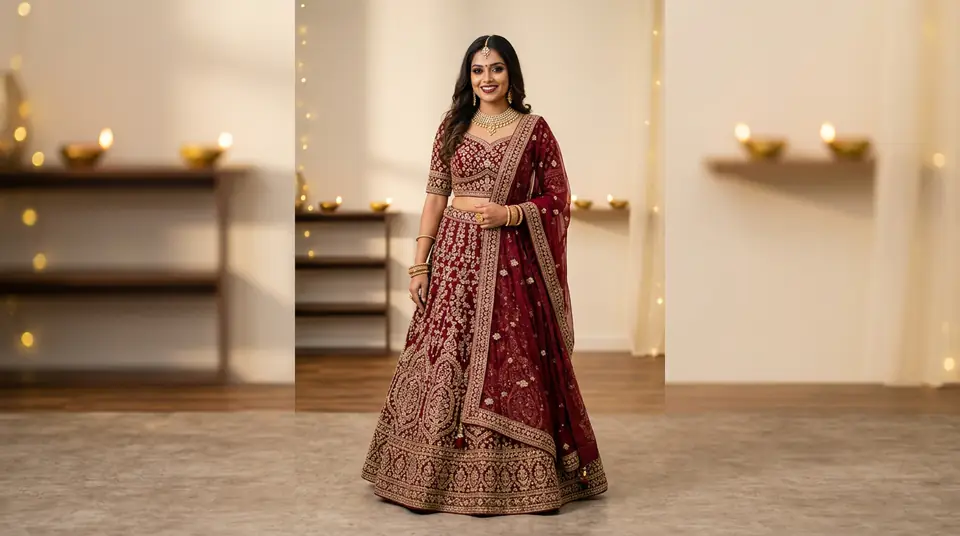
Think about it: you finish a new collection in Tirupur, maybe a batch of intricate lehengas for the upcoming wedding season. With a traditional setup, you're waiting weeks to book a studio, get samples shipped, coordinate models and stylists, conduct the shoot, and then wait another 10-15 days for post-production edits. That's a minimum of 3-4 weeks from garment completion to publishable photos. During festival rush – Diwali, Eid, Raksha Bandhan – this delay can kill your sales momentum.
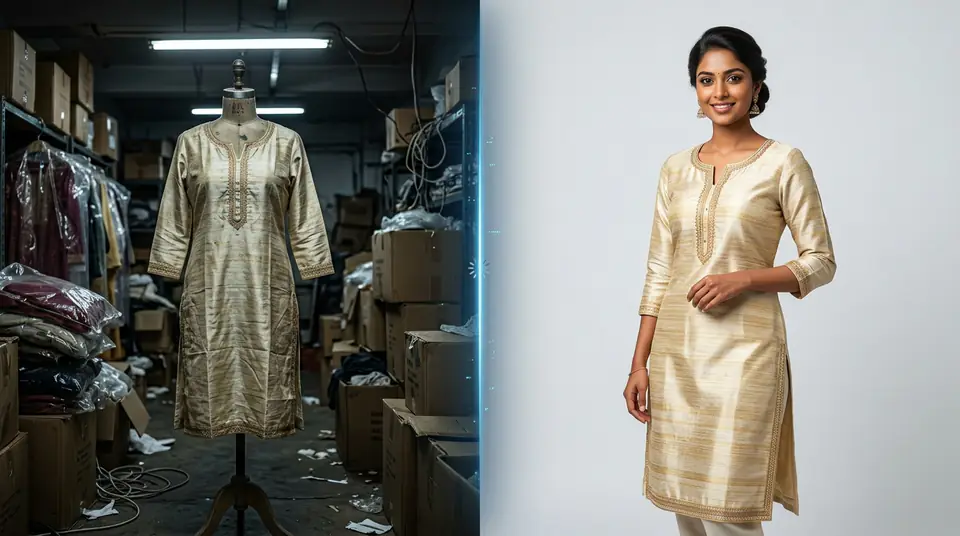
Manufacturers often miss market windows. A trend shifts, or a competitor launches something similar, and your carefully planned shoot schedule has you lagging. AI short-circuits this entire process. You photograph your physical garment on a hanger or flat, upload it, and within minutes, DrapifyApp gives you multiple model photos ready for your listings. This speed is critical for high-volume manufacturers, especially those managing hundreds of SKUs or rapidly changing designs. It’s how you get your new cotton kurtis listed on Myntra or Meesho the day they leave the factory, not a month later.
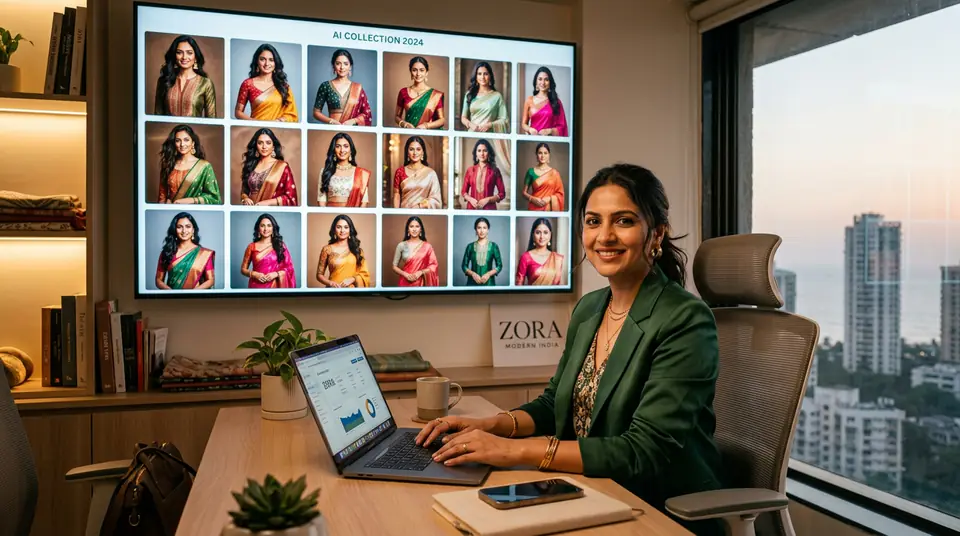
Scaling for hundreds of variants or multiple seasonal collections each year becomes trivial. Imagine producing 500 unique garments a week – a common scenario for a large-scale manufacturer. A traditional studio simply cannot keep up without exorbitant costs. AI tools are built for exactly this kind of volume, offering consistent quality and quick delivery. This approach truly allows you to scale your ecommerce bulk catalogue photography in India without compromising on timing.
Flexibility & Consistency: Brand Image on Autopilot
AI photoshoots offer unparalleled flexibility for model, background, and pose changes post-shoot, while maintaining consistent brand aesthetics across thousands of SKUs, a challenge for traditional methods.
I often tell clients that consistency in your product photos builds trust. If your models, lighting, and backgrounds are all over the place, your brand looks less professional, especially to new customers browsing Myntra. Traditional photography struggles here; different photographers, different shoot days, and even different models lead to subtle variations that accumulate. If you want to reshoot a collection with a new model or in a different pose, you're looking at significant time and money again.
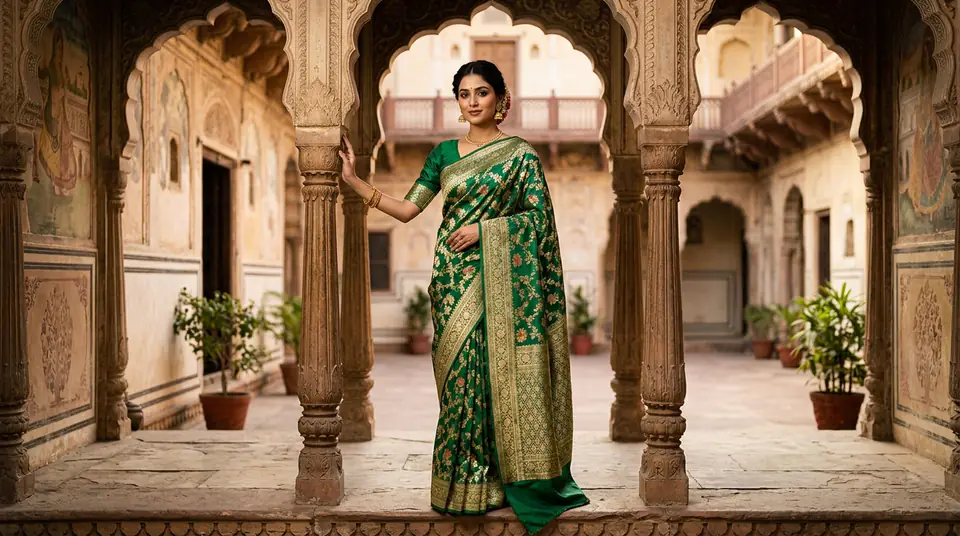
AI flips this. With DrapifyApp, you can select from a wide range of diverse Indian models, backgrounds, and poses, and apply them consistently to every product. If you decide a month later you want a different model for a specific collection, or a new pose, you just click a few buttons. No reshoot needed. This is especially powerful when you need to generate colour variant photos with AI models; you don't reshoot the same garment ten times for ten colours. You shoot it once and AI does the rest.
The ability to virtually swap models, change poses, or even test different aesthetic concepts without ever touching a physical garment means unprecedented creative control. This level of consistency and flexibility is almost impossible to achieve with traditional methods without a massive budget and a dedicated, in-house creative team.
Who Should Pick Which? Your Workflow Checklist
The choice between traditional and AI photoshoots depends heavily on a brand's specific needs, budget constraints, desired turnaround times, and the volume and complexity of their product catalogue.
I’ve seen enough businesses stumble because their workflow wasn't suited to their scale. Understand your core needs first. If you're still weighing the pros and cons, I've got a comprehensive comparison of AI vs Traditional Fashion Photoshoots that digs even deeper.
The Verdict: My Recommendation
For most Indian garment manufacturers scaling their direct-to-consumer operations, especially those selling on high-volume platforms like Myntra, Ajio, or Amazon India, an AI-powered virtual photoshoot offers a clear and undeniable advantage in cost, speed, and overall efficiency.
I burned ₹40 lakh on ads trying to make average photos convert. Trust me, the photography budget isn't where you want to cut corners, but it also shouldn't be where you sink your entire working capital. For manufacturers, the traditional workflow introduces too many delays, too much logistical overhead, and prohibitive costs for the sheer volume and speed required by modern ecommerce. You need to get your new line of ethnic co-ord sets or bandhani dresses online, not wait a month for a studio to catch up.
AI tools like DrapifyApp give you the power to control your visual assets in a way that was previously unimaginable for SMBs. You get professional-grade photos, featuring diverse models, in minutes, for a fraction of the cost. That frees up capital to acquire customers, develop new products, and genuinely grow your business. Stop thinking of photoshoots as a bottleneck, and start seeing them as an instant asset creation pipeline. It’s a shift in how you operate, and it’s a shift that pays dividends.