How much does a fashion photoshoot cost in India?
A fashion photoshoot in India typically costs anywhere from ₹15,000 to ₹80,000 per day for small to medium-sized D2C brands, largely depending on the scope, location, and talent involved.
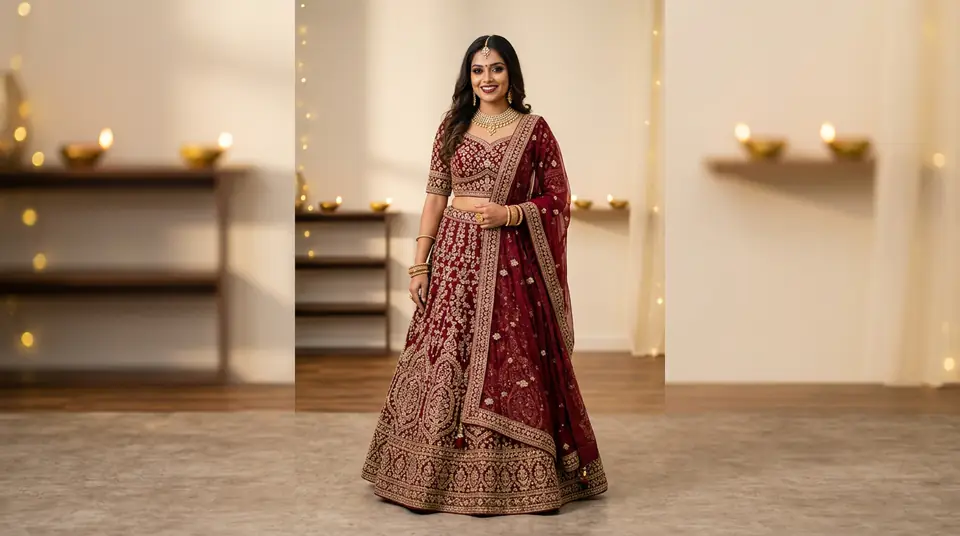
This isn't some arbitrary number; it's what I've seen countless times working with brands trying to scale from ₹5 lakh to ₹50 lakh a month. A basic catalogue shoot for a new kurti collection in a studio, featuring one model and 20-30 outfits, often starts around ₹25,000-₹35,000 in cities like Delhi or Mumbai. If you're looking for a more elaborate concept, say for a Diwali collection with multiple models, outdoor locations, and extensive styling, that bill can easily cross ₹60,000-₹80,000 for just a single day's work. These high upfront costs are a huge burden for any small brand, tying up capital that could be used for inventory, marketing, or even just working capital, which can genuinely stunt growth.
₹15,000
Basic single-model studio catalogue
₹45,000
Mid-range concept/outdoor shoot
₹80,000+
High-end multi-model campaign
What's included in a typical fashion photoshoot package?
A typical fashion photoshoot package usually covers the photographer's fee, studio rental, a single model's charges, basic hair and makeup, and post-production for a set number of images.
When you get a quote from a studio in, say, Bengaluru or Surat, they're bundling quite a few services. You're paying for the photographer's skill and equipment, which is fair enough. Then there's the studio space itself, lighting setup, and often a stylist or assistant. Model fees can vary wildly; a fresh face might charge ₹5,000-₹10,000 for a day, while an established influencer model could demand ₹25,000 or more. Hair and makeup artists add another ₹5,000-₹15,000. And don't forget the unseen hours: the editing, colour correction, and retouching after the shoot, which is often charged per image or as part of a package for, say, 50 final photos. If you need more models, more intricate styling, or a location outside the studio, those are almost always add-ons that inflate the final bill fast. I remember one brand I advised got hit with an extra ₹10,000 for 'complex draping' on their lehengas – a surprise nobody budgets for.
| Service | Typical Cost Range (₹/day) | Notes |
|---|---|---|
| Photographer Fee | 10,000 - 30,000 | Includes equipment & basic editing |
| Studio Rental | 5,000 - 15,000 | For 8-10 hours, standard setup |
| Fashion Model (1) | 5,000 - 25,000 | Experience, agency fees vary |
| Hair & Makeup Artist (1) | 5,000 - 15,000 | Basic to complex looks |
| Stylist/Assistant | 3,000 - 8,000 | Often bundled or additional |
| Post-production (per image) | 50 - 200 | Retouching, colour correction for ~50 images |
Why are traditional studio costs in India rising so fast?
Traditional studio costs in India are rising primarily due to increased demand for professional-grade content, higher operational expenses for studios, and the growing expectations for diverse talent.
Think about it: five years ago, a decent phone camera and a white sheet could get you by on Meesho or even basic listings on Amazon India. Not anymore. Buyers expect slick, high-quality images across Myntra, Flipkart, and even WhatsApp Business catalogues. This increased demand for quality means studios need better equipment, larger spaces in prime locations like Bandra or Lajpat Nagar, and more skilled staff. Real estate and electricity aren't getting cheaper, are they? Plus, brands are becoming more aware of the need for diverse Indian models, which means a broader pool of talent is required, and top models' rates naturally go up. It’s a classic supply-demand squeeze, with studios passing on those overheads to you, the seller. Your competition isn't sitting still, either; they're investing in better photos, forcing everyone to up their game, and that costs money. This cycle just pushes the baseline cost higher and higher, making it harder for new or small players to compete.
Generate your own AI fashion photoshoot with Drapify — 50 free credits, no card required.
Do AI fashion photos actually look real for D2C brands?
Yes, in 2024, AI fashion photos can look incredibly real and are virtually indistinguishable from traditional studio shots, especially when generated by advanced platforms like DrapifyApp.
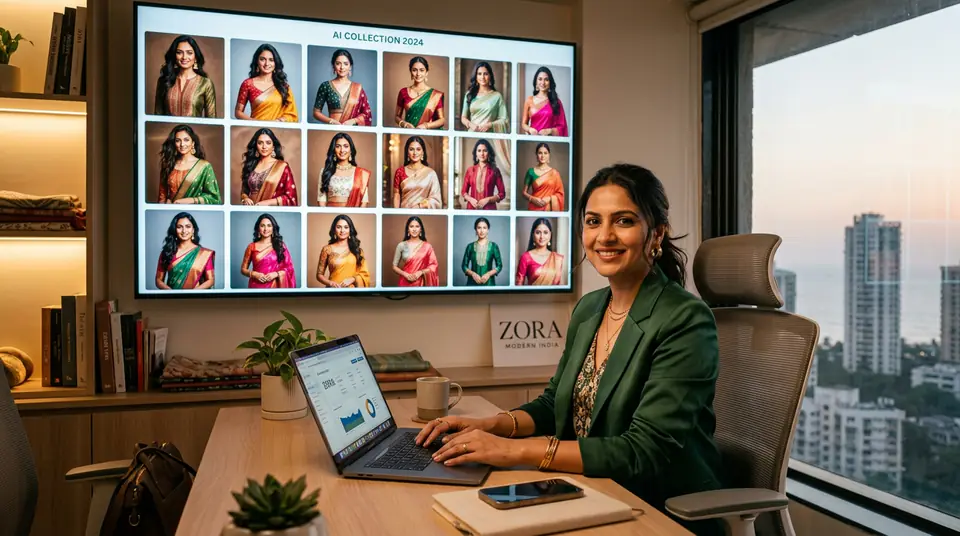
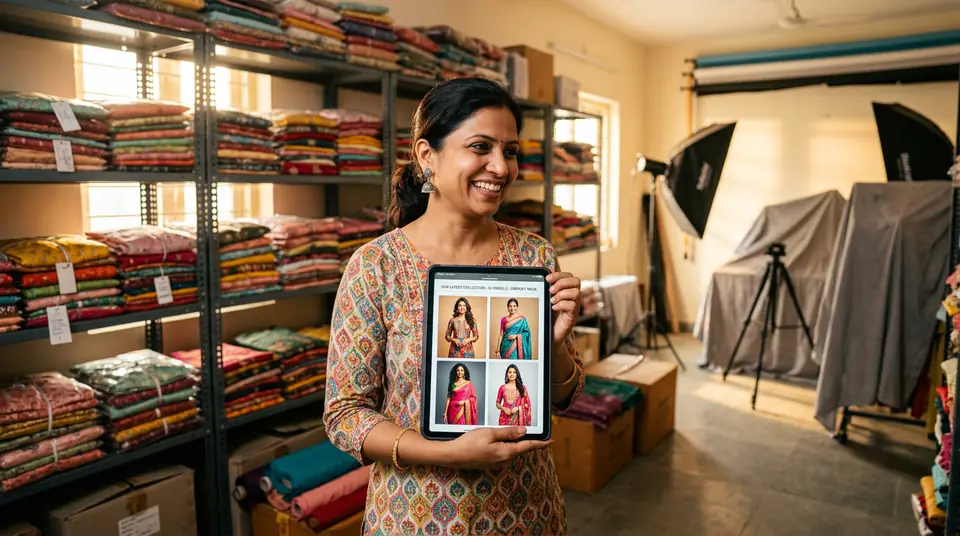
I get this question all the time, and frankly, I used to be skeptical too. But the technology has advanced leaps and bounds. We're not talking about those early, uncanny valley images anymore. Today, you can take a single flat lay photo of your kurti or saree, upload it to a platform like DrapifyApp, and get it modelled on diverse, identity-locked models in various poses and settings within minutes. The AI renders realistic drapes, shadows, and textures that genuinely reflect how the garment would look on a real person, from the fall of a Banarasi saree to the intricate pleats of a lehenga. I've personally seen brands switch their entire product line to AI models for marketplaces like Ajio and Myntra, and their conversion rates either stayed consistent or improved because they could afford more varied and consistent content. The proof is in the sales figures and the reduced return rates, especially for items where fit and drape are crucial. Check out our deep dive on AI fashion photos and the real truth for more insights.
A D2C brand selling ethnic wear in Ahmedabad recently transitioned their entire catalogue of 200 new designs to AI models using DrapifyApp. They reported zero customer complaints about model realism and saw a 10% uplift in engagement on Instagram compared to their previous ghost mannequin photos.
How can small D2C brands cut photoshoot costs without losing quality?
Small D2C brands can drastically cut photoshoot costs without sacrificing quality by leveraging AI fashion photography platforms, focusing on strategic product prioritisation, and optimising for colour variants.
First, the biggest lever is definitely AI. Instead of shelling out ₹30,000 for a single day, you can get high-quality model photos for around ₹13-₹15 per image with platforms like DrapifyApp. Imagine, for the cost of one studio day, you could get 2,000-3,000 model photos! This means you can create a huge, diverse catalogue fast, often in 3 minutes per photo. You'll get output in 1K/2K/4K resolutions, perfect for any marketplace. Second, be smart about what you shoot traditionally (if you must). Don't reshoot all 8 colour variants of a best-selling kurti if you can generate them with AI – you're literally paying for a model to change clothes seven extra times. This is where AI truly shines for scaling your ecommerce bulk catalogue photography and handling color variant photography efficiently. Prioritise your 10-20 bestsellers for any traditional shoots and use AI for the rest of your inventory, especially for less-critical back-catalogue items. Lastly, look for platforms that offer features like identity-locked models across poses, so your brand aesthetic stays consistent. The savings aren't just monetary; it's also time, which for a small brand, is often even more valuable.
When should a brand still consider a traditional fashion studio in India?
A brand should still consider a traditional fashion studio in India for highly conceptual brand campaigns, intricate editorial shoots, or when a unique artistic vision requires direct human interaction with complex styling and multiple specific elements.
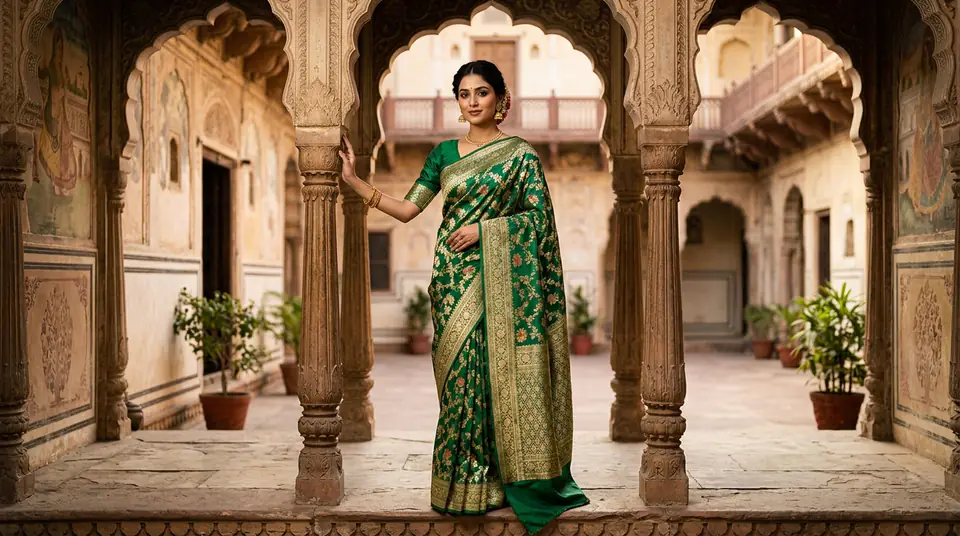
While AI is fantastic for catalogue work and scaling, there are still situations where a human touch is indispensable. If you're launching a premium bridal wear collection and need to convey an aspirational narrative with elaborate sets, specific real-world locations like a heritage palace in Jaipur, or highly intricate draping that changes with every movement, then a traditional studio is likely your best bet. These are the kinds of shoots where the 'feel' and the story are as important as the garment itself, requiring a nuanced artistic direction and spontaneous adjustments that AI can't quite replicate yet. Or perhaps you need to capture a very specific interaction between two models, or a unique lighting effect that AI tools aren't quite perfected at reproducing. For the bulk of everyday ecommerce listing photos, however, especially on platforms like Meesho where volume and speed matter, the traditional studio model is becoming a luxury most small brands simply can't afford if they want to grow profitably.
“In the early days, we spent half our marketing budget on photoshoots. Now, we use AI for 90% of our catalogue and save the studio budget for one big brand campaign a year. It's transformed our cash flow.”