"My brand is premium, so my listing photos should look like a magazine spread."
This is a widespread belief, especially among D2C brands launching expensive kurtis or artisan sarees: a magazine-quality lookbook feels like the right fit for a premium product. You've poured capital into design, fabric, and crafting a high-end experience. It's natural to assume your product imagery should reflect that same aspirational, editorial vibe across the board.
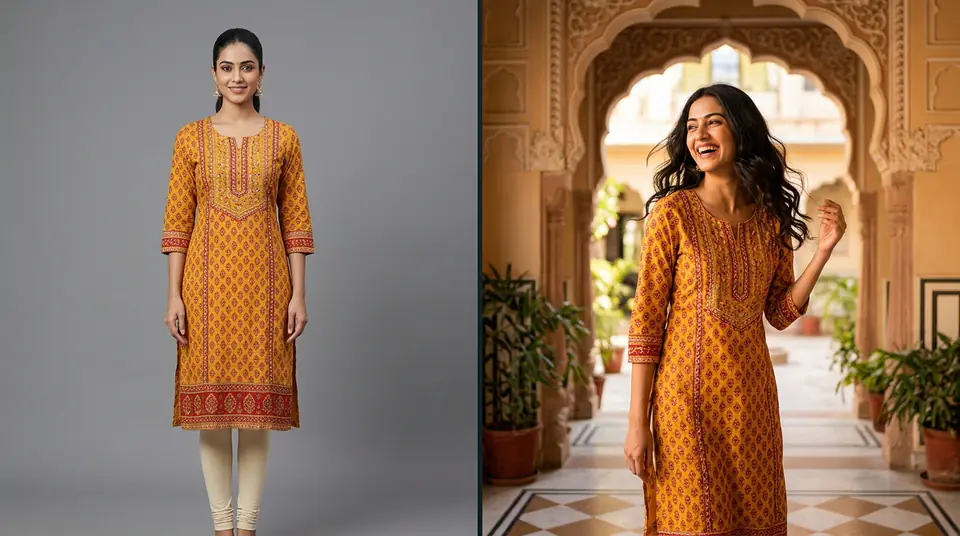
The reality, however, is that while lookbook shots build brand mystique and generate buzz on Instagram, they actively kill conversion when used as primary product listing images. Buyers on platforms like Myntra or your Shopify store aren't browsing for inspiration; they're shopping to buy. They need clarity, detail, and trust. A wide shot with a model gazing into the distance and a tiny garment tucked into an artistic composition doesn't help them check the embroidery, the hemline, or the exact shade of emerald green. It creates friction. A good lookbook showcases a lifestyle; a good listing photo sells a product.
In my experience managing catalogues for Surat-based manufacturers, products with clearly lit, full-frame listing photos featuring the garment prominently saw an average of 15-20% higher click-through rates (CTR) compared to those using overly artistic, wide-angle shots that prioritised mood over product visibility.
"Only traditional studio photoshoots guarantee quality for premium fashion."
Many brand owners believe that the high cost and manual effort of a traditional studio photoshoot is a necessary evil to achieve the 'premium' quality their garments deserve. They think that without a physical studio, human models, and a team of photographers and stylists, their imagery won't convey luxury or trustworthiness. It's a deeply ingrained habit, a comfort zone, really.
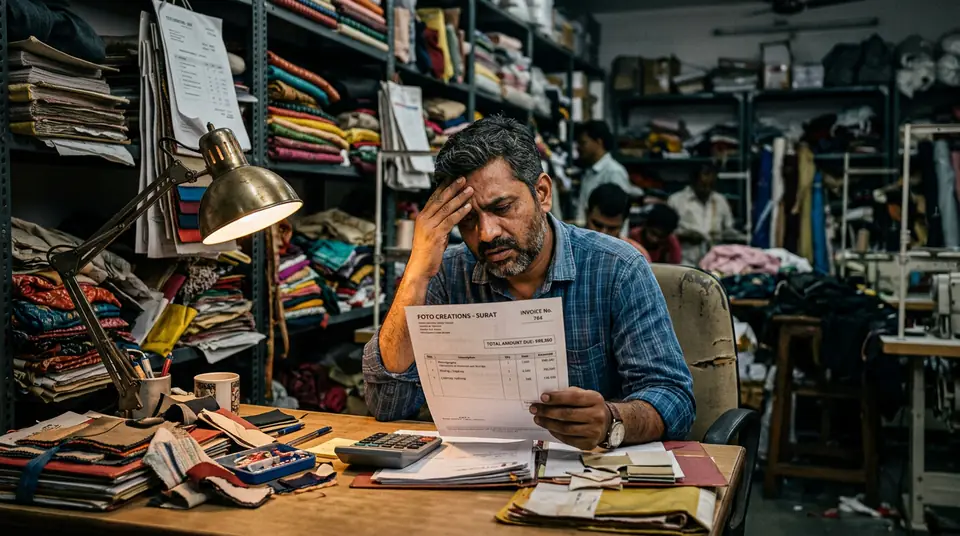
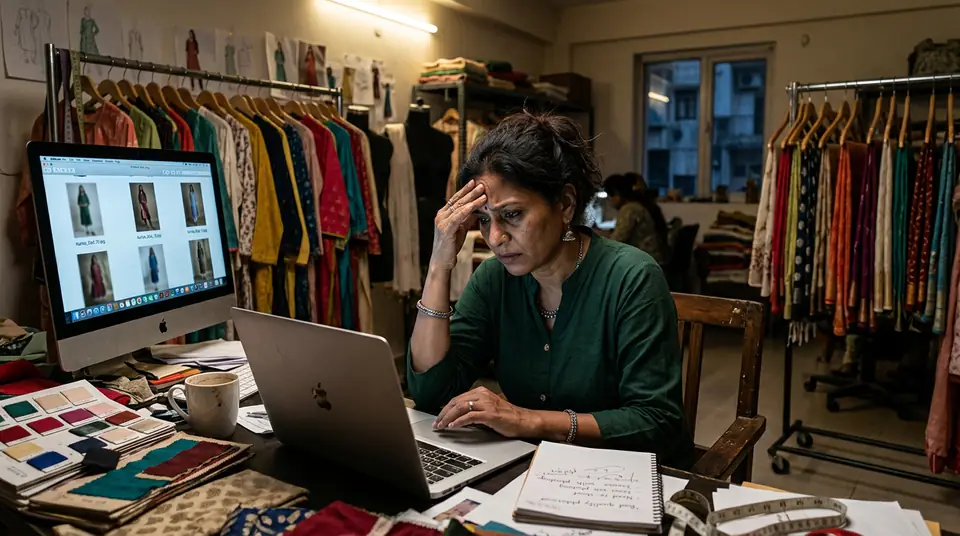
The truth is, while studios deliver a certain type of quality, that quality often comes with bottlenecks, inconsistencies, and hidden costs that actively work against the agility modern ecommerce demands. Monsoon delays in Mumbai can push back shoots by weeks. A model falling sick in Delhi means a reshoot. Plus, maintaining colour accuracy across hundreds of SKUs when different photographers or studios are used becomes a nightmare. Today, advanced AI tools can produce studio-quality output with incredible consistency, often from a single garment flat lay, at a fraction of the time and cost. The output resolution is often 4K, indistinguishable from a real shoot.
A typical two-day studio shoot for a collection of 50 kurtis in Ahmedabad might cost ₹40,000-₹60,000, including model, photographer, and location, yielding around 300 usable images. That's ₹130-₹200 per image. Using DrapifyApp, that same output could be achieved for roughly ₹13-₹15 per photo, enabling brands to scale collections faster and more affordably without sacrificing visual fidelity or model diversity.
"Only traditional studio photoshoots guarantee quality for premium fashion."
Many brand owners believe that the high cost and manual effort of a traditional studio photoshoot is a necessary evil to achieve the 'premium' quality their garments deserve. They think that without a physical studio, human models, and a team of photographers and stylists, their imagery won't convey luxury or trustworthiness. It's a deeply ingrained habit, a comfort zone, really.
The truth is, while studios deliver a certain type of quality, that quality often comes with bottlenecks, inconsistencies, and hidden costs that actively work against the agility modern ecommerce demands. Monsoon delays in Mumbai can push back shoots by weeks. A model falling sick in Delhi means a reshoot. Plus, maintaining colour accuracy across hundreds of SKUs when different photographers or studios are used becomes a nightmare. Today, advanced AI tools can produce studio-quality output with incredible consistency, often from a single garment flat lay, at a fraction of the time and cost. The output resolution is often 4K, indistinguishable from a real shoot.
A typical two-day studio shoot for a collection of 50 kurtis in Ahmedabad might cost ₹40,000-₹60,000, including model, photographer, and location, yielding around 300 usable images. That's ₹130-₹200 per image. Using DrapifyApp, that same output could be achieved for roughly ₹13-₹15 per photo, enabling brands to scale collections faster and more affordably without sacrificing visual fidelity or model diversity.
Generate your own AI fashion photoshoot with Drapify — 50 free credits, no card required.
"Aspirational, heavily styled shots always drive higher sales."
The thinking here is that premium fashion isn't just about the garment; it's about the dream, the lifestyle. Brands assume that by showing a heavily styled shot – a model on a yacht in Goa wearing a flowy dress, or posing in front of a majestic Rajasthani palace with a lehenga – they're selling the 'aspiration' which then translates into higher perceived value and, ultimately, more sales. They spend a lot on elaborate sets and props to create this image.
But an aspirational shot, while great for branding campaigns, often creates a visual disconnect on a product page. Customers aren't buying the yacht or the palace; they're buying the dress. If your listing image is too busy, too far away, or the garment is obscured by styling, you're making it harder for the customer to imagine themselves in that exact product. This leads to increased bounce rates, cart abandonment, and eventually, higher returns because expectations don't match reality. Clear, neutral backgrounds and natural posing that focuses on the garment's drape and details are what truly convert. This is especially true on marketplaces like Meesho where buyers are price-sensitive and detail-focused.
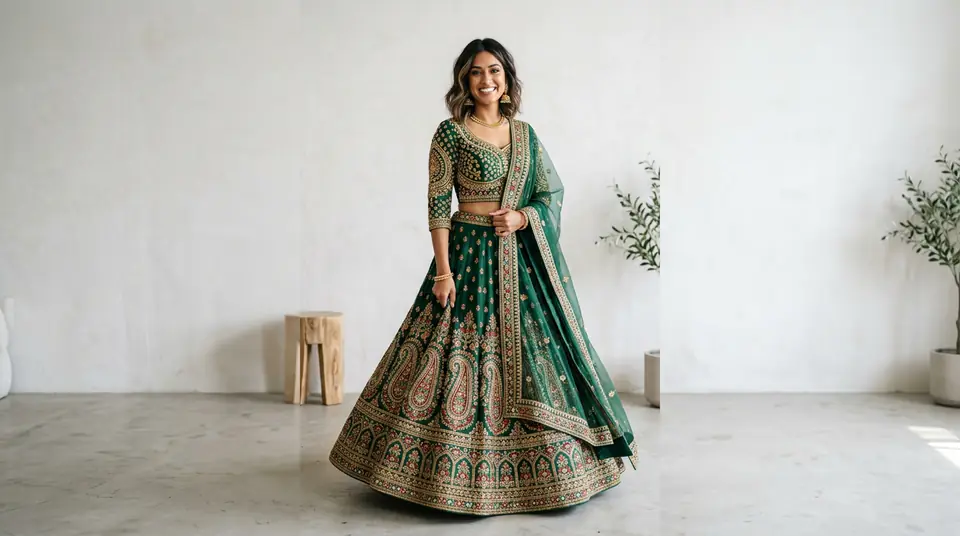
One Myntra seller, after moving from highly stylized, editorial shots to clean, consistent ecommerce product photography for their premium festive wear collection, saw their conversion rate for lehengas increase by 8.5% over the Diwali season. Buyers valued clarity over artistic flair on product pages.
"Using fewer, 'hero' images per product simplifies the buying decision."
Some brands believe that presenting a single, perfect 'hero' shot, or just two-three impressive photos, is enough. The idea is that an overwhelming number of images might confuse the customer or make the page load slowly. They think one incredibly strong image communicates all the necessary information, especially for a high-value item.
This is a critical misstep. In online fashion retail, customers can't touch, feel, or try on the garment. Their decision hinges entirely on the visual information you provide. Limiting images means limiting crucial details like fabric texture, embroidery close-ups, back views, side views, and how the garment drapes on a real body. It raises unanswered questions and breeds doubt. A complete visual story, telling customers everything they need to know, is what truly simplifies the decision and reduces purchase anxiety. Think about the various angles a buyer would look at a saree or a kurti in a physical store; your online listing needs to replicate that.
| Image Type | Purpose | Impact on Conversion |
|---|---|---|
| Front View (Full) | Overall garment shape, fit | Essential baseline |
| Back View (Full) | Rear design, closures | Clarifies fit, design integrity |
| Side View (Full) | Silhouette, drape, seams | Comprehensive fit assessment |
| Close-up (Detail) | Fabric texture, embroidery, embellishments | Builds trust, conveys quality |
| Lifestyle/Styled (Partial) | Contextualizes garment, shows movement | Secondary, for inspiration after detail is clear |
"Using fewer, 'hero' images per product simplifies the buying decision."
This is a critical misstep. In online fashion retail, customers can't touch, feel, or try on the garment. Their decision hinges entirely on the visual information you provide. Limiting images means limiting crucial details like fabric texture, embroidery close-ups, back views, side views, and how the garment drapes on a real body. It raises unanswered questions and breeds doubt. A complete visual story, telling customers everything they need to know, is what truly simplifies the decision and reduces purchase anxiety. Think about the various angles a buyer would look at a saree or a kurti in a physical store; your online listing needs to replicate that.
| Image Type | Purpose | Impact on Conversion |
|---|---|---|
| Front View (Full) | Overall garment shape, fit | Essential baseline |
| Back View (Full) | Rear design, closures | Clarifies fit, design integrity |
| Side View (Full) | Silhouette, drape, seams | Comprehensive fit assessment |
| Close-up (Detail) | Fabric texture, embroidery, embellishments | Builds trust, conveys quality |
| Lifestyle/Styled (Partial) | Contextualizes garment, shows movement | Secondary, for inspiration after detail is clear |
7-10
optimal number of images per product
50%
increase in conversion with detailed shots
30%
reduction in returns with comprehensive visuals
"Diverse models are nice, but they don't impact my bottom line."
Many premium brands, particularly those rooted in traditional aesthetics, tend to stick with a very narrow range of models – typically light-skinned, slender, and conventionally attractive, believing this represents the 'ideal' and appeals to everyone. They think it's a 'nice-to-have' for brand image, but not something that directly affects sales or their profit margins. It's an outdated perspective, clinging to old advertising norms.
The reality is that diverse Indian models directly boost conversion. When a customer sees someone who looks like them – matching skin tone, body type, age, or regional features – wearing a garment, they can instantly better visualize themselves in that product. This connection builds confidence and trust, two huge drivers of online purchase. It's not just about being inclusive; it's about smart business. For a lehenga brand targeting wedding season, showing real Indian body types and skin tones means more potential brides can see how it'd look on them, not just on a generic model.
A case study from an online ethnic wear boutique in Bengaluru showed that after integrating a wider range of AI models with diverse body types and skin tones into their listings using a tool like DrapifyApp, their target audience's engagement metrics — time on page, add-to-cart rate — improved by 22% for their saree collections. People simply relate better and feel more confident buying when they see themselves represented. This is why tools offering diverse Indian models photoshoot are gaining traction.