The Hum of looms and the Looming Dread of Diwali
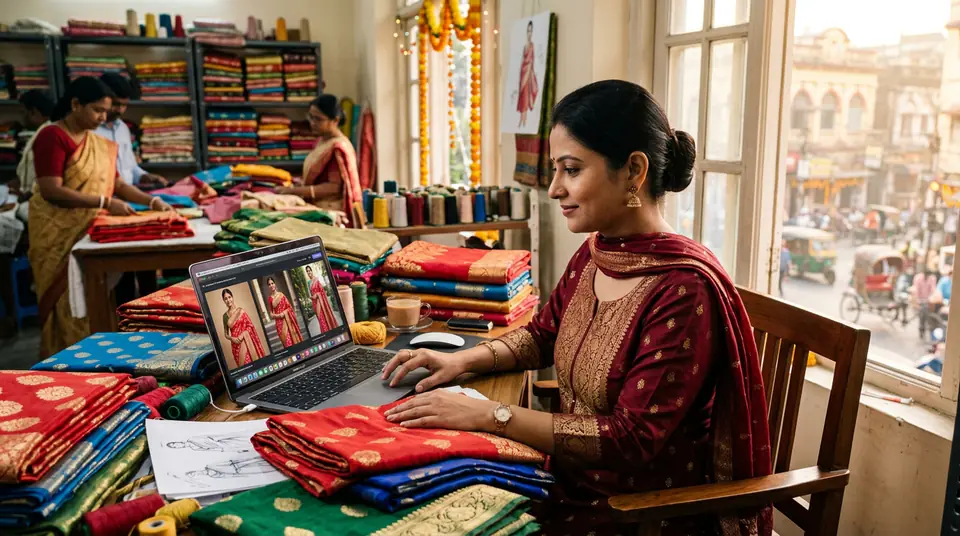
Anjali Sharma’s office in North Kolkata hummed with activity, the rhythmic clack of looms a distant echo from the workshops in the winding lanes below. Her brand, 'The Saree Story,' had built a loyal following for its exquisite Banarasi and Kanjivaram silks, painstakingly sourced and curated. It was early September, and the air already carried a faint whiff of incense and anticipation. Diwali was just around the corner. For Anjali, though, the festival of lights cast a long shadow of dread. It meant a surge in demand, yes, but also the annual catalogue photoshoot sprint – a brutal, expensive ordeal that had almost broken her spirit more than once.
Each festival season, 'The Saree Story' needed at least 200 new SKUs – a mix of classic weaves and contemporary designs. Getting these beauties ready for Myntra, Amazon India, and her own Shopify store wasn't just about production; it was about presentation. And presentation, in the world of online sarees, meant models, makeup, stylists, a studio, and a photographer. A whole army, really, marching to the beat of an ever-tightening deadline.
The Breaking Point: Monsoon Madness and Missing Out
Last year, the monsoon had decided to stretch its stay, soaking Kolkata right into October. Anjali had booked a scenic heritage villa for a grand outdoor shoot, envisioning soft, diffused light highlighting the intricate zari work of her new collection. Two days before the shoot, the forecast turned apocalyptic. Heavy rains, unrelenting. Cancellation was the only option. Scrambling for an indoor studio last minute was a nightmare. The good ones were booked solid. She settled for a mediocre space, the lighting flat, the backdrop uninspiring.
That delay meant her Diwali collection hit the marketplaces a full ten days late. Ten days! In the cutthroat world of festival sales, that's an eternity. Her competitors, nimble and ready, snatched up early bird orders. Anjali watched, helpless, as her projected sales figures for the first week of Diwali plummeted. "We missed out on at least ₹8-10 lakhs in sales," she told me, her voice still carrying the frustration months later. "All because of a photoshoot that went sideways. It wasn't just the money; it was the sheer mental exhaustion. The anxiety. I almost threw in the towel right then."
The Costly Cycle of 'Trying Everything'
Over the years, Anjali had tried almost everything to streamline her photography. First, hiring cheaper local photographers. The results were inconsistent, the models amateur, the editing shoddy. Customers complained about colours not matching the actual product, leading to higher return rates. That experiment bled her brand's reputation more than it saved money.
Then, she tried an in-house setup with a basic DSLR and a friend. "Bless her heart, my friend tried," Anjali laughed, "but saree drapes are an art. The lighting was always off, and the pleats looked… sad. We looked like a roadside stall, not a premium brand." She even considered a big-name Mumbai agency. Their quote for 200 SKUs? Close to ₹6 lakhs, plus travel and accommodation. And a four-week turnaround time. Not feasible for the seasonal rush.
Generate your own AI fashion photoshoot with Drapify — 50 free credits, no card required.
The Switch: From Skepticism to Scale
A casual mention from a fellow seller at a trade expo piqued her interest: AI fashion photography. Anjali was a traditionalist. Sarees were heritage; how could an algorithm capture their soul? She was skeptical, to say the least.
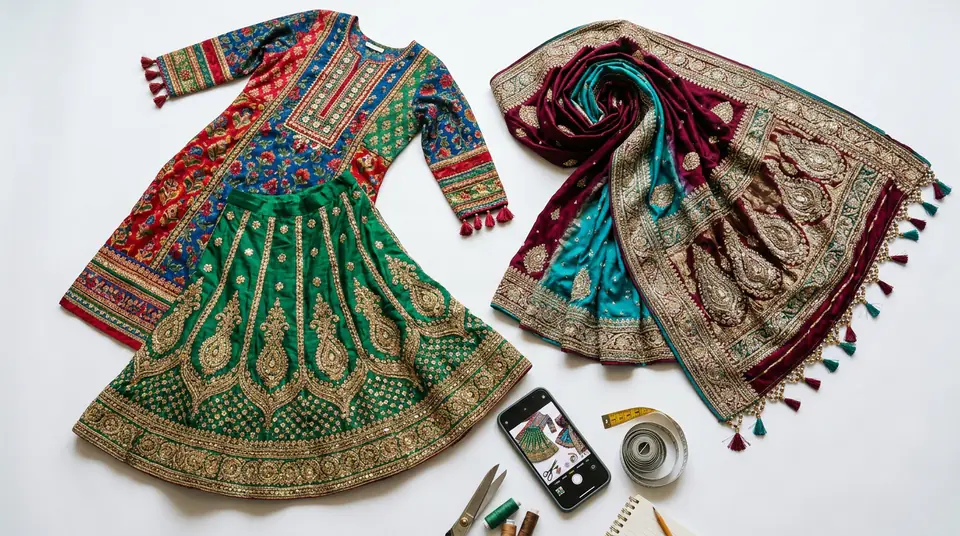
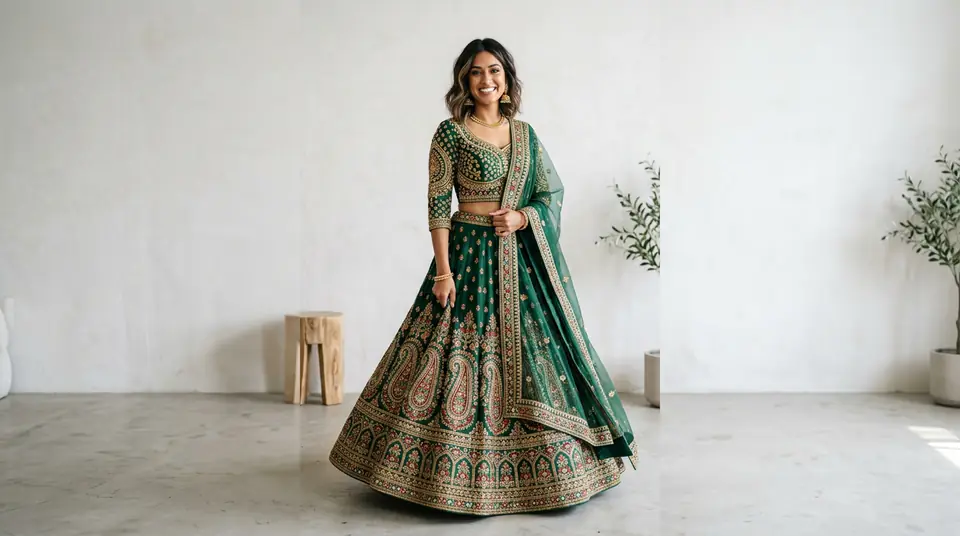
Still, the memory of last Diwali's disaster lingered. She decided to try DrapifyApp. The promise: AI-generated photoshoots from a single garment image, in minutes, at a fraction of the cost. The 50 free credits were a low-risk way to test the waters. She uploaded photos of six of her best-selling Banarasi designs, chose a model from DrapifyApp’s diverse roster, and selected a few poses. Three minutes later, she had stunning, high-resolution images. Consistency was the first thing that struck her. The model, the lighting, the backdrop – all uniform, yet natural. The drapes were impeccable. Even the zari shimmered right.
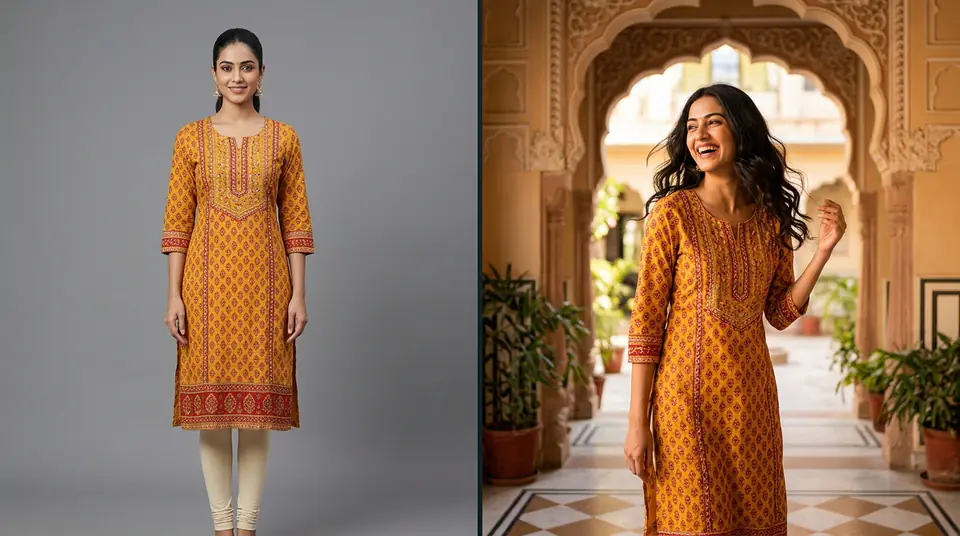
The next step was bolder: she used DrapifyApp for 50 new Kanjivaram designs. She could choose the same model, ensuring her brand's visual identity remained cohesive across her catalogue. The ability to generate colour variants without needing to reshoot each shade was a godsend. It transformed her workflow from a logistical nightmare into a simple upload-and-click process. No more chasing models, no more rain delays, no more studio booking headaches.
The Numbers Don't Lie: A Transformed Festival Season
This past Diwali, 'The Saree Story' launched its entire collection ahead of schedule. Anjali had a calm smile, not a furrowed brow, when the festive season began. The numbers spoke for themselves.
₹3.5 Lakhs
Average studio photoshoot cost (before)
₹55,000
DrapifyApp cost for equivalent photos (after)
3-4 Weeks
Catalogue turnaround time (before)
2 Days
Catalogue turnaround time (after)
Her catalogue featured over 300 new SKUs, a 50% increase from previous years. The speed meant she could react to trends faster, uploading fresh designs as soon as they came off the loom. This agility translated directly into sales. 'The Saree Story' saw a 40% year-on-year growth in festival season revenue, crossing the ₹1.5 crore mark for the first time.
Beyond the Numbers: Peace of Mind
It wasn't just the financial gains, though those were substantial. Anjali regained her weekends. She spent more time curating designs, connecting with weavers, and strategizing her brand’s growth, rather than being bogged down in photoshoot logistics. The stress melted away.
“Before, Diwali meant I was constantly running around, pushing deadlines, stressing over every detail. Now, I feel like I've actually got time to enjoy the festival, not just prepare for it. It's truly changed how I view seasonal launches.”
DrapifyApp’s identity-locked models meant her brand maintained a consistent aesthetic. Customers recognized the 'face' of 'The Saree Story' across all new collections. This consistency built trust, making customers more comfortable buying premium sarees online without seeing them in person. The cost-effectiveness (around ₹13-15 per photo for 4K output) meant she could experiment more with product lines, knowing a photoshoot wouldn't break the bank.
Anjali's Advice: Embrace the New Way
I asked Anjali what she'd tell other D2C brand owners still struggling with the festival sprint. Her advice was blunt, born from experience. "Stop clinging to how things 'should' be done. The old way – expensive studios, multiple models, weeks of delays – it's a bottleneck. It’s bleeding your profit margin and your sanity. For brands like mine, dealing with hundreds of unique products and fast-changing fashion cycles, AI is the only way to genuinely scale without compromising quality."
She continued, "Your time is best spent on design, marketing, and connecting with your customers. The grunt work of catalogue photography? Let DrapifyApp handle it. You don't need to be a tech wizard. Just take a clear picture of your garment, upload it, and let the AI do its magic. It’s that simple. It’s what allowed 'The Saree Story' to not just survive another Diwali, but to truly thrive."