01.1. The Colour Conspiracy: Your 'Maroon' is Not My 'Maroon'
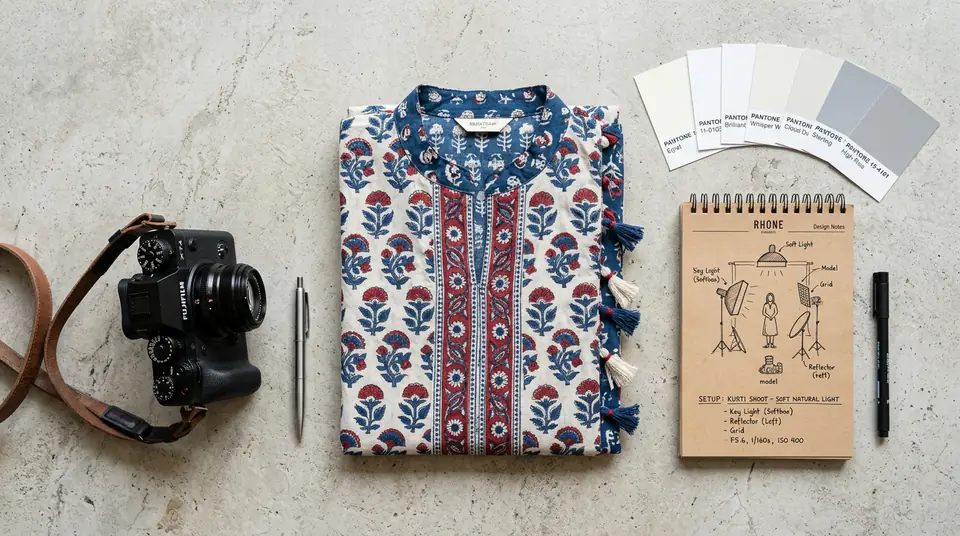
This is a big one, a real profit killer. We've all seen it: a vibrant rani pink lehenga on Myntra that turns out to be a dull magenta when it arrives. The customer feels cheated, and who can blame them? Different screens show colours differently, sure, but your photography setup? That's where the real problem starts. Bad lighting, incorrect white balance, and lazy post-processing can completely alter how a garment's true shade appears online. If your studio lights are too yellow or your editor boosts saturation too much, your "forest green" might look like "teal" to your customer. They'll send it back, guaranteed. It's not them, it's your dodgy colour rendering.
02.2. Sizing Sorcery: That Model is Pinned, Not Fitted
You think everyone's just bad at measuring? Nope. Often, your photos are lying about the fit. I've seen countless studios in Jaipur, even some expensive ones, where the stylist is busy pinning the garment to fit the model perfectly, making an XL kurti look like a snug M. It creates this illusion of a flawless fit on an ideal body type. What happens when it reaches someone with actual curves or a different frame? Instant disappointment. That perfect drape you showed? It's all thanks to clips and tape. Be honest with your sizing; show the garment as it is on the size you're selling. Customers appreciate truth, not tricks.
03.3. Fabric Feel Fiasco: Photos Just Can't Show That Texture
How do you convey the buttery softness of a modal silk saree or the crisp roughness of a pure linen kurta through a flat image? It’s tough, isn't it? Many sellers rely on plain, brightly lit shots that flatten all texture. Then the customer gets a scratchy fabric that looked smooth, or a flimsy one that seemed substantial. This disconnect, where the tactile experience clashes with the visual promise, is a massive driver of returns. Your photos need to hint at the fabric's story. With tools like DrapifyApp, you can generate detailed close-ups and dynamic poses that help suggest texture, giving customers a better, more honest preview of what they're actually buying. It really helps bridge that gap.
Generate your own AI fashion photoshoot with Drapify — 50 free credits, no card required.
04.4. Detail Drought: Where's That Zardozi Work Close-Up?
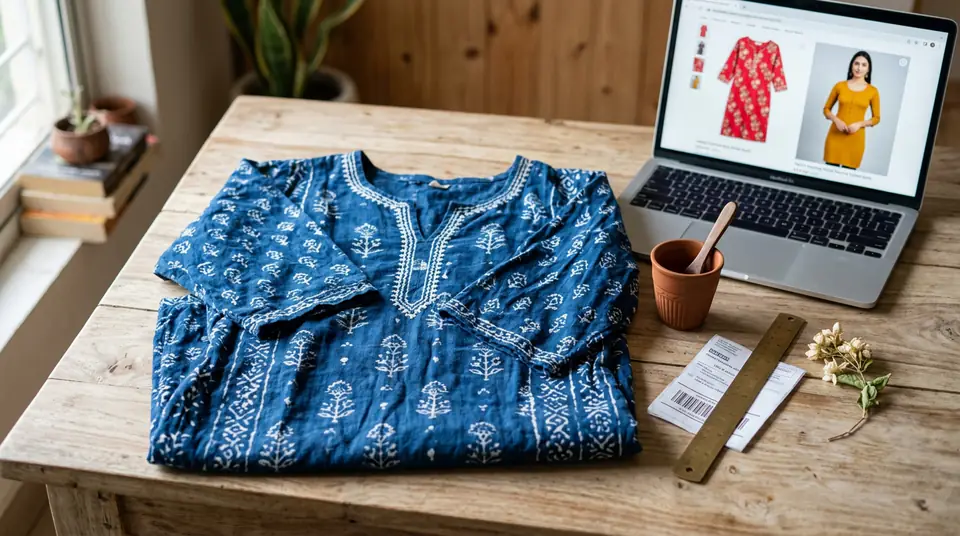
Think about it: when you pick up a garment at a boutique, what do you do? You feel the embroidery, examine the buttons, check the stitching. Online, all of that sensory information is gone. If your product photos only show wide shots, customers can’t inspect the details. Is that a delicate gota patti or just printed gold? Is the button real bone or cheap plastic? This lack of close-up detail creates uncertainty. Uncertainty leads to guesses, and bad guesses lead to returns. Don't hide the craftsmanship, especially if it's a selling point! My own customers on WhatsApp often ask for zoomed-in photos, and I'm happy to provide them, or better yet, embed them directly into the listing. DrapifyApp is great for this, letting me create numerous detail shots without needing another photoshoot for every design tweak.
05.5. Silhouette Shock: Flowy on Screen, Stiff in Person
You know that feeling? You see a beautiful anarkali dress online, flowing gracefully, imagine yourself swirling in it. Then it arrives, and it's stiff as cardboard, refusing to drape like it did in the photo. This isn't just about fabric texture; it's about the garment's structure and movement. Photos often fail to capture the actual silhouette and how the fabric falls. Was the model dancing, or was the garment suspended on fishing line? If your photos only show a static, perfectly ironed look, you're not giving a true impression. Customers want to envision how they'll actually wear it, not just how it looks posed perfectly. Give them a sense of movement, of how it hangs on a real body.
06.6. Missing Angles Misery: Only One Flattering Pose?
It’s a classic move: photograph a garment from its most flattering angle and call it a day. But buyers need more than just one good side. They need to see the back, the side profile, how it looks when arms are raised, how the sleeves fit. Imagine buying a kurta and realizing the back is completely different or the side slit is too high for your comfort. My customers, especially for special occasion wear like Diwali lehengas, always ask for multiple views. Providing a comprehensive visual tour of the garment from all angles isn’t just good practice; it's essential for setting correct expectations. Without it, you're practically inviting a return. AI fashion photography, like what DrapifyApp offers, can give you 10-15 different poses from a single product photo, showing every angle and movement imaginable for about ₹15 a shot.
07.7. 'One Size Fits All' Folly: Only One Body Type?
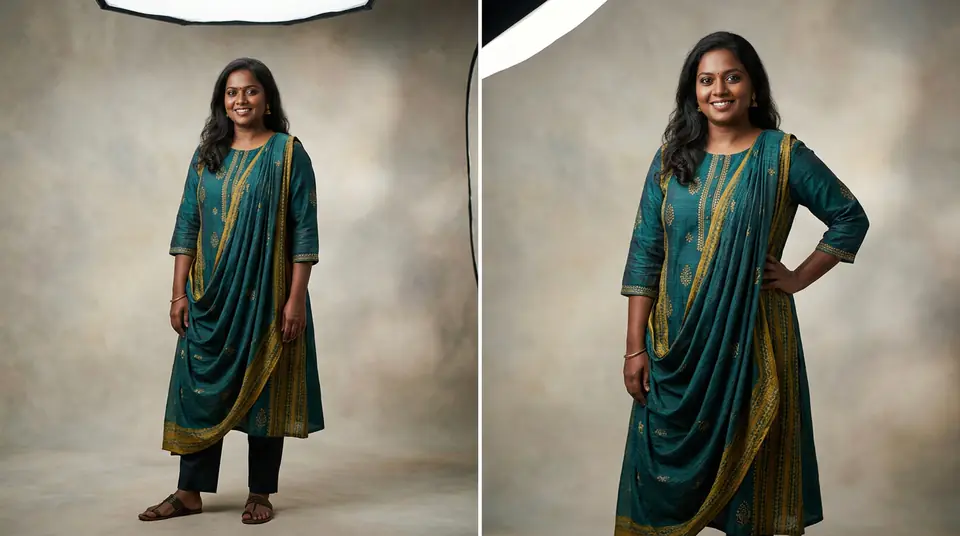
If all your catalogue photos feature the same slender, tall model, you’re alienating a huge chunk of your potential customers. People want to see how a garment will look on someone like them. A stunning designer saree might look incredible on a size S model, but how does it drape on a size L? Or on someone petite versus someone tall? When customers can’t visualize themselves in the clothes, they hesitate. Or worse, they buy, it doesn't fit their body type, and it's sent right back. It’s not just about inclusivity; it’s smart business. Showing a diverse range of body types helps more people feel confident in their purchase. This can be costly with traditional photoshoots, but using identity-locked AI models from DrapifyApp lets you consistently showcase your clothes on various realistic body types and poses without a massive budget or logistics headache.