01.1. Ignoring Macro Details – The Biggest Sin
Look, your customers can't feel the weight of that silver bracelet or run their fingers over the intricate meenakari work through a screen. What they can do is zoom. And if that zoom shows pixelated, blurry details, or worse, no details at all? They're gone. Premium jewelry demands extreme clarity. We're talking about showing the texture of gold, the individual facets of a diamond, the tiny imperfections that prove it's handmade, not mass-produced. If your photos don't highlight the craftsmanship, why should anyone pay a premium?
02.2. Bad Lighting, Flat Photos – No Sparkle, No Sale
Jewelry lives and dies by its sparkle. That glimmer, that flash – it's what catches the eye in a crowded feed. Most brands get this wrong, using harsh, direct light that creates unflattering reflections or, even worse, dull, flat lighting that makes a ₹25,000 diamond necklace look like a toy. You need soft, diffused lighting that brings out the fire in stones and the lustre in metals without blowing out highlights. Think about a sun-drenched evening, not a fluorescent office light. Your pieces should glow, not just exist.
03.3. Inconsistent Backgrounds & Styling – Amateur Hour, Every Time
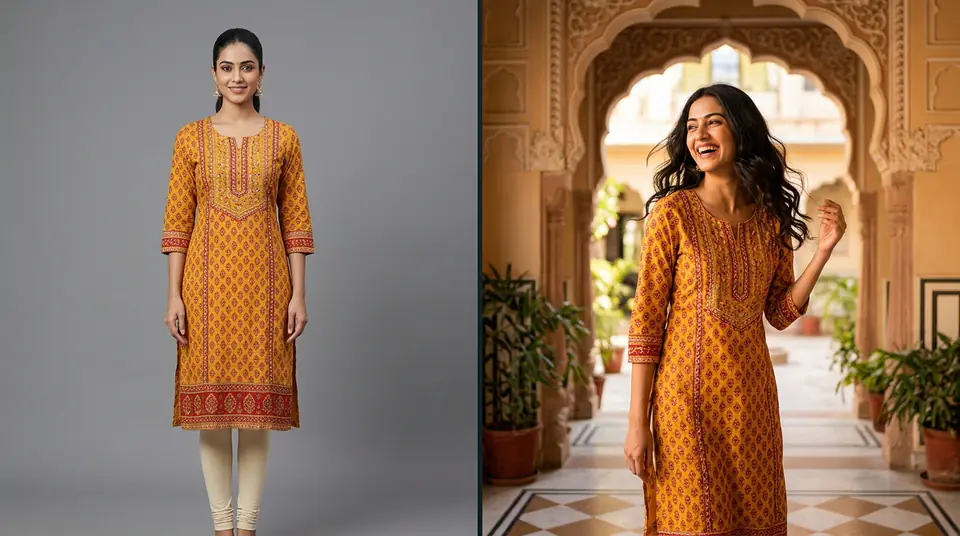
You're building a brand, right? Not just selling individual pieces. So why does your catalogue look like a collage from different Etsy shops? One day, it's a stark white background; the next, a rustic wooden table; then suddenly, some velvet fabric from the local market. This screams 'amateur' and erodes trust. Pick a consistent aesthetic for your product shots – clean white, muted grey, or a specific brand colour. It creates cohesion, reinforces your brand identity, and makes browsing your store a much smoother, more professional experience. You want your brand to feel like a curated collection, not a random garage sale.
Generate your own AI fashion photoshoot with Drapify — 50 free credits, no card required.
04.4. Not Showing Scale – "Is That Ring Big Or Tiny?"
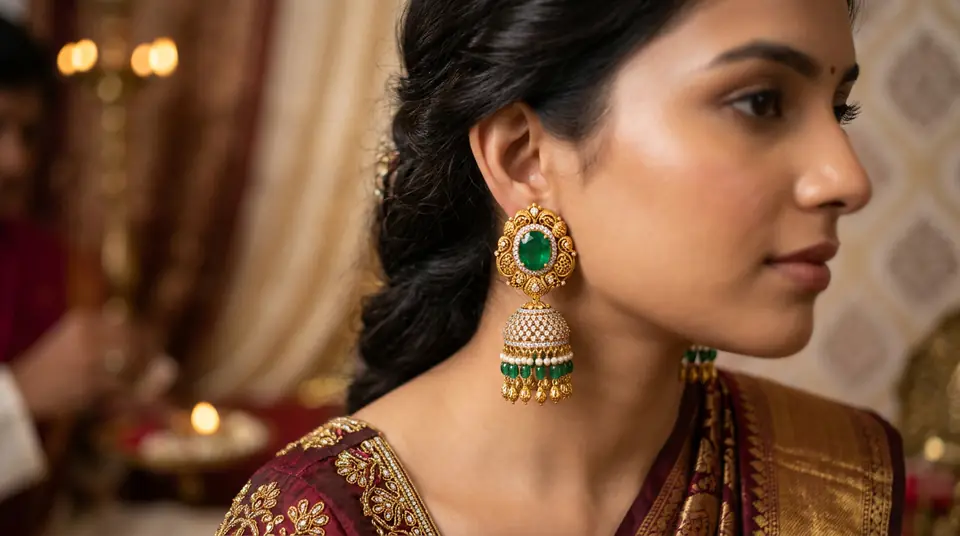
This is a massive point of friction and a primary driver of returns. Customers cannot gauge the actual size of your earrings, rings, or pendants from isolated photos. It's a fundamental misunderstanding of the online shopping experience. Are those jhumkas the size of a rupee coin or a 50-paise coin? You need context. Show the piece on a model's ear, neck, or hand. If that's not feasible, a simple scale indicator like a ruler or even a familiar object (like a chai glass, if it fits your brand vibe) works wonders. Don't make your customer guess; give them the facts.
05.5. Poor Colour Accuracy – When Sapphire Looks Like Amethyst
Imagine selling a vibrant emerald pendant, and it looks like a faded jade in your product photos. Huge problem. Gemstone colours, metal tones (think rose gold vs. yellow gold vs. antique gold), and even enamel work have to be spot-on. What's on screen must match what arrives in the parcel. Inaccurate colour representation is a quick path to customer disappointment and high return rates. Calibrate your cameras, use natural light where possible, and always do a final check across different screens. Your reputation for quality depends on it, especially if you're selling ₹1 lakh pieces on Instagram.
06.6. Only Studio Shots, No Lifestyle – No Connection, No Sale
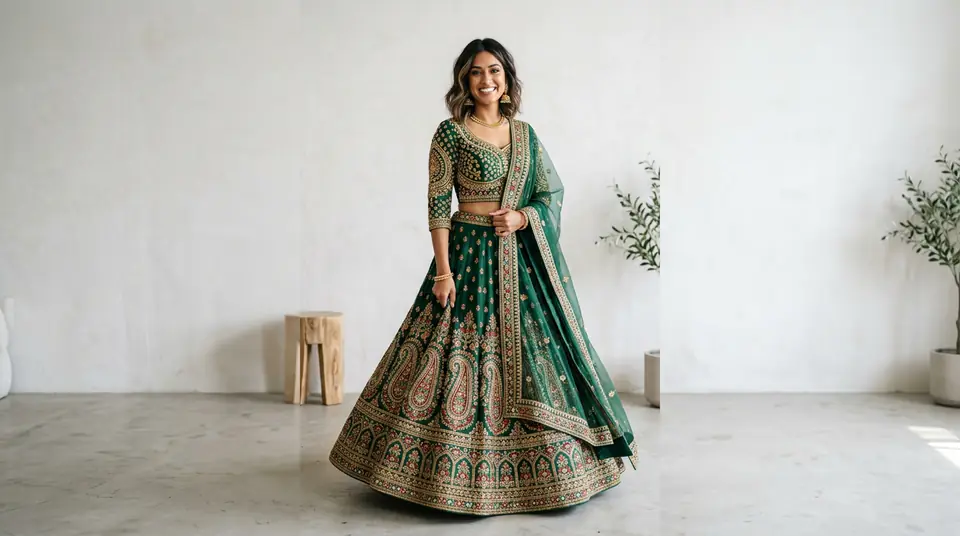
The clean studio shot is vital, yes. It's your baseline. But that's not how people wear jewelry in real life. They layer necklaces, stack bangles, accessorise for a Diwali party or a destination wedding. If your catalogue only shows isolated pieces on a white background, you're missing a massive opportunity to connect emotionally with your customer. Show them how the piece enhances an outfit, how it moves, how it feels. This helps them envision themselves wearing it, moving from 'that's nice' to 'I need that'. DrapifyApp is brilliant for this; you can take a basic product photo and generate multiple lifestyle scenes with diverse models in different settings for ~₹13-15 per photo. Instant aspirational content without a costly shoot.
07.7. Slow Catalogue Refresh – Stale Images Kill Repeat Purchases
In the fast-moving Indian D2C space, customer expectations for fresh content are sky-high. Your regulars, the ones who bought from you last year for Eid, they're not coming back to see the exact same pieces photographed the exact same way. Jewellery trends evolve, occasions change, and your brand needs to keep pace. The cost and logistics of constant photoshoots used to be a killer, especially for smaller brands in Jaipur or Surat needing hundreds of designs photographed weekly. But that's no longer an excuse. You can now refresh your entire catalogue, create new lifestyle shots for seasonal collections, and generate endless ad creatives in minutes. DrapifyApp handles it: upload one photo of your latest pendant, choose from diverse models, and get stunning AI-generated fashion photos at 4K resolution, ready for Myntra, Amazon, or your own Shopify store. Stop letting stale photos cost you money.