01.1. The Hidden Cost of "Good Enough" Photos
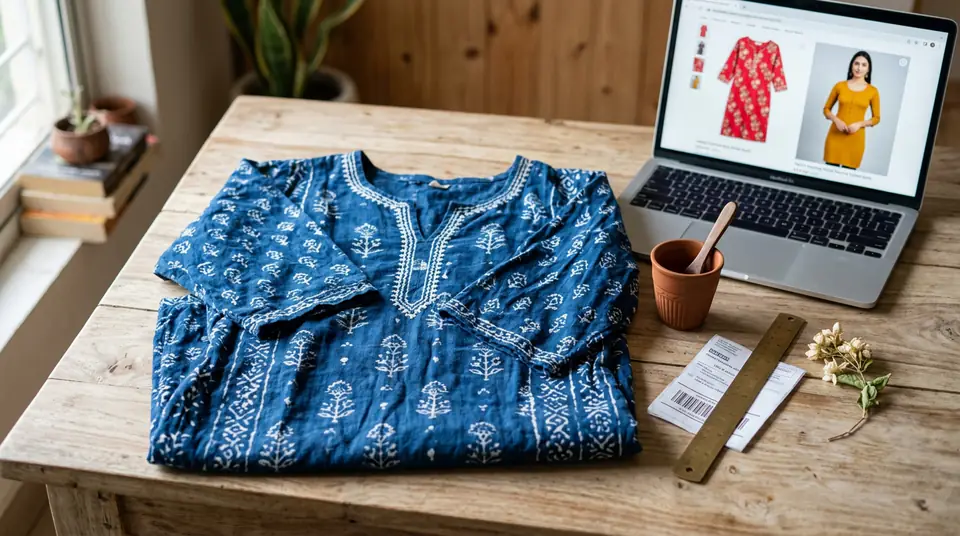
Everyone wants to save a few bucks, I get it. You had a decent photoshoot last season, and hey, that crisp blue Oxford shirt is still selling. Why reshoot, right? Wrong. What feels like saving money is actually costing you sales on new arrivals. Your customers see the old, familiar shots next to a brand-new design, and subconsciously, that new design gets dragged down. It doesn't scream 'fresh' or 'must-have' if it's sitting in a catalogue that hasn't changed its vibe in months. They're scrolling past, looking for something that pops, something they haven't seen you doing before.
02.2. Seasonality vs. Catalogue Refresh Cycles
Indian fashion moves fast. Diwali isn't just one collection; it's a constant stream of new prints and cuts. For men's shirts, you're not just dealing with summer and winter; it's festival wear, casual Fridays, wedding guest attire, and a dozen micro-trends in between. Each demands a fresh look, a new vibe. Your studio photographer in Mumbai is booked solid for weeks, and their per-day rate for 30-40 images? Easily ₹40,000 to ₹50,000. Suddenly, keeping your catalogue current for each selling moment becomes a massive, unsustainable expense. You can't just keep up, you fall behind, losing crucial sales windows.
03.3. Model Fatigue (for Your Buyers)
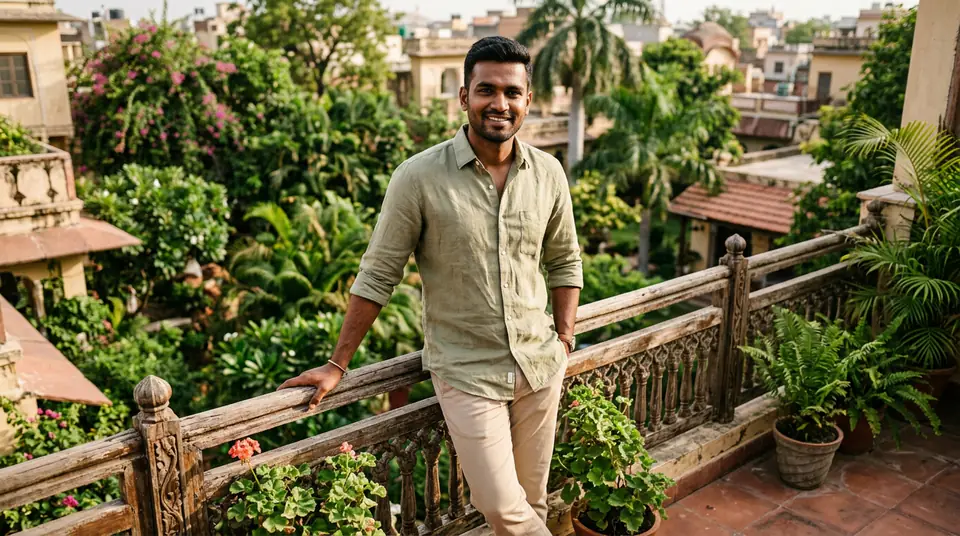
Think about it. You've got that one model, Rakesh, who looks great in everything. For the first 20 shirts, he's a star. By the 50th, your customers are seeing more of Rakesh than your actual shirts. It's not Rakesh's fault, bless him. It's just that seeing the same face, same pose, same background, over and over again, makes your entire collection blend into one. Your brand starts to feel stale, predictable. People lose interest, they stop paying attention. They want to envision themselves in that shirt, not just Rakesh. Fresh faces, diverse poses – it keeps the catalogue vibrant and the customer engaged.
Generate your own AI fashion photoshoot with Drapify — 50 free credits, no card required.
04.4. The "White Shirt" Problem
You know this pain. You've got three white shirts. One is linen, one is cotton-silk, one is a textured pique. How do you make them look different enough in photos to justify three separate listings, without literally writing "this is linen" on the image? The nuances of fabric, texture, collar style – they're incredibly hard to capture consistently and compellingly with standard photography, especially when you're trying to showcase 100+ SKUs. It requires careful styling, precise lighting, and often, many more shots than you budgeted for. This is where a lot of brands give up, making their most versatile products look… boring. You can't sell a ₹1500 shirt with a ₹50 photo. Not for long, anyway. And definitely not at scale.
05.5. Scaling Photography, Not Just Production
Your production unit in Ludhiana is cranking out 500 new shirts a week. Fantastic! But your tiny photography budget is still stuck back at 50 shirts a month. This is the real bottleneck. You can't list new stock, you can't push fresh campaigns, and you certainly can't compete with the Myntras and Amazons of the world if your catalogue isn't growing at the same pace as your inventory. Traditional photoshoots don't scale linearly with your output. Each new design, each colour variant, each size (if you use different models for sizing) requires a separate, often expensive, shoot. This is exactly where a tool like DrapifyApp makes all the difference. You can generate hundreds of high-quality images from a single garment photo, getting 1K, 2K, or even 4K output, without booking a studio or a model.
06.6. The Reshoot Tax (It Always Comes)
Oh, you thought you were done after the first shoot? Think again. You send your listing to Myntra, and they reject it because the background isn't pure white. Or maybe that "olive green" shirt looks brown on Ajio, and now your return rate is through the roof. Perhaps you launched a new colour variant of your best-selling shirt, but now you need all the new shots for it. These unplanned reshoots are brutal. They eat into your profit, delay launches, and drain your energy. It's not a rare occurrence; it's a common tax small brands pay, again and again. With AI tools like DrapifyApp, you can generate colour variants without reshooting anything, saving you both time and cash. Plus, failed shots are auto-refunded, so you're not burning money on duds.
07.7. Ignoring the ₹15/Photo AI Alternative
This is the most surprising one for me. We're in 2024! You can get a professionally styled, AI-generated fashion photoshoot from a single garment photo in about three minutes. Three minutes! For around ₹15 a shot! Yet, so many men's shirt DTC brands are still stuck in the old ways, paying ₹500, ₹800, even ₹1000 per usable photo, and waiting weeks for delivery. DrapifyApp gives you identity-locked models across different poses, meaning your catalogue stays consistent and professional, no matter how many shirts you add. It's not just a cost-saver; it's a speed multiplier that lets you update your entire catalogue for Diwali, Eid, or just a random flash sale. Stop burning cash and missing opportunities. Your competitors? They're already using it.
₹15
Cost per AI photo (approx)
3 mins
Time per photoshoot
50
Free credits to start