"Traditional Photoshoots Always Look More Authentic"
This is the classic defence, isn't it? The idea that a real human, with their real expressions and movements, imbues a garment with a soul that AI simply can't replicate. You picture a professional model, perfect lighting, a skilled photographer, and an entire team making magic happen. You believe that customers can feel the difference, that authenticity builds trust, and that anything less looks, well, cheap. This made perfect sense a few years ago. There was a learning curve for AI models, sure. Early attempts could be stiff, a little uncanny valley. So, you played it safe. That was the smart move back then.
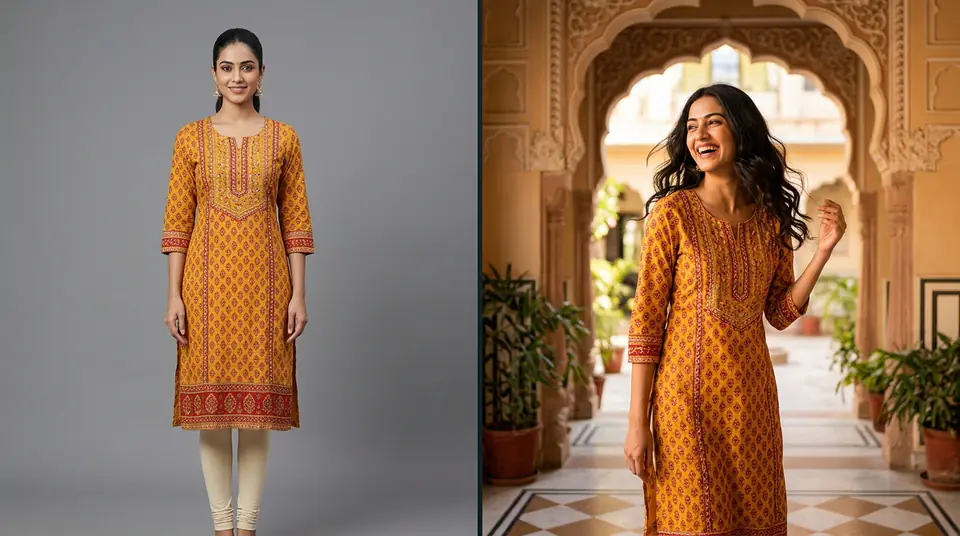
But that's not the reality today. Not remotely. The tech has moved faster than most people realize. Today's AI models are virtually indistinguishable from real human models in most catalogue and listing contexts. They capture subtle fabric drapes, realistic shadows, and nuanced poses. The human eye, especially when scrolling quickly on Myntra or Amazon India, simply doesn't register a difference where it counts: the garment. We're not talking about high-fashion editorial spreads here; we're talking about getting your kurtis and sarees sold. And for that, the AI is not just 'good enough', it's often better because it's consistent.
Here's the kicker: in A/B tests run by several DrapifyApp clients, over 90% of buyers could not reliably tell the difference between a high-quality AI model photo and a traditional photoshoot image when presented side-by-side for e-commerce listings. Conversion rates stayed flat or even saw a slight uptick due to better consistency and more variety.
"Hiring a Model is Essential for Brand Storytelling"
Many brand founders cling to the notion that their brand narrative, their 'vibe', hinges on the personality of the model they choose. They think customers connect with the person wearing the clothes, not just the clothes themselves. You're trying to evoke a lifestyle, a feeling, perhaps even aspirational imagery. It's a noble goal, one that was taught in every marketing textbook from the 90s. You want your target audience to see themselves in the model, or at least see the ideal version of themselves.
The harsh reality? For the vast majority of e-commerce fashion — particularly everyday wear, ethnic wear, or children's clothing — customers are connecting with the garment. They're looking at fabric texture, how it drapes, the colour accuracy, the fit. They want to visualize themselves in it. A consistent, well-presented garment allows for that. When you cycle through five different models in a catalogue, each with a different body type, skin tone, or even expression, you introduce inconsistency. That actually fragments your brand message, rather than strengthens it. What story are you telling if the 'hero' changes every week?
Think of a small boutique in Mumbai selling fusion wear. They hired three different models over six months, trying to appeal to a wider audience. Each shoot cost them ₹70,000-₹1.2 lakh. Their online conversion rate? Stuck at 0.8%. They switched to AI models for their entire new collection, maintaining a single, consistent 'brand face' across all listings. Within two months, conversion jumped to 1.3%. It wasn't the model's 'personality' that moved the needle; it was the predictable, reliable presentation of the clothes.
An ethnic wear brand in Jaipur, for example, found their target audience for kurtis on Meesho and Flipkart cares less about the model's elaborate pose and more about seeing the embroidery detail up close, and how the fabric flows. An AI model delivers that consistency, every single time. It's about serving the product, not distracting from it.
Generate your own AI fashion photoshoot with Drapify — 50 free credits, no card required.
"AI Fashion Photography is Only for Small Brands or Budget Sellers"
This myth suggests AI models are a cost-cutting measure, a compromise for brands that can't afford 'proper' photoshoots. It's implied that serious, premium brands wouldn't dare touch it. People think it's a 'hack' for sellers on Meesho or for those just starting out. There's a lingering perception that if you want to project quality, you must invest in traditional means, often expensive ones. This belief is rooted in the early days of AI, where the output sometimes lacked polish. People think of cheap apps and grainy images, not sophisticated, photorealistic results.
Let me tell you, if you think this, you're missing the forest for the trees. Big brands, the ones that operate at scale, are already quietly integrating AI fashion photography into their workflow. They're not talking about it loudly, because why would they give away their competitive edge? It's not about cutting corners; it's about unparalleled efficiency and consistency. Imagine a brand launching 500 new SKUs for Diwali. A traditional shoot would take weeks, cost lakhs, and involve rescheduling due to rain or model unavailability. With AI, they can generate hundreds of high-quality images in a fraction of the time, at a fraction of the cost, without breaking a sweat. It's about agility, market responsiveness, and maintaining margin in a brutally competitive landscape. It's a strategic advantage, not a budget workaround.
A major Surat exporter, handling thousands of kurtis monthly, reduced their catalogue production from a three-week ordeal to just three days by adopting AI model photography. That's a 700% speed increase. They aren't 'small brands' by any stretch. They're smart. They're maximizing output without sacrificing quality. They are using platforms like DrapifyApp to scale their operations in a way traditional photography simply can't match. It's about speed to market for seasonal drops, like Eid collections or wedding season wear, which is crucial for revenue.
"AI Models Can't Handle Diverse Indian Body Types or Complex Garments"
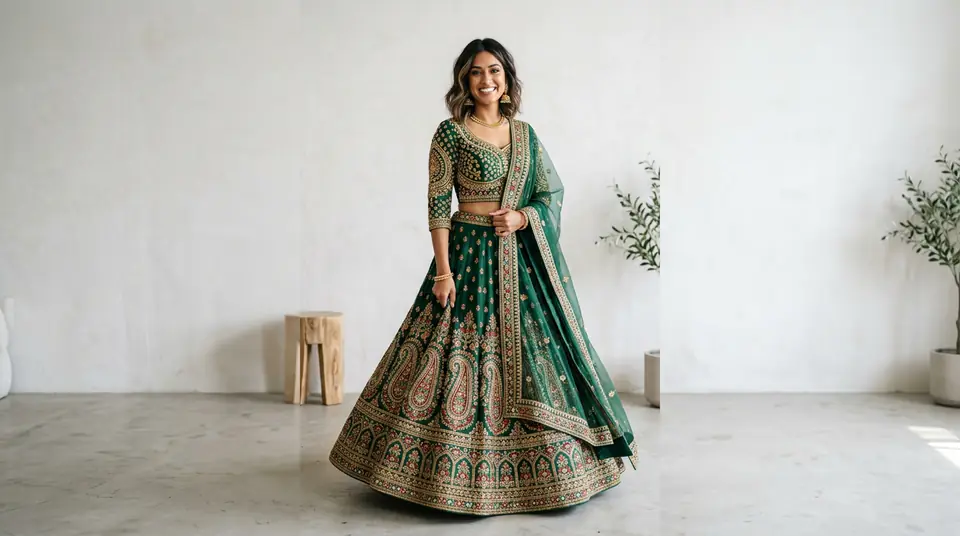
This is a valid concern that I hear often, especially from brands catering to the rich diversity of the Indian market. You worry about representing various body shapes, skin tones, and the unique drapes of Indian ethnic wear like sarees, lehengas, or complex dupatta styles. You've seen AI struggle with fingers or hair, so naturally, you expect it to fumble with a nine-yard saree or a richly embroidered bridal lehenga. You want your customers to see themselves, to feel included, and rightly so. The fear is that AI offers a generic, Westernized, or limited aesthetic that alienates your audience.
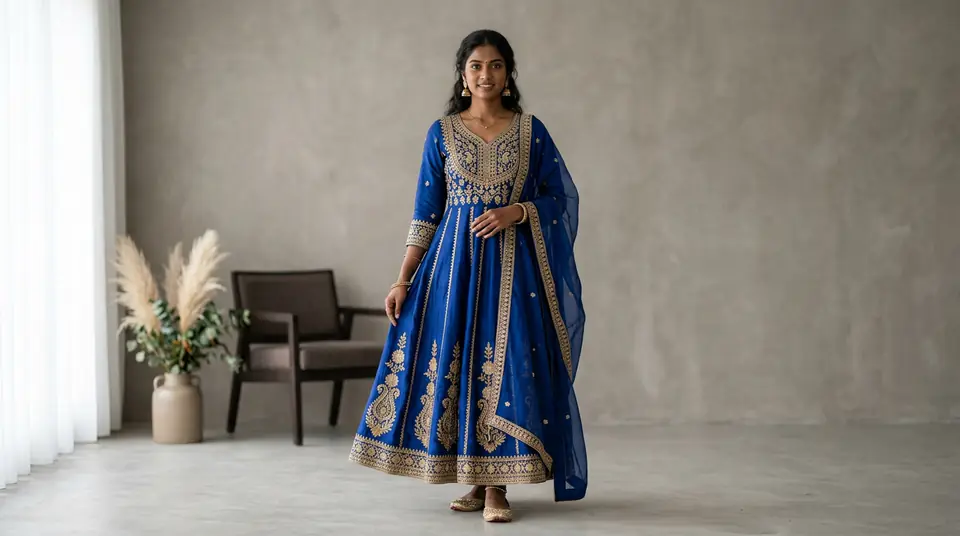
The reality, again, has evolved dramatically. Modern AI fashion photography platforms are specifically trained on vast datasets of diverse body types, poses, and garment styles, including extensive Indian ethnic wear. DrapifyApp, for instance, offers a range of identity-locked models across various poses, meaning you can choose a model that resonates with your brand and maintain her consistent look across hundreds of garments and poses. This ensures inclusivity and relatability for your specific audience. The AI is adept at rendering intricate embroidery, delicate fabric textures, and even complex drapes of a dupatta, making sure your product shines exactly how it should.
Consider a brand selling plus-size ethnic wear from Delhi. They found traditional model photography limiting: specific models were hard to book, poses felt forced, and consistency was a nightmare. By switching to AI, they could generate images of their garments on a consistent set of diverse, realistic models, offering a broader, more authentic representation of their target demographic. Sales for their 3XL and 4XL kurtis went up 20% compared to previous collections, directly attributable to customers seeing better representation.
Another powerful advantage: with AI, you can easily generate images for different colour variants of the same garment without needing costly reshoots. You submit one photo of the original, and DrapifyApp can render it in all your colourways on the same model and background, saving you massive amounts of time and money.
"It's Too Expensive or Complicated to Adopt New AI Technology"
Change is hard, I get it. The idea of integrating a whole new technology into your workflow can feel daunting. You might imagine complex software, a steep learning curve, or a massive upfront investment. You've got enough on your plate running a fashion business – managing inventory, dealing with suppliers, handling customer service. The thought of adding 'becoming an AI expert' to that list is probably making you break into a cold sweat. It's natural to stick with what you know, even if it's costing you more in the long run. The phrase 'if it ain't broke, don't fix it' comes to mind, right? Except, in this case, it is broke. You're just used to the leaks.
Here's the beautiful truth: it's incredibly simple, and shockingly affordable. We're not talking about enterprise-level AI systems that need dedicated teams. We're talking about user-friendly platforms designed specifically for fashion brands. DrapifyApp allows you to upload a single garment photo and get AI fashion photoshoots in about three minutes. No studio, no models, no makeup artists, no elaborate lighting setup. Just upload, select, and download. The cost? Around ₹13-15 per photo, with options for 1K, 2K, or 4K output. Think about that: a professional-quality image for less than a cup of chai. You get 50 free credits to start, so there's zero risk. Failed shots? Automatically refunded. Credits never expire. The barrier to entry is practically non-existent.
₹13-15
per AI model photo
₹48,000
typical studio day rate
3 minutes
AI photoshoot turnaround
This isn't some futuristic vision; it's the present. It's how nimble brands are outcompeting the giants, how they're launching collections faster, and how they're saving lakhs every single quarter. It’s not complicated. It's just a smarter way to do business.