The Sticker Price vs. The True Per-Image Cost
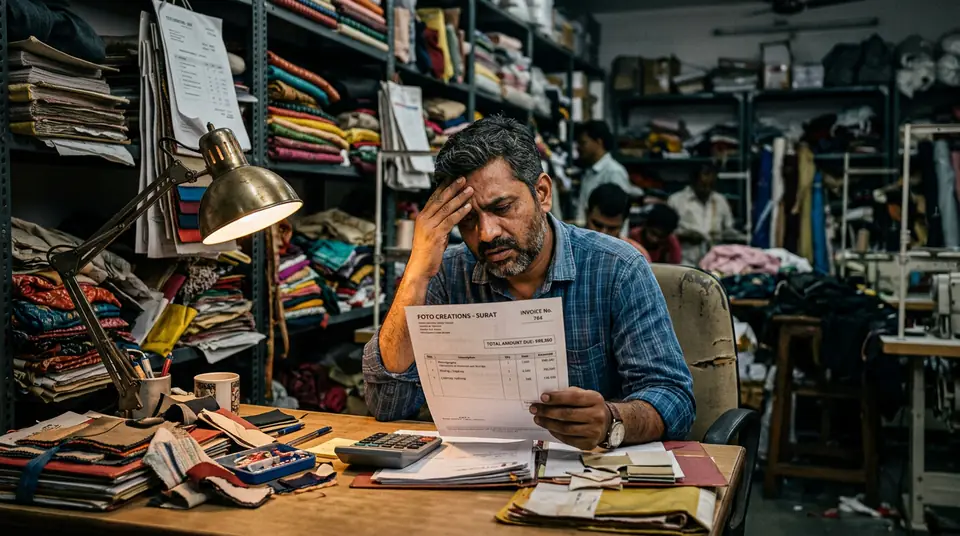
The price someone quotes you for product photography is rarely what you actually pay per image. It's a game of hidden costs, minimums, and the dreaded 'reshoot tax'. I've seen countless sellers in Jaipur and Surat get blindsided by expenses they didn't factor in, ending up with a per-image cost far higher than anticipated. Understanding the full picture, from initial quote to final usable image, is critical for your bottom line.
Let's be clear: when we talk about the product photography cost per image in India, we're not just talking about the photographer's fee. We're considering everything: models, stylists, studio rent, travel, post-production, and the cost of managing the entire operation. Ignoring these factors leads to budget overruns and makes it impossible to scale your catalogue efficiently.
Traditional Studio Shoot: The Full Breakdown
A traditional studio photoshoot is often seen as the gold standard, but it comes with a hefty price tag and a complex list of line items. For a typical fashion catalogue shoot in a city like Delhi or Mumbai, you're looking at a base daily rate that quickly multiplies with additional services. Here's how the costs pile up for a single day, aiming for 50-70 SKUs.
| Item | Typical Cost (₹) | Notes |
|---|---|---|
| Studio Rental (1 day) | 10,000 - 25,000 | Includes lighting, backdrops. Varies by city and amenities. |
| Photographer Fee (1 day) | 15,000 - 30,000 | Experienced fashion photographer. Often includes assistant. |
| Fashion Model (1 day) | 8,000 - 20,000 | Per model. More diverse looks? Hire more. Expect ₹15,000 minimum for someone decent. |
| Stylist/Draper (1 day) | 5,000 - 12,000 | Essential for drapes, accessories, garment fit. Don't skip this. |
| Makeup Artist (MUA) (1 day) | 4,000 - 8,000 | Basic makeup and hair changes throughout the day. |
| Post-production (per image) | 50 - 200 | Colour correction, retouching, background removal. Often quoted separately per final image. |
| Garment Transportation | 1,000 - 3,000 | To and from studio, especially for bulk. |
| Meals/Refreshments | 1,500 - 3,000 | For the entire crew. You're responsible, it's courtesy. |
| Contingency (10-15%) | Variable | Always budget for unexpected delays, extra shots, or minor reshoots. |
So, for a single day, shooting, say, 60 SKUs (each needing 3-4 angles, total 180-240 images), your minimum spend could easily hit ₹45,000 before post-production. If each final image costs ₹100 for retouching, that's another ₹18,000-₹24,000. Suddenly, a ₹45,000 day rate becomes ₹63,000-₹69,000. Divide that by 60 SKUs, and your per-SKU cost is ₹1,050-₹1,150. If you only use one angle per SKU, your per-image cost sits at ₹350-₹383. This is before any reshoots.
₹69,000
Total cost for a single studio day (60 SKUs)
₹1,150
Per-SKU cost, fully loaded
₹383
Per-image cost (180 final images)
Freelance Photographers: A Budget Alternative?
Hiring a freelance photographer can reduce costs, but often at the expense of a full studio setup or dedicated support staff. A freelancer might offer a day rate that includes their equipment and basic post-production, but you'll likely need to arrange the model, stylist, and location yourself.
A decent freelance fashion photographer in India might charge ₹8,000-₹15,000 for an 8-hour day. If you supply the model (₹5,000-₹10,000), stylist (₹3,000-₹7,000), and shoot at your own boutique or a friend's place to save on studio rent, your daily cost might drop to ₹16,000-₹32,000. Assuming they deliver 50 finished SKUs (150 images), your effective per-image cost becomes ₹106-₹213. This is better, but you're doing a lot more coordination.
The challenge here lies in consistency and reliability. I've had freelancers vanish mid-project or deliver inconsistent quality, forcing costly delays. Always check their portfolio rigorously and clarify exactly what's included in their quote. Hidden charges for extra revisions are common.
The math stops working when you need high volume or very specific creative direction. If you're selling hundreds of sarees online or kurtis for wholesale, managing multiple freelancers for consistency across your entire catalogue becomes a logistical nightmare. And frankly, your weekends aren't free labor for logistics.
Generate your own AI fashion photoshoot with Drapify — 50 free credits, no card required.
DIY/In-House Photography: The "Free" Option?
Many small boutique owners, myself included in the early days, try to handle product photography in-house. It feels free because you're not paying an invoice, but it costs you time, effort, and often, sales. You'll need some basic equipment: a good smartphone (or DSLR), a tripod, proper lighting, and a clean backdrop. All this requires an initial investment.
The effective per-image cost for DIY is hard to pin down precisely, but it's not zero. Factor in your time, the equipment depreciation, and the often-lower quality images that lead to higher return rates or lower conversion. A customer might not buy that beautiful designer blouse if your photos are poorly lit or inconsistent. The 'free' option can quickly become the most expensive in terms of lost sales.
For small WhatsApp catalogues or initial drafts, it's okay. But for serious marketplace listings on Myntra or Amazon India, DIY photos rarely meet the professional standards required for approval and sales traction. I tried it; I know.
AI Fashion Photography: The Per-Image Cost Game Changer
This is where the math really shifts, especially for small to medium-sized businesses in India. AI fashion photography tools like DrapifyApp create model photos from a single garment image in minutes. The structure is different; you pay per image, usually through credits, and there are no hidden costs like models, stylists, or studio rent. It strips away all the traditional overhead.
Your product photography cost per image in India using AI is transparent and low, starting as low as ₹10 per image for 1K resolution. This is a flat rate. You provide your garment photo, choose your model and pose, and get a professional image ready for Myntra, Amazon, or your Shopify store. There's no negotiation, no managing a crew, no travel. This significantly cuts down on the 'reshoot tax' too, since you can generate multiple looks with different models without any extra photoshoot expense.
I used to spend days on a catalogue refresh. Now, I can turn around hundreds of kurti model photos in an afternoon. This scalability is crucial for seasonal collections or when launching new colour variants – you don't need a whole new photoshoot for a different shade of blue; just use the AI. For businesses handling 50+ SKUs regularly, the savings are transformative. For a Surat wholesaler dealing with hundreds of ethnic wear designs, this means constant, fresh catalogue content without the logistics headache.
Cost Comparison: Where Your Money Really Goes
To truly grasp the economics, let's compare the fully loaded, effective per-image cost across different setups for a typical 100-SKU fashion catalogue. This includes all hidden costs, not just the photographer's quote. We'll assume 3-4 images per SKU to account for angles and details.
| Setup Type | Effective Per-Image Cost Range (₹) | Typical Total Cost (100 SKUs, 300 images) (₹) | Break-Even SKU Count (vs. AI) |
|---|---|---|---|
| Traditional Studio | 250 - 500+ | 75,000 - 1,50,000 | 10-20 SKUs (below this, AI is cheaper due to high fixed costs) |
| Freelance Photographer | 100 - 250 | 30,000 - 75,000 | 20-40 SKUs (depends heavily on your ability to manage other aspects) |
| DIY / In-House | 50 - 150 (time-costed) | 15,000 - 45,000 (plus equipment depreciation) | N/A (lowest quality, highest time investment for quality results) |
| AI Fashion Photography (e.g., DrapifyApp) | 10 - 35 | 3,000 - 10,500 | Essentially 1 SKU. AI is cost-effective from the first image. |
What does this table tell us? The upfront fixed costs of traditional photography mean you need to shoot a large number of SKUs for the per-image rate to drop to anything reasonable. If you're a small boutique launching 10 new designs, paying ₹75,000 for a studio shoot means your per-image cost could be ₹750! AI photography, with its variable cost structure, eliminates this threshold entirely. You only pay for the images you get, making it incredibly flexible.
Consider the economics of colour variants. If you have a popular kurti in five colours, a traditional studio shoot means five separate garment changes, five sets of photos, extending your shoot day and increasing costs. With AI, you can generate colour variants without additional reshoots, just by using your base garment photo. That's a massive saving in time and money. Run your own numbers: how many SKUs do you actually launch each month? How many colour variants? The answer will usually point to AI being the most economical choice for scale.
When Traditional Photography Still Makes Sense
Despite the clear economic advantages of AI, traditional photography still holds its ground in specific scenarios where its unique strengths outweigh the cost. It's not about being cheap; it's about being effective for the specific goal.
It boils down to the strategic intent behind your images. For everyday catalogue listings on Myntra or Meesho, where consistency, speed, and cost-effectiveness are paramount, AI is the clear winner. For brand-building or showcasing a select few hero pieces in a highly conceptual way, traditional photography retains its value. It's not an either/or; it's knowing when to use which tool.