The Manufacturer's Trap: Why Your 30-Day Photoshoot Cycle is Bleeding Money
You are a master of your craft. From the looms in Surat to the cutting tables in Tiruppur, you turn raw fabric into beautiful garments. But then you hit a wall. The final, most crucial step before you can make a single rupee online: the photoshoot. This is where your D2C dream dies a slow, expensive death. This is where your agile competitors leave you in the dust. The traditional fabric to catalogue process is a trap designed to steal your time and your profit. It starts with packing your best samples and shipping them to a studio in Mumbai or Delhi. Then comes the endless WhatsApp coordination: 'Is the model confirmed?', 'Does the photographer understand our vibe?'. You wait a week for the shoot, another ten days for the 'first look' edits, only to find the lighting is wrong and the poses are flat. By the time your catalogue is ready, 30 days have passed. Thirty days where you paid for studio time, model fees, photographer rates, and exorbitant editing charges. Thirty days where your inventory sat in a warehouse, losing value. Thirty days where your competitors, using a smarter workflow, have already launched, sold out, and are planning their next collection.
Quantifying the Damage: The ₹2 Lakh Opportunity Cost of 'Waiting for Photos'
Let's stop talking about frustration and start talking about hard numbers. What does that 30-day delay actually cost you? Imagine you've produced a new collection of 15 kurtis for the Karwa Chauth season. A traditional photoshoot costs you, conservatively, ₹45,000. But that's not the real cost. The real cost is the lost sales. Your competitor, who launched their collection three weeks before you, captured the initial buying frenzy. They got the early reviews, the social media buzz, and the top spots on Myntra and Ajio. By the time your 'fresh' collection goes live, the market is already saturated. That collection, which could have generated ₹5 Lakhs in its first month, now struggles to make ₹3 Lakhs. That ₹2 Lakh difference is the 'Manufacturer's Lag Tax'—a penalty you pay for an outdated process. You didn't just lose money; you lost momentum, market position, and customer attention. This happens every single season, with every single collection. You are manufacturing efficiently only to lose all your advantage at the final hurdle. It’s a silent profit killer that is making your D2C journey ten times harder than it needs to be.
Generate your own AI fashion photoshoot with Drapify — 50 free credits, no card required.
Mini Case Study: How a Jaipur Kurti Maker Slashed GTM from 28 Days to 2
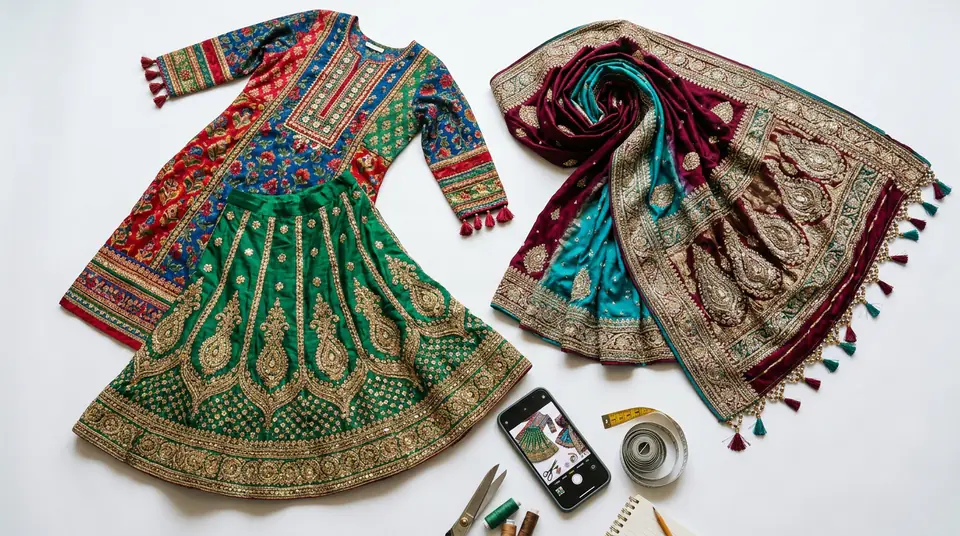
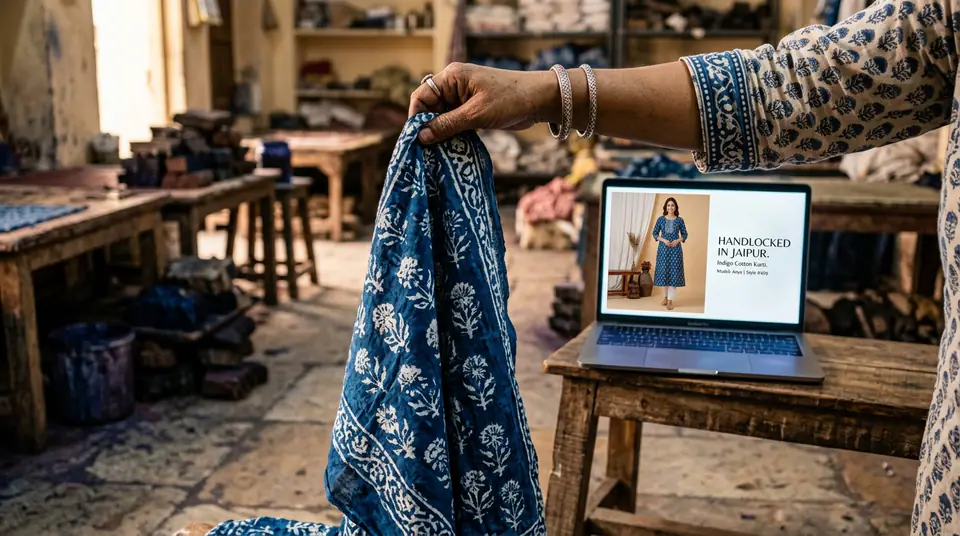
Consider the story of a mid-sized kurti manufacturer in Jaipur. For years, they struggled with the D2C model. Their process was textbook traditional: finish a batch, send samples to a Delhi photographer, and wait. A 20-SKU shoot would cost them nearly ₹60,000 and take four weeks from dispatch to final images. Last Raksha Bandhan, this delay meant their beautiful collection went live just one week before the festival, completely missing the peak sales window. Frustrated, they tried DrapifyApp. For their next collection, the process was completely different. As soon as a final sample was stitched, they put it on a simple mannequin in their own office and took a picture with a smartphone. They uploaded the flat shot to DrapifyApp. Within minutes, they had dozens of professional, on-model images for each SKU. Total time from finished garment to live listing on Meesho and Amazon India: 48 hours. Total cost: Less than ₹1,500. The result? They launched a trending Kalamkari print collection a full month ahead of schedule, capturing the initial wave of demand and selling out their entire first batch before their larger competitors even had their samples shot.
Your Unfair Advantage: The DrapifyApp Fabric to Catalogue Engine
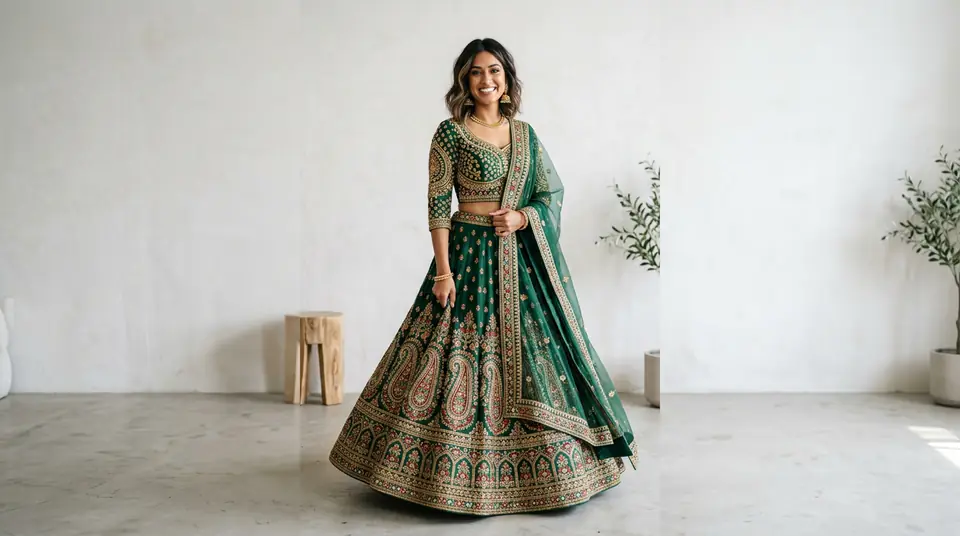
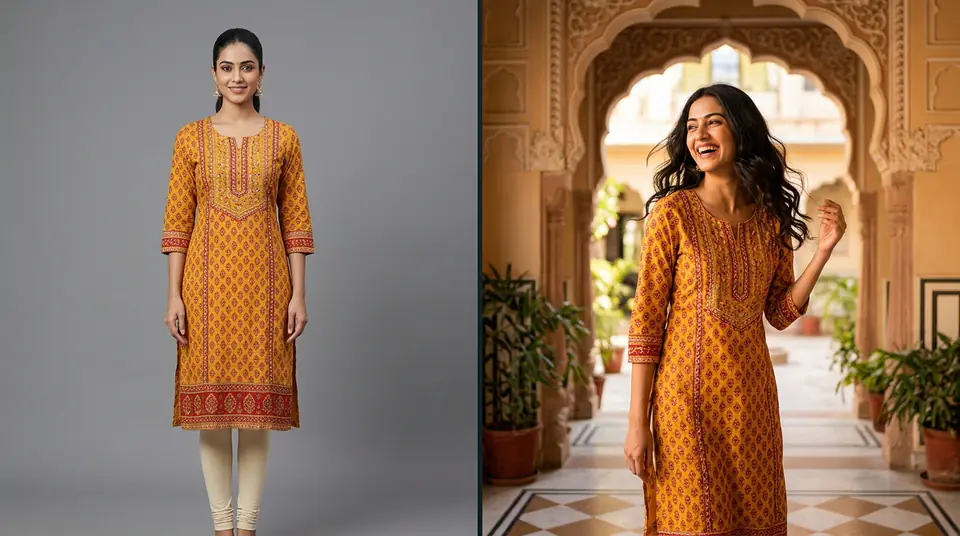
What that Jaipur manufacturer discovered is that DrapifyApp isn't just a tool; it's a completely new garment workflow. It's your in-house, 24/7, AI-powered photoshoot studio that eliminates the middlemen, the delays, and the insane costs. It's built for manufacturers who need speed and quality. The process is brutally simple: take a photo of your product on a mannequin, a hanger, or even a flat lay. Upload it to DrapifyApp. Our AI instantly places your garment onto thousands of diverse, professional models in high-end settings. You get catalogue-quality photos in seconds, not weeks. We support your entire range: kurti sets, sarees, shirts, western wear, kids wear, jewelry, and even footwear. Worried about marketplace guidelines? Our built-in Design Studio lets you create custom backgrounds to match the exact specifications for Flipkart, Myntra, or your own Shopify store. With plans starting at just ₹499 for 450 credits—enough for an entire collection—the economics are undeniable. A standard 1K image costs about 15 credits. You can generate a complete, market-ready catalogue for less than the cost of shipping your samples to the studio.
Your 48-Hour 'Loom to Live Listing' Action Plan
Stop seeing this as a fantasy. This is your new reality, starting today. Here is your precise, step-by-step plan to implement a 48-hour fabric to catalogue workflow and leave your competition wondering how you did it:
1. Finalize Your Sample (Hour 1): The moment your master tailor finishes the perfect sample, your clock starts. 2. Snap a Simple Photo (Hour 1.5): No fancy studio needed. Use your smartphone to take a clean, well-lit photo of the garment on a simple mannequin or hanger against a plain wall. 3. Sign Up for DrapifyApp (Hour 2): Create your account and get immediate access. The free trial is enough to see the power for yourself. 4. Upload & Generate (Hour 2.5): Upload your phone photo. Select from a vast library of models and scenes. Let our AI generate dozens of high-resolution options while you have a cup of chai. 5. Refine & Download (Hour 3): Choose your best shots. Use the Design Studio to ensure a perfect, consistent background across your entire collection. Download the final images. 6. Go Live (Hour 48): Write your product descriptions, set your price, and upload your stunning new catalogue to Amazon India, Meesho, or your website. While your competitors are just getting tracking numbers for their sample shipments, you are already getting sales notifications.
This isn't just a faster process; it's a fundamental business advantage. It's how you win in the crowded Indian D2C fashion market.