The Catalogue Graveyard: Where Profits Go to Die
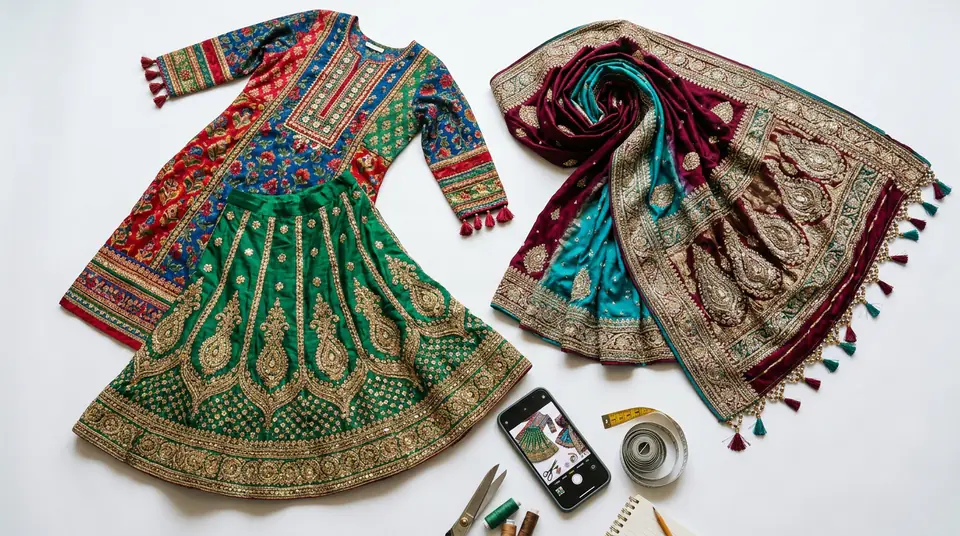
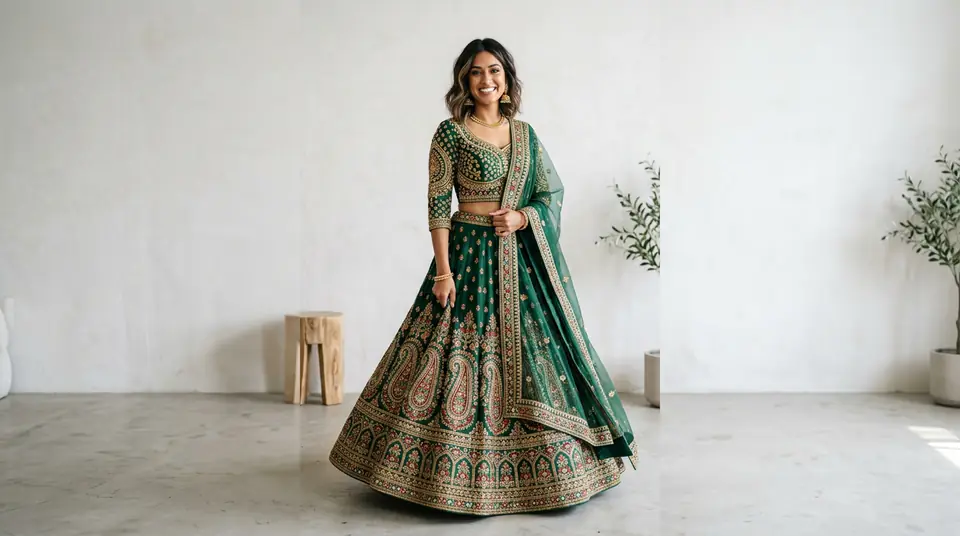
It’s a tale I’ve heard too many times. A manufacturer in Ludhiana creates a stunning new line of pullovers for winter, absolutely perfect for the coming cold snap. Or a Jaipur lehenga house designs an intricate new bridal collection, just in time for wedding season. Production's wrapped. Quality check? Done. Inventory's stacked. Now what? They wait. They wait for a model to be available, for a studio slot, for the stylist, for the photographer, for the retoucher. Each step, a week. Sometimes two. By the time those garments finally hit Myntra or their own Shopify store, the moment's passed, or worse, their early-moving competitors have already captured the market. This isn't just frustrating; it's a colossal waste of capital, inventory, and opportunity. Every day your best new design sits off-catalogue is a day your competitors are selling your future sales.
The traditional fabric to catalogue workflow for manufacturers jumping into D2C is simply not fit for purpose in 2024. It was designed for a wholesale world, where speed meant nothing. You’d showcase a collection to distributors in person, take orders, then produce. Online? That’s a sprint, not a marathon. You need to be fast. Lightning fast. Your customers in Bangalore and Delhi aren’t waiting; they’re scrolling, buying from whoever lists first. The problem isn't your design talent, or your production capacity. It's the bottleneck between finished goods and live product pages. That bottleneck is killing your scale.
The Photoshoot Treadmill: High Cost, Low Speed
Look, I get it. We've all been there, paying through the nose for what feels like essential catalogue imagery. A full-day studio shoot in Mumbai for a new collection can easily run you ₹40,000 to ₹80,000, and that's before you even factor in model fees, makeup artists, stylists, travel, food, and post-production. You're looking at anywhere from ₹150 to ₹400 per final image once everything’s tallied. For a brand launching 50-100 new SKUs every season? That's lakhs being poured into an expense that doesn’t directly move the needle in the way it used to.
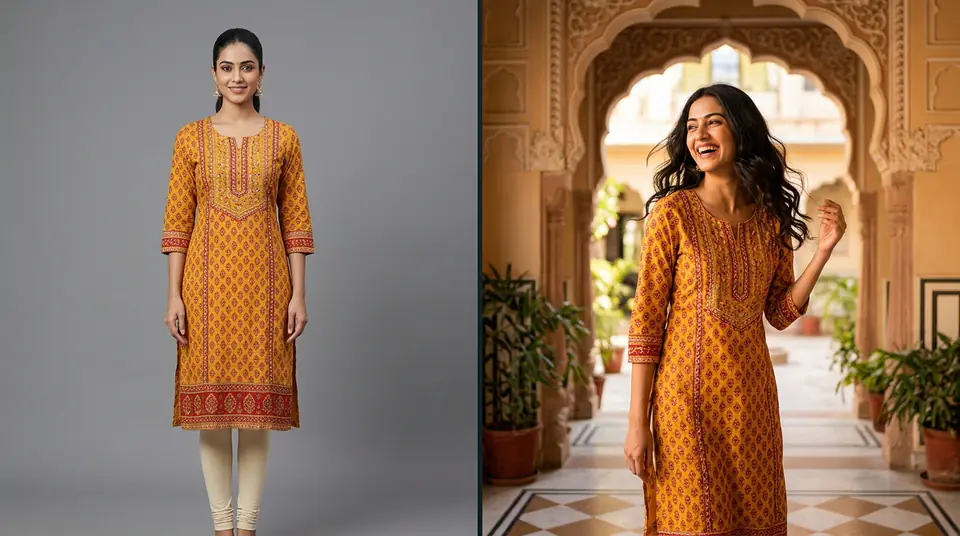
““I spent ₹65,000 on a shoot last month for a new line of Kurtis. The photos came back, and half the collection was out of stock by the time they were ready. What was the point?””
Priyanka’s pain is real. The typical timeline for a shoot like that? Book a month out, shoot day, 7-10 days for selections, another 7-14 for retouching. You're talking 3-4 weeks minimum from the moment you decide to shoot to having images in hand. During that time, market trends shift. Competitors launch similar designs. Peak season demand, like pre-Diwali or Eid sales, gets missed entirely. This isn't just about money; it's about the opportunity cost of lost time. And it’s why so many manufacturers struggle to break past the ₹50 lakh/month mark with D2C, even with excellent products. They're stuck on the photoshoot treadmill, paying more and moving slower.
Generate your own AI fashion photoshoot with Drapify — 50 free credits, no card required.
The 48-Hour Fabric to Catalogue Blueprint
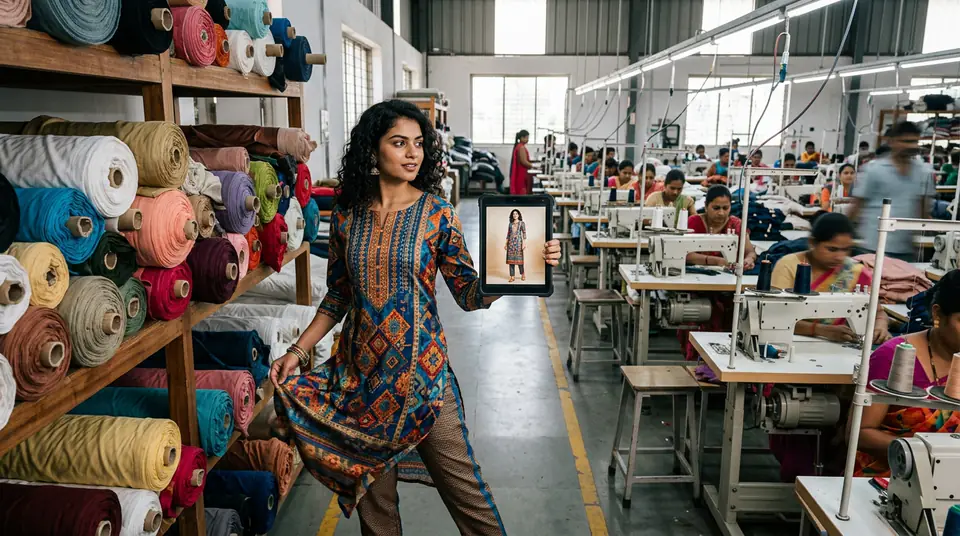
What if you could turn that 3-4 week wait into just two days? That’s the core of the new D2C mandate for manufacturers: an ultra-lean, super-fast fabric to catalogue workflow. It sounds ambitious, I know. But it’s entirely achievable by leveraging digital solutions and rethinking your dependency on physical photoshoots.
DrapifyApp: Your Engine for Speed and Scale
This isn't some theoretical playbook. I've seen brands in Ahmedabad and Surat implement this exact methodology to devastating effect against their slower, studio-dependent rivals. The core enabler? Affordable, high-quality AI fashion photography. With DrapifyApp, you’re not just saving money, though the ~₹13-15 per photo cost is certainly compelling. You're buying speed. You're buying scale. You're buying sanity.
Imagine this: a new design hits your cutting table on Monday. By Tuesday evening, it’s live on your D2C store, complete with multiple high-resolution (1K/2K/4K) model shots. No more juggling agency bookings, no more weather delays for outdoor shoots, no more exorbitant reshoot costs for minor tweaks or colour variants. You can refresh your catalogue daily, not seasonally. You can test 20 different poses for a new kurti design, see which performs best, and swap them out, all without booking another studio hour. DrapifyApp gives you 50 free credits to start, letting you really kick the tires on this accelerated workflow.
3 minutes
time per AI photoshoot
~₹13-15
cost per AI photo
weeks to 48 hours
time saved on catalogue
This isn’t just about making your photos cheaper; it's about making your entire D2C operation more agile and responsive to market demand. The credits never expire, and failed shots are auto-refunded, so you're not wasting anything. It’s a lean, mean, listing machine that lets you focus on what you do best: creating incredible garments.
Reclaim Your Margins, Redefine Your Brand
When you cut out weeks of waiting and thousands of rupees in photoshoot costs, what do you get? You get reclaimed margins. That money can go back into sourcing better fabrics, investing in R&D for new designs, or scaling your marketing spend on platforms like Instagram and Facebook. The time you save? That's time for strategy, for customer feedback, for expanding into new categories like menswear, jewellery, or home furnishings.
The traditional path was slow, expensive, and restrictive. The new path for D2C manufacturers is about speed, efficiency, and relentless execution. It means you can respond to micro-trends, launch capsule collections with minimal overhead, and truly dominate your niche. Stop thinking like a wholesaler trying to sell online. Start acting like a D2C-first brand, obsessed with speed and customer conversion. Your ability to move from fabric to catalogue in under 48 hours isn't just a tactical advantage; it's a strategic imperative for any Indian fashion brand looking to scale past the ₹1 crore/month mark today.