The ₹50,000 Studio Day Myth
Alright, another call with a Surat wholesaler this morning, rattling on about 'seasonal rush' and 'sky-high studio costs.' My friend, it's not a rush; it's just Tuesday. And those studio costs? They're not sky-high, they're unnecessary for what you're trying to achieve. I've heard this lament a thousand times, especially from the high-volume garment guys in Jaipur and Surat who are trying to keep up with demand for their kurtis, lehengas, and ethnic wear.
Back in my Mumbai studio days, I used to charge ₹40,000 to ₹60,000 for a single day. That's for a full crew, models, stylists, equipment, post-production – the whole nine yards. One day. For a niche D2C brand doing a premium lookbook, creating an aspirational narrative, sure, it's an investment. It aligns with their brand story. But for a wholesaler in Jaipur who needs 500 different kurtis photographed every single week for Myntra, Meesho, and their own B2B catalogue? That's not an investment; that's a one-way ticket to bankruptcy. The numbers just don't click, not when your average wholesale price per kurti hovers around ₹350-₹700.
"But I need professional photos," they'll insist. And they're right, you absolutely do. Your buyers, whether they're boutique owners or end-consumers on Amazon India, judge a book by its cover. They see the photo before they see the fabric. But what if "professional" didn't have to mean "exorbitant and slow"? What if you could hit those professional benchmarks without booking a studio that demands advance payments and then delivers 40 photos three days later? (Yeah, I've been on both sides of that fence.)
₹45,000
Avg. daily studio cost (Mumbai/Delhi)
30-50
Garments shot per day (complex styling)
4-7 days
Turnaround time (shoot to delivery)
₹1000+
Cost per garment (premium shoot)
Where the Margins Disappear
You see, for the bulk sellers, the economics just don't add up. You're bringing in hundreds of designs, maybe ₹300-₹500 a piece at wholesale. You can't afford ₹500-₹1000 per photo and expect to turn a profit, let alone thrive. Yet, I hear guys still doing it, or worse, cutting corners with amateur photographers whose work looks like it was shot in a broom closet. (Believe me, I've seen some horrors; patchy lighting, bad cropping, wrinkles still visible on the garment – it’s painful.) This isn't just about the upfront cost of the shoot. Think about the hidden drains.
The biggest culprit? Repetition. Every single kurti needs its own shot, usually from 2-3 angles to satisfy marketplace requirements and show off details. And if you have colour variants? Forget it. You're either sending them back to the studio for another half-day shoot, paying more, or you're just putting up one colour and hoping customers 'imagine' the others. It's a gamble, a big one. And it’s precisely where your precious margins, already thin in wholesale, just evaporate into thin air. Time is money, too. The logistics of getting hundreds of garments to and from a studio, managing models, dealing with reshoots for missed details – it all adds up. It takes you away from sourcing, selling, and managing your core business. You’re essentially becoming a photoshoot coordinator, not a garment mogul.
“My biggest client on Myntra needed 300 new kurtis listed before Diwali. My photographer quoted me ₹80,000 for a three-day shoot, plus another ₹15,000 for variant colours. I almost dropped the phone. What am I supposed to tell my buyers when my listing goes up two weeks late? Or when my per-piece photo cost eats half my profit margin?”
My Aha! Moment (and yours too)
This problem always gnawed at me. As a photographer, I loved the craft, the artistry of capturing light and fabric. But as a consultant, I saw the inefficiencies bleeding these businesses dry. Especially with the sheer volume demanded by marketplaces like Amazon India, Flipkart, and Meesho, and the relentless pressure of fast fashion cycles. Listing hundreds of new designs weekly, sometimes daily, became a bottleneck. The old ways were simply not built for this scale.
Then, something changed. AI happened. Now, before you roll your eyes, I'm not talking about some sci-fi fantasy where robots drape your sarees. I'm talking about intelligent tools that automate the mundane, repetitive, and costly parts of fashion photography, leaving you, the business owner, to focus on the design, the sourcing, and the sales. For years, I told clients, 'reshoot your six best-selling kurtis first, then look at the rest. Prioritize.' Now? You don't have to choose. You can have it all. This technology levels the playing field, making high-quality photography accessible to every wholesaler, from the biggest exporters in Surat to the smallest boutiques in Ahmedabad.
Generate your own AI fashion photoshoot with Drapify — 50 free credits, no card required.
The 500-Garment Weekly Grind, Simplified
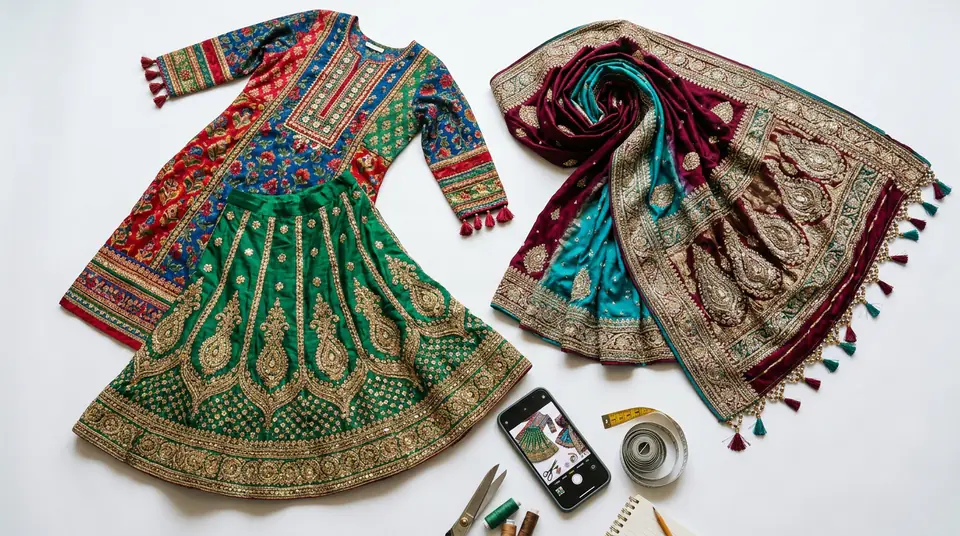
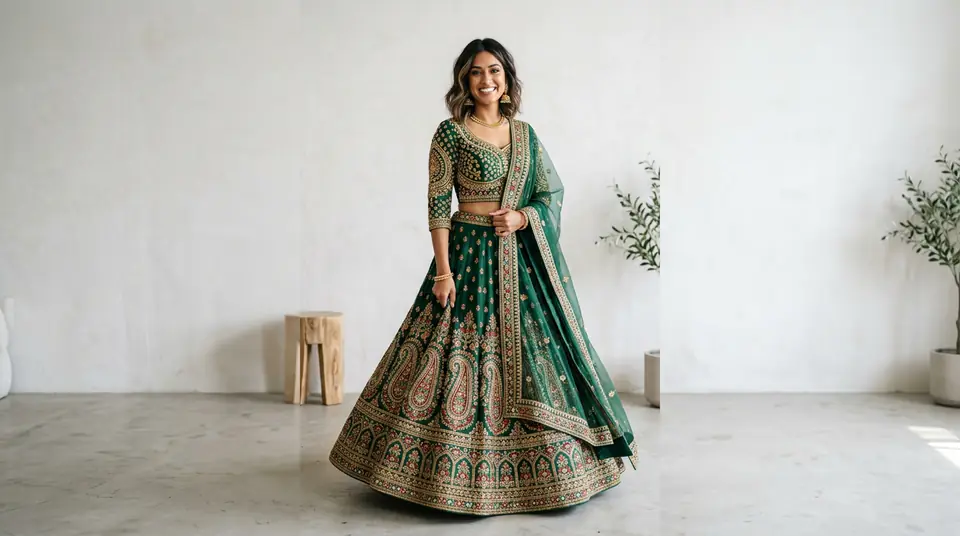
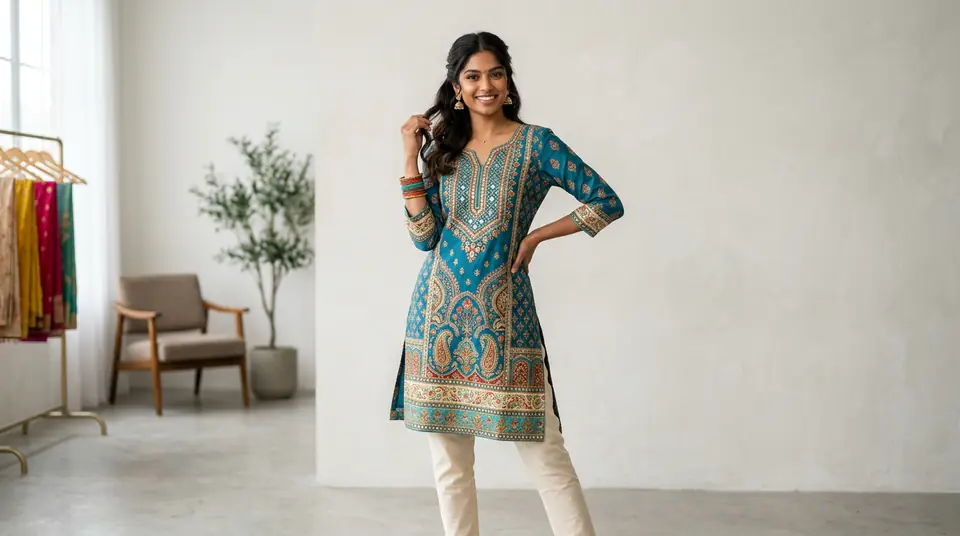
Imagine this: You've got a new batch of kurtis from your manufacturer. Instead of arranging for a studio, booking a model, coordinating stylists, and spending an entire day just to get a few dozen shots, you take a crisp photo of a single kurti on a hanger or a mannequin. That's it. Then, you upload it to a platform like DrapifyApp. You pick a model from a diverse library of Indian and international faces, choose a dynamic pose that showcases the garment, select a background that suits your brand aesthetic. Three minutes later, bam, you have a high-resolution, 4K catalogue image ready for Myntra, for less than ₹15.
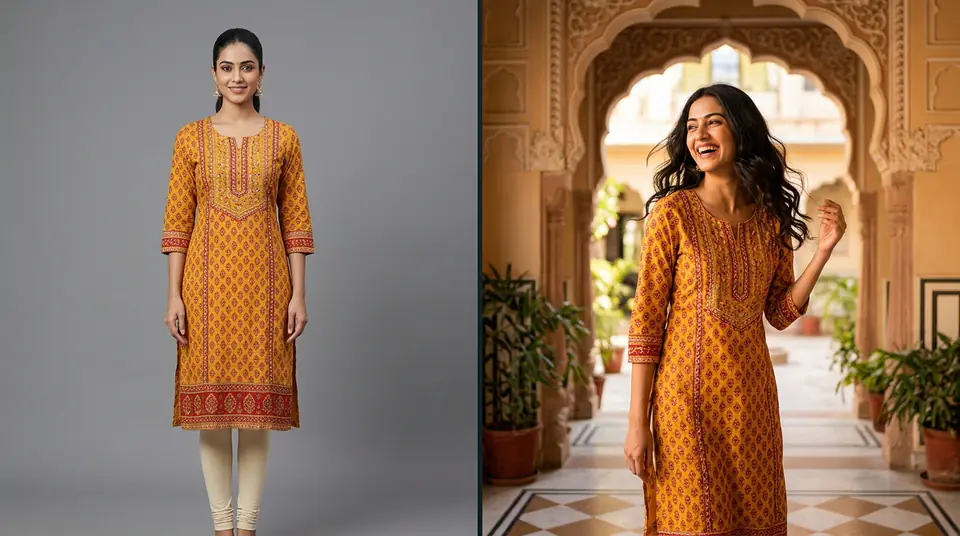
And this is where it gets really powerful for wholesalers: What if you have 10 colour variants of that same kurti design? You don't reshoot anything. DrapifyApp handles that, too, rendering each variant on the exact same identity-locked model in the exact same pose, ensuring perfect consistency across your entire collection. This is how the smart wholesalers are doing 500 garments a week, even 1000, with literally zero studio footprint. No more logistical nightmares. No more chasing photographers for edits. Just a streamlined, efficient workflow that respects your time and your bank account. It's not just about speed; it's about unparalleled control and consistency that traditional methods simply can't match at this scale. Think about a Jaipur garment exporter managing thousands of SKUs for clients globally – this workflow becomes absolutely indispensable.
Consistency: The Unsung Hero of Sales
I've seen catalogues from some excellent Jaipur and Surat manufacturers that look like a patchwork quilt. Some kurtis shot with a grey background, some with white, a few on a mannequin, others flat lay, some with a model who looks like she's about to fall asleep in the frame. What message does that send to a discerning buyer, especially if they're a boutique owner placing a large order or an end-consumer on Myntra? Inconsistent photos scream 'inconsistent quality,' even if your kurtis are, in fact, top-notch. It chips away at trust, piece by piece.
Marketplaces love consistency. Myntra's algorithms, Amazon India's stringent image standards, Flipkart's display rules – they all prefer a uniform, professional look. It not only helps their customers trust the product and the seller, but it also improves the overall browsing experience. When your catalogue looks polished and professional, with every garment presented beautifully and uniformly, even if it's thousands of unique designs, you stand out. That's the edge. That's what converts browsers into buyers, especially for repeat wholesale orders. No one wants to buy from a brand that can't even get its photos right. It's the first, most visible sign of sloppiness, and it's completely avoidable in 2024. Your visual identity is your brand's handshake; make it firm and reliable.
My Promise to You
Look, I'm a photographer. I love the smell of fresh prints and the satisfying click of a shutter. But I also love seeing businesses succeed, truly succeed, without being held hostage by outdated processes. For high-volume fashion wholesalers, the old way is dead. It's too slow, too expensive, and frankly, too much hassle. You're in the business of selling garments, not managing temperamental photographers and their exorbitant invoices, or coordinating complex logistics during peak season.
Embrace the tools that let you do both: produce stunning, consistent visuals at scale, and keep your focus where it belongs – on your next big order, on expanding your network, on designing the next hit collection. This isn't about replacing the art of photography; it's about streamlining the utility of photography for mass-market ecommerce. Give DrapifyApp a try. You get 50 free credits, no strings attached, so you can test it with your actual products. What have you got to lose, besides those sky-high studio bills and endless waiting times? Your competitors in Surat and Jaipur are already figuring this out. Don't be the last one to the party.