'Every new men's shirt design needs a fresh, big-budget studio photoshoot.'
This one hits hard because it used to be true. For decades, the gold standard for any serious apparel brand meant booking a studio, hiring models, stylists, photographers, and an entire crew. It was a badge of honour, a sign you were 'serious' about your brand. You believed this because that's what all the big players — think Peter England or Louis Philippe — did. And frankly, it delivered results back when online competition wasn't a bloodbath.
Here's the blunt reality: that old model is now a growth killer, especially for a men's shirt DTC brand aiming for ₹1 crore plus. The market demands constant newness. A studio shoot for even a small collection of 10 shirts in Mumbai? You're looking at ₹70,000 to ₹1.5 lakh, minimum, for a single day. And that’s before retouchers. By the time those photos are live on Myntra or your Shopify store, weeks could've passed. Your competitors, often smaller and nimbler, are already selling what you just started shooting.
Consider this: a top-tier Mumbai studio often charges around ₹90,000 per day for a fashion shoot, excluding model fees, styling, and post-production. This cost eats into your margin for every new SKU you launch. If you're trying to refresh your catalogue with 5-7 new designs every month, you're looking at an overhead of nearly ₹10-12 lakhs annually just for shoots. That's not scaling; that's burning cash.
'Authenticity demands real models for all catalogue shots.'
I hear this all the time. 'My customers want to see the shirt on a real person, they want to connect!' And yes, for lifestyle campaigns, a real person adds warmth and relatability. It makes sense why you'd think that for every single catalogue shot too. After all, you want to show how the shirt drapes, how it fits, the texture of the fabric in real life. That human touch, right?
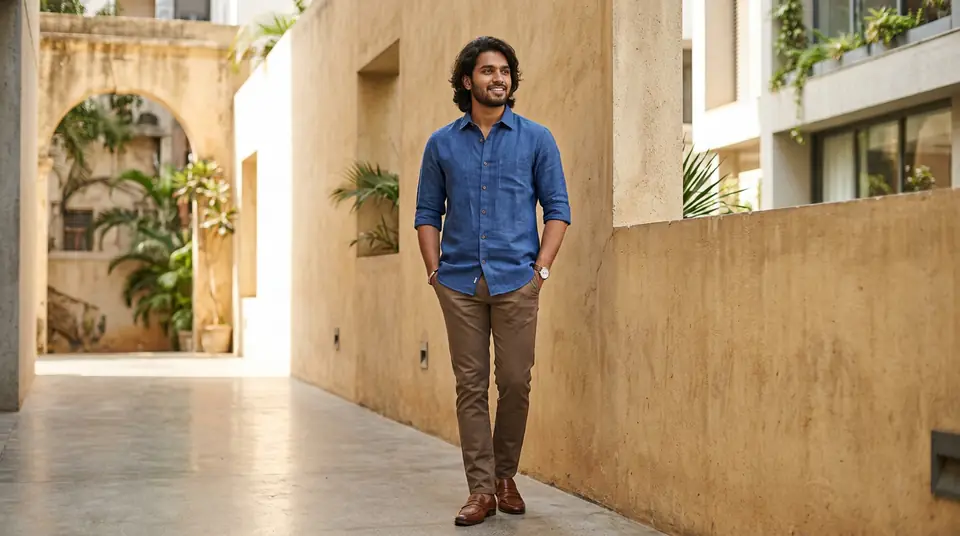
But for the nuts and bolts of your ecommerce listings – the 6-8 images per SKU needed to clearly show the product – 'authenticity' from a diverse pool of human models often translates to inconsistency. Different models, different poses, different skin tones, even different lighting across shoots mean your catalogue lacks visual cohesion. Your customer sees your whole brand, not just one shirt. A patchy catalogue erodes trust quicker than you'd think. Plus, hiring male models for even a day can set you back ₹15,000-₹30,000, and finding the right look that resonates with all your diverse Indian buyers is a constant challenge.
The reality is, consistent, high-quality, and reliable model representation without the logistical nightmare is now possible. We've seen brands boost their conversion rates by 18% simply by standardising their model photography. Platforms like DrapifyApp use AI to place your shirt on a diverse range of virtual models, maintaining consistent identity and poses across your entire collection. It looks real, it builds trust, and it's scalable. This consistency is what actually converts a casual browser into a buyer on Amazon India.