How much should I budget for a catalog photoshoot in India?
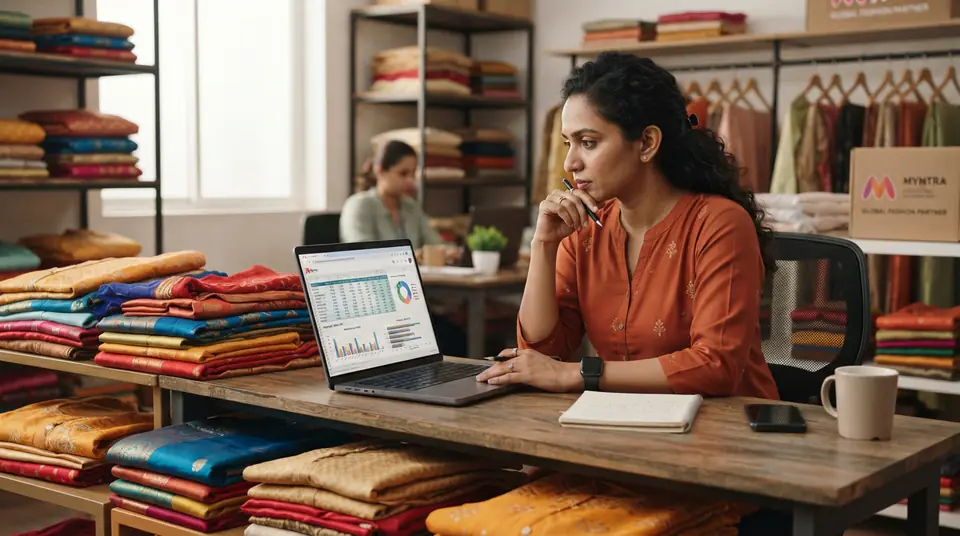
You should budget between ₹25,000 for a very basic setup to over ₹1,50,000 for a full-day, professional catalog photoshoot for a clothing brand in a major Indian city like Mumbai or Delhi. This range depends entirely on the experience of your team and the quality you're aiming for. The biggest shock for new sellers is usually the 'all-in' cost. It's not just the photographer's fee.
Your total budget is a sum of many parts, and trying to save too much on one can ruin the investment in all the others. A top-tier photographer can't save photos if the model is inexperienced or the makeup is poorly done. Think of it as a recipe; leaving out one key ingredient spoils the dish. The photographer is just one part of that recipe.
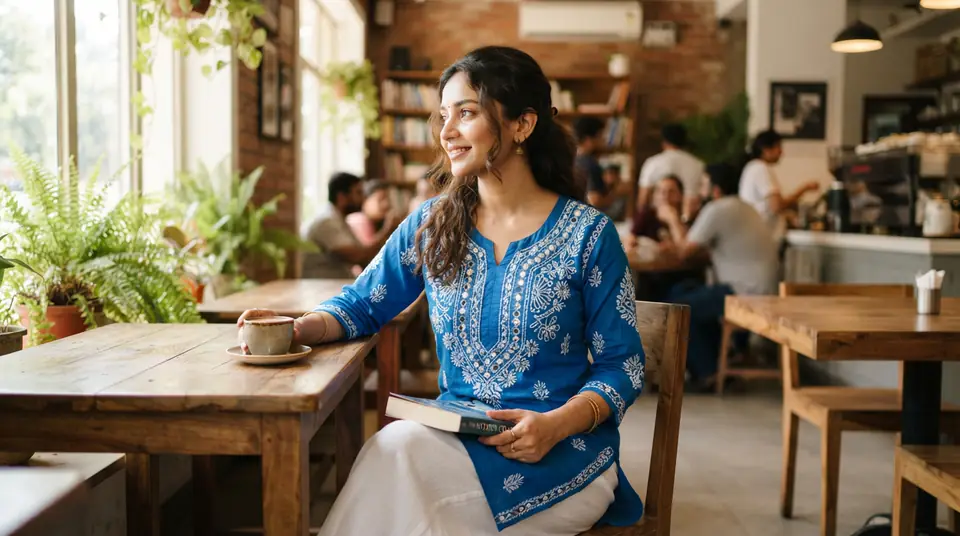
To make this concrete, let's do a worked calculation. Imagine you're a new brand based out of Jaipur, and you have a collection of 20 new kurtis to launch before the Diwali season. You need about 4-5 solid photos per kurti for your website and for marketplaces. Here’s a realistic breakdown for a decent, mid-range, one-day shoot in 2026:
Who do I need to hire for my clothing photoshoot?
For a professional clothing photoshoot, you need to hire, at a minimum, a photographer and a model, but a standard team also includes a stylist, a makeup and hair artist (MUA), and a production assistant. Don't underestimate the 'support' roles; they are what make a shoot run smoothly and prevent expensive delays. A single 8-hour studio day is a race against time, and every minute you waste is your money burning.
Here’s a breakdown of the team and why each person is critical:
What kind of photos do I need for my catalog?
For a standard e-commerce catalog, you need a consistent set of 4 to 6 core images for every single product: a full-length front view, a 45-degree angle view, a side view, a full back view, and at least one close-up detail shot. This 'shot list' is your blueprint for the day, ensuring you get everything you need for marketplaces and your own website without having to guess. Consistency is everything here. A customer browsing your store on Ajio or Myntra should see the same angles for every garment. It builds trust.
Your basic shot list should look something like this for each SKU (Stock Keeping Unit):
Marketplaces are strict about this. They want clean, clear images that help the customer make a decision, which reduces returns. While creative shots are great for Instagram, the product listing page is all about clarity. Each platform has its own technical rules for things like image size, background colour, and file size. Not following them gets your listings rejected, wasting all the time and money you spent on the shoot. For example, if you plan to sell on Myntra, understanding the specific Myntra catalogue photo requirements is not optional, it's mandatory.
How many products can I shoot in one day?
A well-organized team can typically shoot between 20 to 40 products in a standard 8-hour studio day. This number drops significantly if the garments are complex, like sarees or lehengas, which require intricate draping and styling. A studio might wrap 50 t-shirts in a day but struggle to shoot 10 heavy bridal lehengas. The product itself dictates the pace.
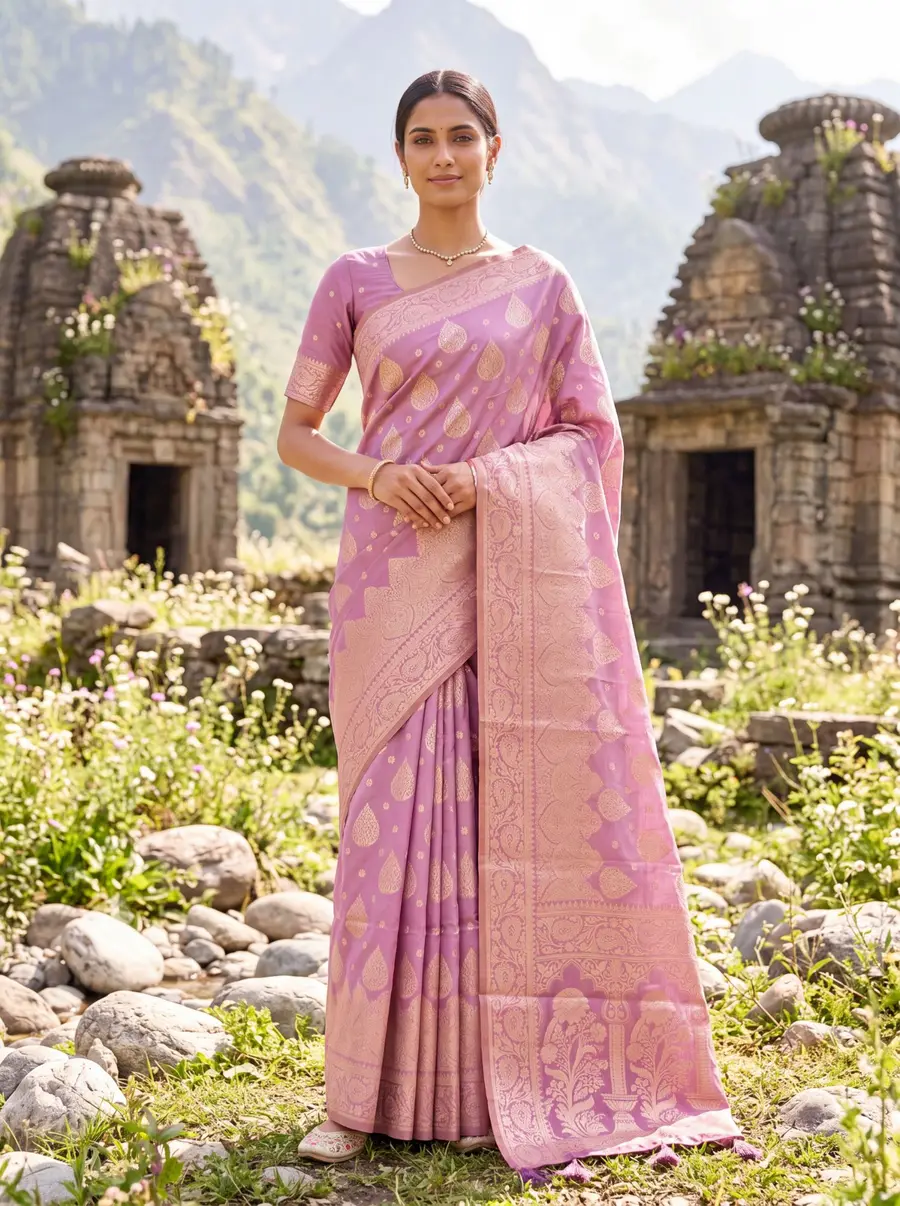
Think about the total time per product. It’s not just the 2 minutes the photographer is clicking. It’s the model changing, the stylist adjusting the fit, the MUA touching up lipstick, and the assistant steaming the next piece. For a simple kurti, this might be a 10-15 minute cycle. For a Kanjivaram saree? The draping alone can take 20 minutes to get perfect. The pleats have to be right, the pallu has to fall just so. You're paying five professionals to wait while one person drapes. It's the most expensive part of any ethnic wear shoot.
This is where the entire model of a catalog photoshoot for a clothing brand is being completely transformed. With AI photography platforms like DrapifyApp, the number of products you can 'shoot' in a day is virtually unlimited. You take one simple, flat photo of your garment. That's it. From that one photo, you can generate an entire catalog on a dozen different models in hundreds of poses. Those 10 bridal lehengas that would have crippled your studio for a full day? You can have photos for them ready in an hour. It fundamentally changes the economics of launching a large collection, especially for sellers who deal with complex garments like sarees. An AI saree photoshoot eliminates the biggest bottleneck: the manual, time-consuming draping.
What's the biggest mistake new brands make with their first catalog photoshoot?
The single biggest—and most expensive—mistake new brands make is simply not being prepared, which forces them to pay a 'reshoot tax' later. They show up to the studio with wrinkled garments, samples that don't fit the model, a vague idea of 'some nice photos,' and no clear shot list. This lack of preparation burns through studio time and money faster than anything else.
Shoots regularly stall over missing buttons or creases someone hopes to fix in Photoshop. Photoshop can't fix a badly wrinkled silk kurta in a way that looks real. A steamer on-site can. Arriving with every single outfit pressed, accessorized in labeled bags, and organized in shooting order can literally double the number of products you get through in a day. It is that important.
Another classic waste of money is booking an entire day with a full crew just to shoot the five other color variants of your best-selling dress. You are paying everyone—the model, the MUA, the stylist—to stand around while the model just changes into the same outfit in blue, then green, then yellow. It's a huge financial drain. This is a problem that technology has completely solved. A far more efficient method is to shoot your main color perfectly, then generate color variant photos with AI models. You get every colorway, on the same model in the same poses, for a fraction of the cost of one reshoot day.
Can I skip the traditional photoshoot and just use AI?
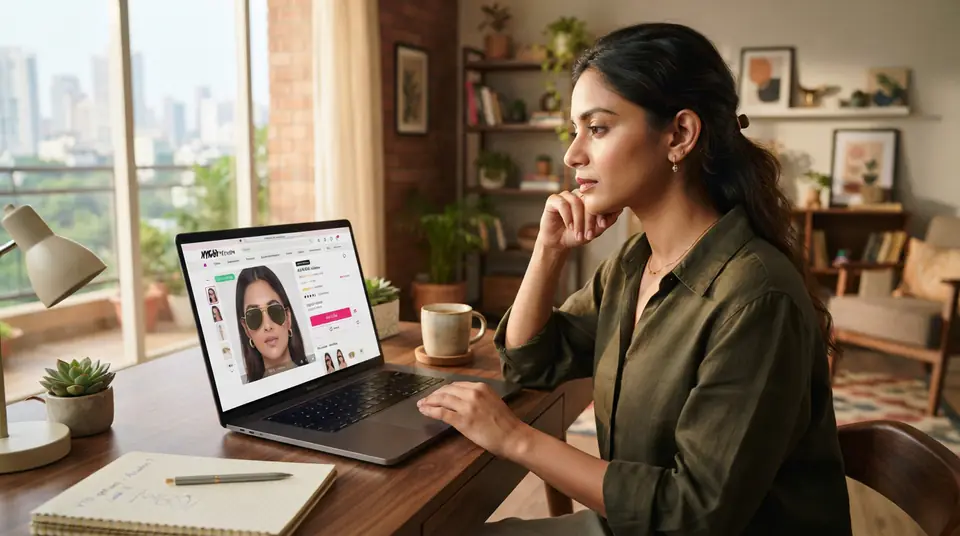
Yes, for the majority of e-commerce catalog images, you can now entirely skip the traditional photoshoot and use AI to generate high-quality, on-model photos. The process involves taking a single, clean photo of your garment on a hanger or laid flat, uploading it to a platform like DrapifyApp, and the AI will generate images of it on a variety of models in marketplace-compliant poses. It’s a massive shift from the old way of doing things.
This isn't about replacing creativity; it's about automating a repetitive, expensive, and time-consuming task. The core job of a catalog photo is to show the product clearly on a human form. AI does this incredibly well, at a speed and cost that a physical studio can never match. With Drapify, for example, you can get photos back in about 3 minutes, at resolutions up to 4K, for as little as ₹9 per image. You can test your product on different models, in different settings, without booking a single person. You can even start for free, with your first 2K image and a redo on the house, to see the quality for yourself.
However, it's important to know the limitations. This approach is built for scale and e-commerce efficiency. For a deep-dive on the pros and cons, reading up on the differences between an AI vs. traditional fashion photoshoot is a good idea.