The Daily Grind of Online Fashion Photography
Another urgent WhatsApp message from a reseller: "New catalogue, Amit bhai, high priority!" He looked at the stacks of unphotographed new arrivals. The question how to take photos of clothes for selling online wasn't just theoretical; it was his daily bottleneck. This is a hypothetical scenario, an illustrative example of the challenges many sellers face, not a real customer case study. Imagine a Surat saree wholesaler, operating a bustling D2C business with 240 distinct SKUs, shipping around 60 orders a day. His entire growth strategy hinged on fresh inventory, but getting those sarees online was always a fight against time and budget.
Every week, 20 new designs would arrive from weavers, each needing five to seven shots: front, back, pallu detail, border, and a drape shot. That’s 100-140 new images just to get the stock listed. Traditional photoshoots meant coordinating models, studios, and photographers. It was a logistical nightmare that drained capital and slowed his time to market. His competitors, smaller players without proper systems, were cutting corners, using bad lighting and phone photos, listing faster but sacrificing quality. He knew quality was key for D2C growth on platforms like Myntra and Amazon India, yet the cost to maintain it was crushing.
The Breaking Point: When Costs Outweigh Growth
Amit's breaking point wasn't a single event, but a slow, grinding realization that his photography costs were eating into his margins. A typical catalogue photoshoot for 20 new sarees (around 120-140 shots) in Surat would cost him ₹18,000 to ₹35,000 for a one-day shoot, covering model fees, photographer charges, studio rent, and makeup. That was a weekly expense, amounting to ₹72,000-₹140,000 every month just for new arrivals. This doesn't even include reshoots for rejected images or new colour variants. It was unsustainable.
Cash flow tightened. New designs sat in the warehouse for a week or more, waiting for the next photoshoot slot. Each day a saree wasn't listed, it wasn't selling. Each delay meant missed sales opportunities during peak seasons like Diwali or the wedding season. He tried pushing his team to schedule shoots tighter, but quality suffered. Models were tired, lighting inconsistent. Marketplace rejections started to climb, costing him more in delays and reshoot fees.
What Amit Tried That Failed
He explored cheaper traditional options. Hiring freelance photographers for a few hours at a time seemed like a solution, but consistency was an issue. Each new freelancer had a different style, making his catalogue look disjointed. This mattered on marketplaces where customers scrolled through dozens of listings.
Then came the idea of an in-house setup. A basic studio in his warehouse, a decent DSLR, a lighting kit. Initial investment: around ₹80,000-₹1.5 lakh. The plan was to train one of his existing staff to do basic flat-lay photography or even hanger shots. But the results were dismal. Flat-lays lacked the drape and flow that sarees needed. Hanger shots looked cheap, definitely not Myntra-ready. On-model shots were out of the question; finding affordable, consistent models locally was harder than he thought, and professional ones were expensive.
He even experimented with local phone photography services. While cheap (₹500-₹1,000 for a few shots), the image quality was poor, background distractions were common, and photos often failed to meet even Meesho's basic guidelines. His conversion rates dipped. Customers couldn't visualize the saree on a person, leading to higher return rates as expectations weren't met. He was losing money trying to save it. For any D2C brand aiming for growth, cutting corners on visuals is self-sabotage.
Don't fall for cheap photography services promising quick results. Poor image quality and inconsistent branding hurt your conversion rates and lead to more returns. Your product photos are your storefront.
The Switch: Embracing AI for Catalogue Photography
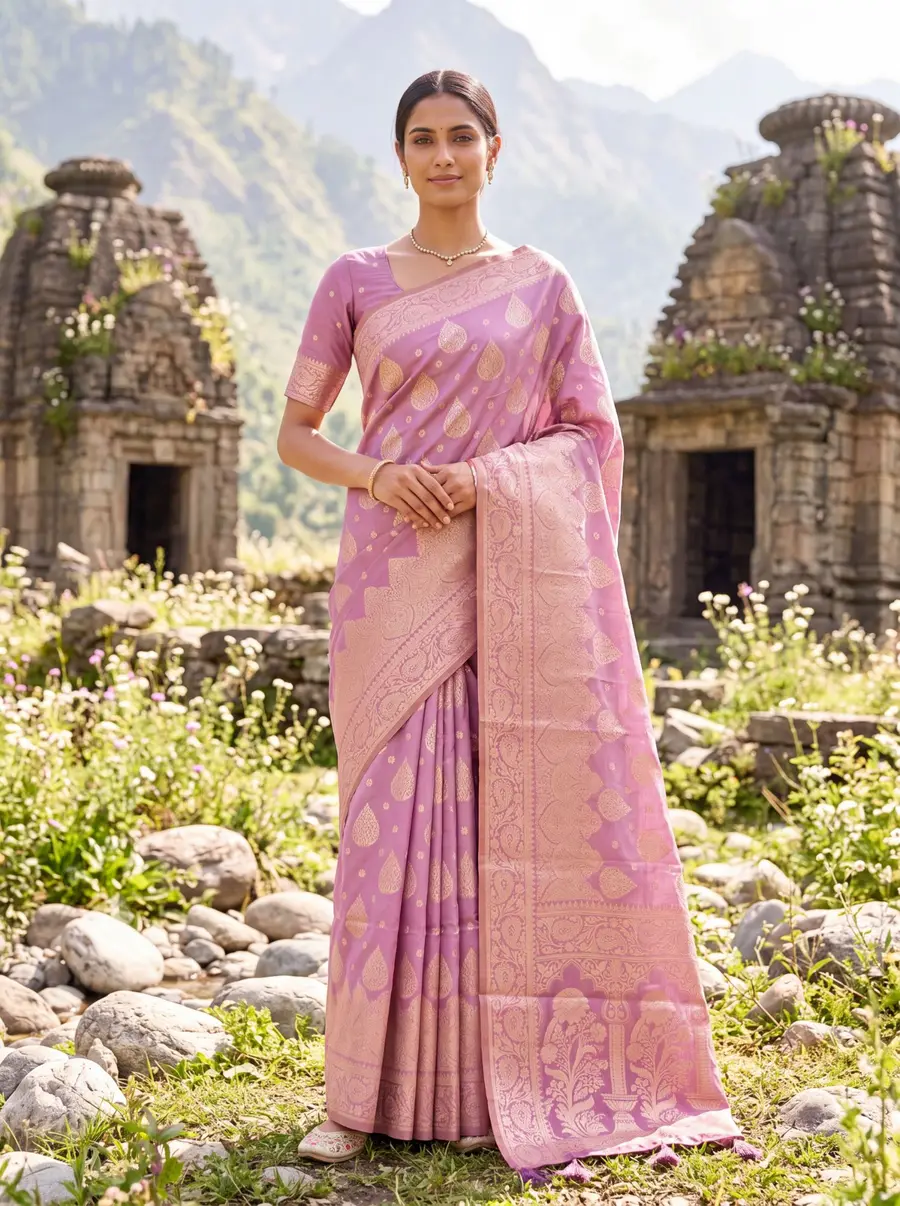
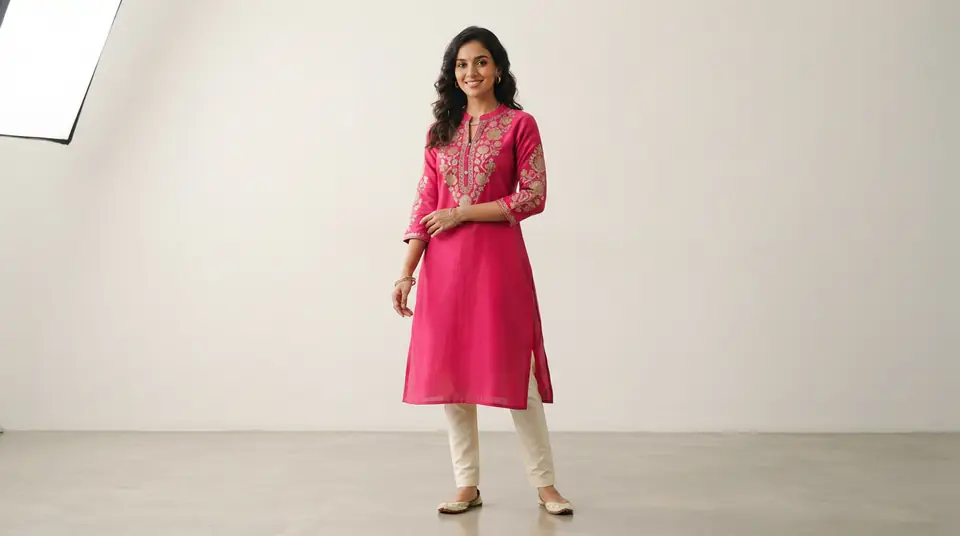
One evening, a friend in the textile business mentioned DrapifyApp. He was skeptical. AI models? For sarees? He imagined stiff, unrealistic images. But the promise of speed and cost savings was too tempting to ignore. The initial 2K photo was free, with one free redo, and no sign-up until he tapped Generate, so there was no risk to try. He took a few flat-lay photos of some new arrival sarees on his phone, then uploaded them to the platform. Within minutes, the AI generated stunning, on-model images, showcasing the drape and fall perfectly. He could choose from diverse Indian models, all with consistent identities across different poses.
The price was ₹9 per 1K photo, a flat ₹25 for a 2K resolution image, and ₹35 for a 4K image. Compared to his weekly studio budget, this was a fraction of the cost. He realized DrapifyApp wasn’t just a cost-cutting tool; it was a way to completely rethink how to take photos of clothes for selling online efficiently and at scale.
What Changes: Operational Impact and Growth
The transformation was immediate. Amit no longer waited for models or studio slots. He could photograph new sarees the moment they arrived. His team simply took quick flat-lay shots, uploaded them, and had marketplace-ready images within minutes. This cut his time to market from over a week to less than a day.
For his 20 weekly new SKUs, each needing 6 shots, he now produced 120 images. At ₹25 per 2K image, his weekly photography cost dropped to ₹3,000. Monthly, that’s just ₹12,000, a massive saving compared to the ₹72,000-₹140,000 he used to spend. DrapifyApp's AI models meant consistent lighting, poses, and model faces across his entire catalogue, giving his brand a professional, cohesive look.
He could now easily create multi-look campaigns using Drapify Studio, showing the same saree on different models or in various settings. Need a festive look for Diwali? Done. A casual look for daily wear? No problem. He could also generate colour variants without reshooting, a huge advantage for his extensive product range. Failed shots were automatically refunded, and credits never expired, making it truly pay-per-use with no subscription lock-in.
₹1.4 Lakhs
Old monthly photo cost
₹12,000
New monthly photo cost (modelled)
7 Days
Old time to market
3 Hours
New time to market (modelled)
What This Means for You: Scaling D2C with Smarter Photography
Amit's story isn't unique. If you're an Indian D2C fashion seller, whether you sell kurtis, lehengas, or menswear, your product photography is a major lever for growth. The choice of how to take photos of clothes for selling online directly impacts your costs, speed to market, and ultimately, your sales. You don't need to be a photography expert; you need smart tools.
Here’s what you can learn: First, understand your true costs. Don't just look at the studio bill; factor in lost sales from delays, marketplace rejections, and the time spent coordinating shoots. Second, prioritize consistency. A uniform look across your listings builds trust and strengthens your brand identity. AI tools like DrapifyApp let you achieve this effortlessly with identity-locked models. Third, embrace agility. The faster you can list new products, the more competitive you become. This is especially true during festive sales like Eid or the wedding season where timing is everything.
By shifting to AI-powered catalogue creation, you can redirect funds from expensive photoshoots towards marketing, inventory, or product development – areas that directly fuel D2C growth. You stop reacting to photography bottlenecks and start proactively driving your business forward. The ability to generate thousands of unique photos for a fraction of the traditional cost changes the game entirely. Think of the new product lines you could launch, the marketing campaigns you could execute, all without the photography headache.
For example, say you want to explore new markets or launch a regional collection. You can instantly generate photos with South Indian AI models or North Indian models, testing appeal without the expense of localized photoshoots. Or if a particular garment design is selling fast, you can quickly generate new looks or backgrounds to keep the listing fresh.
Marketplace Image Requirements (as of 2026)
Meeting marketplace image guidelines is crucial to avoid listing rejections and ensure your products appear professional. While specific requirements can change, these are the typical standards for major Indian platforms in 2026. Always check the seller panel for the latest updates.
| Marketplace | Minimum Resolution | Aspect Ratio | Background | File Type | File Size |
|---|---|---|---|---|---|
| Myntra | 1500x2000 px | 3:4 (Portrait) | Pure White (#FFFFFF) | JPG/PNG | <500 KB |
| Amazon India | 1000x1000 px | 1:1 (Square) or 5:1 (Portrait) | Pure White (#FFFFFF) | JPG/PNG/GIF | <10 MB |
| Flipkart | 700x700 px | 1:1 (Square) | Pure White (#FFFFFF) | JPG/PNG | <5 MB |
| Meesho | 500x500 px | 1:1 (Square) | White/Light Grey/Single Solid Color | JPG/PNG | <2 MB |
| Ajio | 1200x1800 px | 2:3 (Portrait) | Pure White (#FFFFFF) | JPG/PNG | <2 MB |
Many marketplaces allow multiple images per listing. Always include a front, back, and detail shot. For fashion, on-model images often perform better than flat-lays. Use a tool like our Meesho image resizer or Amazon image resizer to quickly meet size requirements without losing quality.
Worked Example: The Real Cost of Catalogue Photography
Let’s break down the actual costs for a medium-sized D2C brand in Jaipur listing 100 new kurtis a month. Each kurti needs a minimum of 4 unique photos (front, back, detail, lifestyle/drape). That’s 400 photos per month.
This modelled scenario shows a potential monthly saving of ₹86,000. This isn't just a cost saving; it’s an operational shift. You're freeing up nearly a lakh rupees that can be reinvested into advertising, acquiring more inventory, or developing a better customer experience. This allows a D2C brand to outcompete others simply because its working capital is more efficient.
Who This Is NOT For
While AI fashion photography offers immense benefits, it isn't for every seller or every situation. This approach might not be the best fit for you if:
For the vast majority of D2C sellers focused on volume, speed, cost-efficiency, and consistency, AI solutions like DrapifyApp offer a clear competitive advantage.