What is the typical saree photoshoot cost in India for 2026?
A typical saree photoshoot for an e-commerce catalogue in India for 2026 can range anywhere from ₹18,000 to ₹60,000 for a single day, depending heavily on location, model experience, and the number of sarees shot.
This isn't a simple flat fee; it's a sum of many moving parts. You're paying for the studio, the photographer's time and skill, a professional model, a stylist to make sure the drape is perfect, hair and makeup artists, and then the crucial post-production work like retouching and color correction. For a small boutique launching a new collection of 10-15 sarees, you might get away with the lower end of that range, perhaps a freelancer working from a home setup in Bengaluru. But for a larger wholesaler in Surat needing 50-100 sarees shot for Diwali season, you're looking at multiple days or a higher per-day rate with a full crew in a commercial studio.
| Service | Typical Cost Range (₹/day) | Notes |
|---|---|---|
| Studio Rental | 8,000 - 20,000 | Mumbai/Delhi studios are pricier, smaller cities less so. Includes basic lighting. |
| Photographer | 7,000 - 25,000 | Experience matters. Freelancers are cheaper; agency photographers cost more. |
| Fashion Model | 6,000 - 15,000 | Depends on experience, portfolio. Often includes up to 8 hours. |
| Stylist / Drape Artist | 4,000 - 10,000 | Crucial for sarees. Ensures perfect pleats and pallu. |
| Hair & Makeup Artist | 3,000 - 8,000 | Usually booked with the model; enhances the overall look. |
| Retouching (per image) | 100 - 300 | Not a daily rate. Add 300-500 extra if complex background manipulation needed. |
| Assistant / Runner | 1,500 - 3,000 | Often overlooked but makes the shoot smoother. |
When you add these up, a single day's shoot can easily hit ₹30,000 or more before you've even considered travel, accommodation, food, or unexpected delays. And remember, that's just for the shoot day. The real work of getting marketplace-ready images, especially for platforms like Myntra or Amazon India, continues in post-production, often adding another ₹100-300 per final image. It's a significant investment, one that often catches new sellers off guard.
Why do traditional saree photoshoots cost so much?
Traditional saree photoshoots are expensive primarily because they are time-consuming, involve multiple highly paid professionals, and carry inherent logistical risks like model no-shows or bad weather.
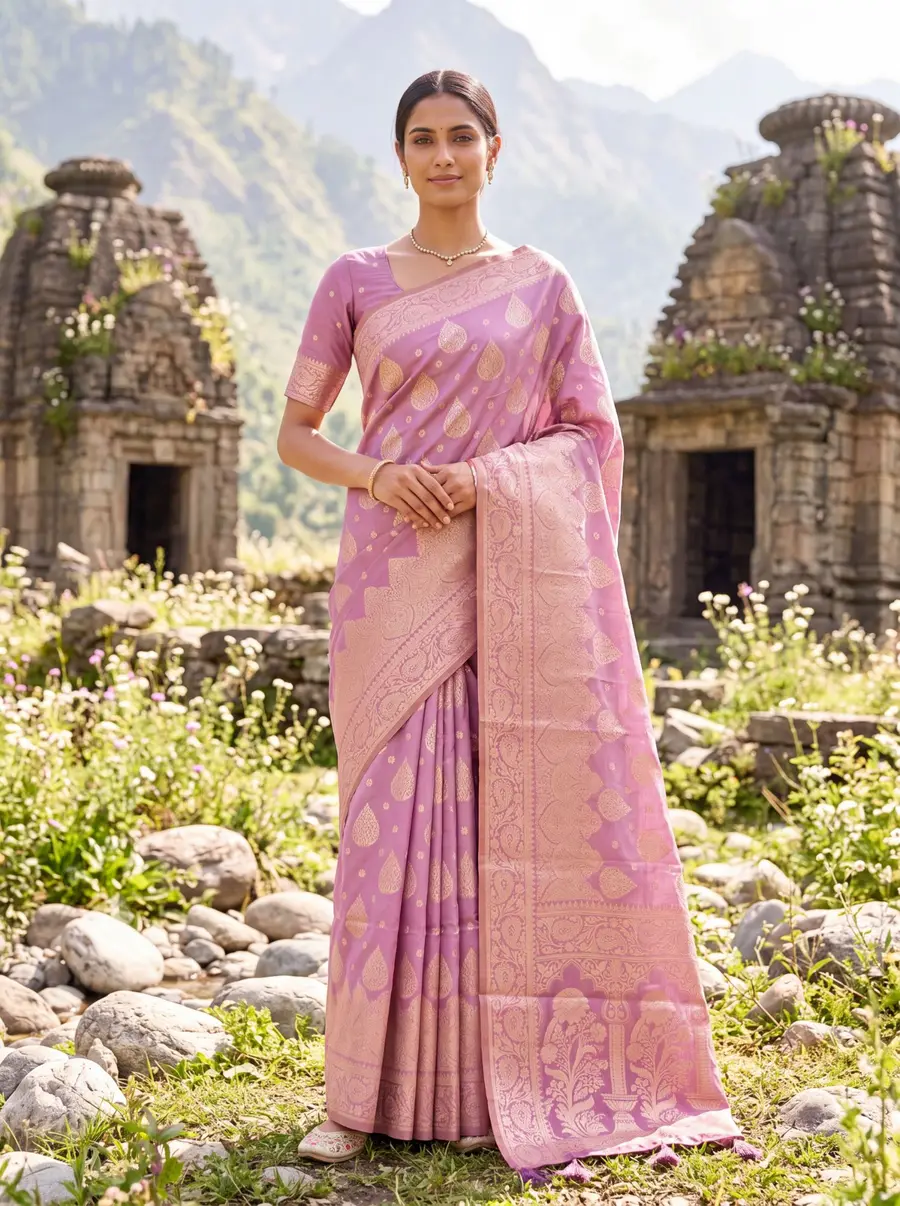
Think about it: you're coordinating schedules for at least five to seven people – the photographer, model, stylist, makeup artist, sometimes a videographer, and your own team. Each of these individuals commands a professional fee for their expertise and time. A good fashion photographer in Mumbai, for example, isn't just pressing a button; they're understanding light, composition, styling, and how to get the best out of a model in front of the camera. The same goes for a saree drape artist; their skill ensures the garment looks appealing, hiding imperfections and highlighting craftsmanship. Without that expertise, even a beautiful Kanjivaram saree can look flat or messy in a photograph, which simply won't sell online.
Then there are the hidden costs, the ones nobody talks about until they hit your budget. Did the model run late? That's overtime for the studio and the crew. Did a new saree arrive last minute that needs to be shot? That disrupts the flow and adds time. What if the raw images don't quite capture the true colour of your unique Bandhani saree? That's a potential reshoot, and trust me, reshoots are brutal. They double your expenses for a specific garment, covering everything from re-booking the model to the studio time all over again. One or two critical reshoots can add ₹10,000-₹15,000 if the first batch doesn't meet Myntra's background consistency requirements.
The sheer number of products also dramatically inflates costs. If you're shooting 10 sarees, it's manageable. If you're shooting 100 or 200 sarees for a festive collection, that's days of studio time, multiple models, and an army of post-production specialists. Every extra saree adds more minutes of styling, more clicks, more retouching. It’s a linear cost increase that can quickly spiral beyond what a small or medium-sized business can comfortably afford, especially when operating on tight margins for volume sales on platforms like Meesho or Flipkart.
20%
Average reshoot rate for complex garments like sarees due to styling or technical issues
₹15,000+
Additional cost for re-shooting a single day's catalogue
2-3 weeks
Typical turnaround time for delivery of final retouched images
How can small saree businesses get high-quality catalogue photos without breaking the bank?
Small saree businesses can achieve high-quality catalogue photos on a budget by leveraging DIY techniques for basic shots and strategically using AI fashion photography tools for professional model images.
For individual product shots, a simple DIY setup can work wonders. You'd need a good smartphone camera, ample natural light (a large window is your best friend), and a clean, plain background – a white bedsheet or a large chart paper works well. Focus on getting sharp, well-lit images that accurately show the saree's texture and colour. This is fine for close-ups or flat-lays, especially for platforms like WhatsApp Business catalogues where the overall aesthetic bar might be slightly lower than Myntra. However, creating on-model photos with a DIY approach is incredibly difficult; a consistent model, professional drape, and varied poses are almost impossible without significant investment or skill. You can learn more about specific setup advice in our guide on how to take catalogue photos with a phone.
This is where AI tools step in, offering a bridge between expensive studio shoots and limited DIY options. Instead of hiring a model, photographer, and stylist, you can take a single, well-lit flat-lay or mannequin photo of your saree. Then, AI can transform that garment image onto diverse, identity-locked models in various poses and backdrops. This drastically cuts down on human resources and studio time, bringing the cost per image down to something truly manageable. Imagine turning a basic flat-lay of your Banarasi saree into a stunning on-model shot ready for Myntra in minutes, not days.
For a boutique that wants to showcase new designs weekly or during peak seasons like Eid or Diwali, this approach changes everything. You aren't held back by shoot schedules or high upfront costs. You can experiment with different models or backdrops for your Kurtis or Lehengas without committing to another full photoshoot. It's about agility and financial prudence, ensuring your budget goes further and you can list more products, faster.
Do AI-generated saree photos actually look real and professional?
Yes, with the rapid advancements in AI photography technology, especially in the last year, AI-generated saree photos can look remarkably real and professional, often indistinguishable from studio shots, provided you use a high-quality platform.
When AI first started hitting the fashion scene, there were often tell-tale signs: strange distortions, unnatural drapes, or models that looked a bit 'off'. These were common in early AI tools. But that's changed drastically. Modern AI tools, like DrapifyApp, are trained on vast datasets of real fashion photography, allowing them to render fabric textures, shadows, and model poses with incredible realism. For sarees, the drape is critical. It's not just about putting a fabric on a body; it's about the fall, the pleats, the pallu, the way light plays on silk or cotton. These nuances are now accurately simulated by sophisticated AI algorithms.
The test that matters is comparing traditional studio shots of your own sarees, from heavy Kanjivarams to flowy chiffons, against AI-generated versions. When done right, the AI output at 2K or 4K resolution holds up incredibly well. The key is the underlying technology that understands garment physics and model anatomy. What's more, platforms like DrapifyApp allow you to lock in a specific model's identity. This means if you find a model you like, you can use her across your entire catalogue, creating consistent branding and eliminating the headache of trying to book the same human model for every new collection.
This consistency is a massive win for sellers. Marketplaces like Myntra heavily penalize inconsistent model looks or lighting. With AI, every new batch of sarees can feature the same model, in the same style, maintaining a polished and professional look across hundreds of listings. It’s not just about saving money; it's about achieving a level of visual consistency that's often difficult and expensive to maintain with traditional shoots, especially for businesses with high SKU counts. For a deep dive into this, check out our piece on AI model fashion vs. hiring real models in India.
How much does an AI saree photoshoot cost per image compared to traditional methods?
An AI saree photoshoot typically costs as low as ₹9 per 1K image and up to ₹35 per 4K image, dramatically undercutting traditional studio shoots which can effectively cost ₹300-₹1000 per retouched image.
Let's break that down. When you calculate the 'per image' cost for a traditional shoot, you take the total expenditure – studio, crew, model, retouching, reshoots – and divide it by the number of final, approved images. If a ₹45,000 shoot day yields 80 good images, you're looking at ₹560 per image. And that's if everything goes perfectly. Add a couple of reshoots, and that number climbs fast. For garments like sarees that require intricate draping and styling, the per-image cost often skews higher than simpler apparel like t-shirts.
₹300 - ₹1000
Effective cost per retouched image for traditional saree shoots
₹9 - ₹35
Cost per AI-generated saree image (1K-4K resolution)
3 minutes
Average generation time for an AI fashion photo from a single garment image
Now, consider an AI tool like DrapifyApp. You submit a single photo of your saree – maybe a flat-lay you took with your phone. In about 3 minutes, you get an on-model photo. The pricing is transparent: around ₹9 for a 1K resolution image, ₹25 for 2K, and ₹35 for a high-res 4K image. There's no subscription required; you buy credits as you need them, and they never expire. This makes it incredibly cost-effective for businesses that might have seasonal demand or fluctuating inventory. A boutique owner in Jaipur preparing for the wedding season can generate hundreds of unique saree model shots for a fraction of what a studio would charge, freeing up capital for inventory or marketing.
This pay-as-you-go model, combined with rapid turnaround, fundamentally shifts the economics of fashion photography. You're not paying for downtimes, reshoots, or human errors. If a generated image isn't quite right (rare, but it happens), DrapifyApp automatically refunds your credits. It's a risk-free way to expand your visual catalogue without the prohibitive upfront costs. You can explore more about credit pricing and options on the DrapifyApp plans page.
Can AI help with specific saree photography challenges like color variants or different drape styles?
Yes, AI is exceptionally effective at tackling common saree photography challenges such as generating multiple color variants without reshoots and showcasing different drape styles on the same model.
One of the biggest headaches in saree photography is managing color variants. If you have the same design available in five different colors, traditionally, you'd have to photograph each color individually on a model. This multiplies your studio time, model fees, and post-production costs. With AI, you can take one good product photo of a saree (say, the blue version), and then use that same image to generate all its color variants on the model, accurately reflecting the different hues without any additional shooting. This saves substantial time and money, making it viable to list every single colour option you offer, rather than just the hero shot.
Another common challenge is demonstrating versatility in drape. A saree can be worn in dozens of ways – Nivi, Bengali, Gujarati, Coorgi, and so on. Capturing these on a live model would require multiple changes, re-draping, and significant time investment per garment. AI tools are evolving to allow for different poses and even subtle variations in drape, all while keeping the same model and garment. While the ability to do complex, culturally specific drapes is still developing for all AI tools, the core functionality for varied poses is very strong. This helps present your sarees in a more dynamic and appealing way to a wider audience on platforms like Amazon India or Flipkart.
This capability to generate color variants and diverse poses means a single physical saree can become multiple compelling listings. For a wholesaler managing hundreds of SKUs, this isn't just a convenience; it's a strategic advantage, allowing them to scale their visual content output exponentially without scaling costs. It ensures every unique product you have, even down to subtle colour differences, gets the professional model treatment it deserves.
When should a saree seller still opt for a traditional studio photoshoot?
A saree seller should still opt for a traditional studio photoshoot when they require highly specific, artistic editorial shots, very intricate custom drapes that AI cannot yet perfectly replicate, or a strong brand narrative conveyed through a unique physical setting.
While AI has come incredibly far, there are still certain scenarios where the human touch of a seasoned photographer and stylist remains irreplaceable. If you're creating a high-fashion lookbook for a premium designer saree collection, aiming for specific lighting setups that convey a mood, or need a complex, artistic narrative woven into your images, a traditional studio is often the way to go. Think of bespoke shoots for a limited-edition collection of heirloom Kanjivaram sarees; the human element in styling, interaction, and creative direction is still paramount here. These aren't typically for your everyday catalogue listings on Myntra, but rather for branding campaigns, magazine features, or social media splash content where the goal is aspirational, not just transactional.
Another reason could be extremely unusual or avant-garde draping styles that AI models might struggle to render realistically, though this gap is closing quickly. If your brand relies on a very specific, unconventional aesthetic that requires real-world physics and hands-on manipulation of fabric, a studio with an experienced drape artist is still king. However, for 90% of e-commerce catalogue needs—clean, consistent, high-quality images of sarees on models—AI is now a formidable, cost-effective, and fast alternative. The decision often comes down to budget, scale, and the specific purpose of the images.